About Us
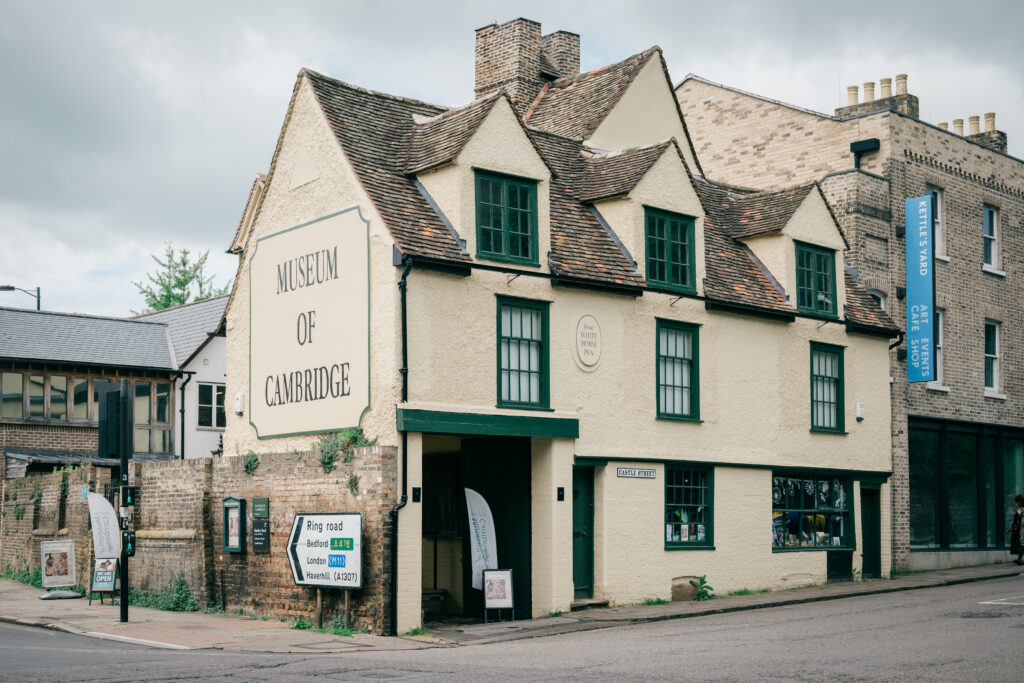
The Museum of Cambridge is a unique cultural institution dedicated to safeguarding the extraordinary stories of everyday people from Cambridge and Cambridgeshire. Set in the Grade II-listed 17th century White Horse Inn, the Museum has been telling these stories since 1936.
Visit us and explore over 300 years of Cambridgeshire history and heritage. Our Museum has something for everyone, and our collections include objects related to the everyday life, customs, and traditions of the local people of the area.
We love the way that objects can help us to reflect on our histories. They bear marks that help us to appreciate their makers, their owners, and their users. The stories that they share can still have meaning today. We want to understand those stories and to continue making connections between the past and the present by collecting peoples’ stories today.
Folklorist Enid Porter was the longest serving Museum curator (1947-1976) and her work characterises our collection. She collected and preserved local heritage for future generations, recording people’s stories and memories. Porter also shaped modern English folklore studies. We are reviving her ethos and ideas through projects exploring more recent, diverse heritage, reflecting and recording stories of development and change.
Our Building
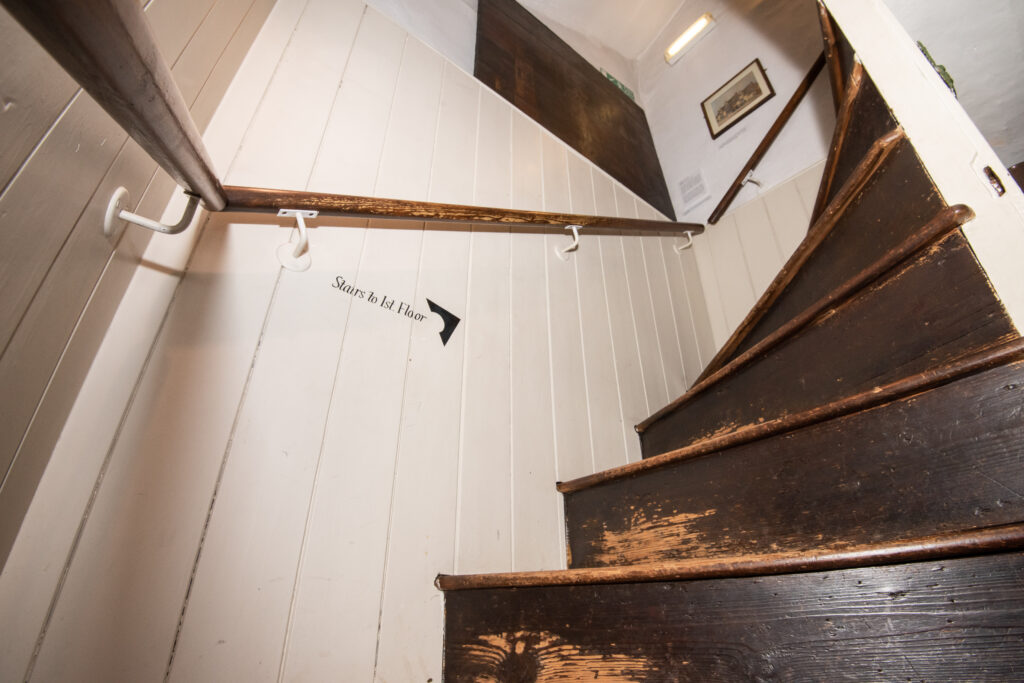
Known as The Cambridge and County Folk Museum for over 70 years, our building is a Grade II listed 17th century former coaching inn. It’s an increasingly rare and important example of an historic timber-framed building of its type that is still open to the public. Used by the townspeople of Cambridge, it was once a domestic dwelling. Its layout changed over time and so it developed an eccentric character with winding staircases and uneven floors. Our building is sure to make your visit memorable.
Our History
The Museum opened in 1936 but its origins can be traced back to 1933. The Cambridgeshire Federation of Women’s Institute held an exhibition called, ‘A Festival of Olden Times’ in the Guildhall. Each village that participated presented local objects and the exhibition was such a success that there were calls for a permanent social history collection to be established.
A year after the exhibition, Ernest Saville Peck gave a talk to the Cambridge Rotary Club – of which he was the founder – and he proposed a ‘Museum of Bygones’. The museum he envisaged would “illustrate the old-fashioned life of the town and county” and it “would be a collection of common objects” that “faithfully reflect the everyday life of the people in the past centuries”. His proposal received much support, and the Provisional Committee was formed to investigate the idea.
In 1935 the Committee distributed a pamphlet inviting interested parties to a public conference on 26th October to discuss the formation of a ‘Folk’ Museum. As reported in the Cambridge Daily News on 28th October, two resolutions were passed at the meeting. The first was, ‘that an Association be formed which shall have as its object the establishment in Cambridge of a museum for the exhibition of objects of special local interest dating from medieval times onward’. The second resolution, “That the Association shall be authorised by this conference to hire the premises of the old White Horse Inn, No.2, Castle-Street, for the purposes of the museum”, was also agreed.
The Association was made up of a diverse group of people from both ‘town and gown’ who shared a common interest in history and collecting. They were also all prominent members of Cambridge society. They worked quickly, holding their first general meeting in March 1936. Mrs Adeane, wife of the Lord Lieutenant of the County, became Patron and Florence Keynes was elected as President, a role she would hold until her death in 1958. Catherine Parsons was appointed Honorary Curator and Reginald Lambeth given the post as Resident Custodian. They began accessioning items into the collection in July. Around nine hundred exhibits were collected and arranged as realistically as possible within the appropriate room settings and throughout the yard. By November 1936 the Museum was ready to receive the public.
Historical figures of Museum of Cambridge
The founders of the Museum of Cambridge shaped the nature of the Museum’s collection by donating just over half of all acquisitions that were accessioned in 1936. As such, the early collection can be seen as a reflection of the passions and interests of those who donated objects and those who subsequently curated the collection.
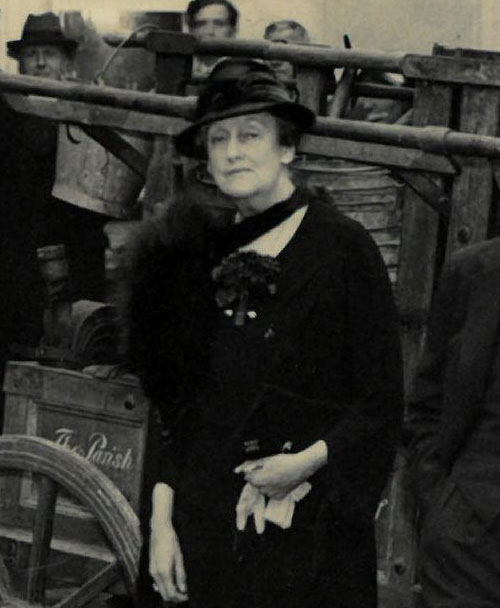
Catherine E. Parsons (1870-1956) donated 143 objects in just the first year and would continue add to the collection throughout her time as Honorary Curator. Born in Horseheath, she wrote many pamphlets on local life in the village including, ‘Notes on Witchcraft’. Originally given as a lecture to the Cambridge Antiquarian Society it was subsequently published by the society in 1915. A keen collector, Catherine spent many years amassing ‘bygones’ from barns, cottages and attics of local people. Catherine also contributed to other collections. In 1950 she donated over a 1,000 keys to the Pitt-Rivers Museum in Oxford.
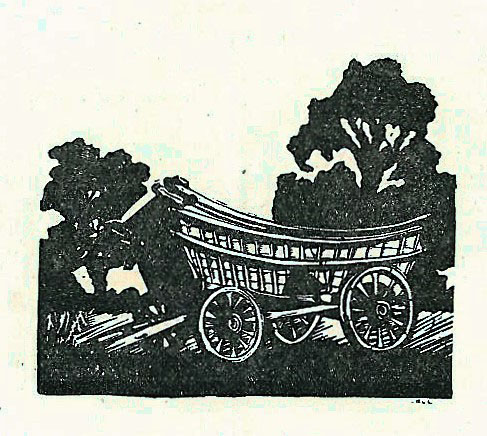
Reginald C. Lambeth (1903-1981) held various roles in the Museum between 1936-1947. Originally Resident Custodian, he would later become Assistant Curator, then Curator of the Museum. Reginald combined his work with another role, as Rural Industries Organiser for Cambridgeshire and Isle of Ely, and his interests in this area can be seen in the objects he gifted to the Museum. A talented artist and printmaker, he created the linocut of the Museum that graced much of the publicity for the new Museum. Reginald also researched and illustrated pamphlets for the Museum, such as ‘Some former Cambridgeshire Agricultural and other Implements’ (1941).
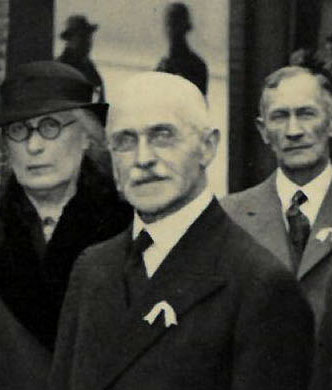
Ernest Saville Peck (1866-1955), regarded by many as the ‘father’ of the Museum, ran the family pharmacy business at 30 Trumpington Street after studying for both a B.A and a M.A. at Cambridge University. An active member of the British Pharmaceutical Society, Ernest was fascinated by objects related to the history of pharmacy and, in particular, mortars and pharmacy jars. This interest is demonstrated in his contributions to the Museum. Ernest also made significant donations to both the Fitzwilliam Museum and the collection of the British Pharmaceutical Society.