The Tale of Elizabeth Woodcock
On the second of February 1799, as snow began to fall, Elizabeth Woodcock climbed atop her horse Tinker – laden with her shopping from Cambridge Market – and began the ride home north to Histon. At the Three Tuns Inn on Castle Street she stopped only briefly to fill her flask with brandy for the cold journey.
The snow came down quicker and harder, until a blizzard was raging upon Elizabeth and Tinker. The horse was practically skating across the frozen ground as it trotted homeward across the common, but on it went as Elizabeth huddled in her cloak, clinging to her horse’s neck for warmth.
Then, a bright flash shone across the sky. It was like a falling star, blinding and violent. Poor Tinker panicked, reared and raced away. Poorer Elizabeth was thrown from the saddle and lay in a heap of snow as she watched her horse disappear into the distance, saddled with all the food from the market across its back.
Elizabeth tried to follow Tinker into the night, but soon found herself sinking waist deep in the snow. Seeking cover, she huddled beneath a hawthorn bush and from exhaustion, cold and perhaps a little brandy, fell into a deep slumber.
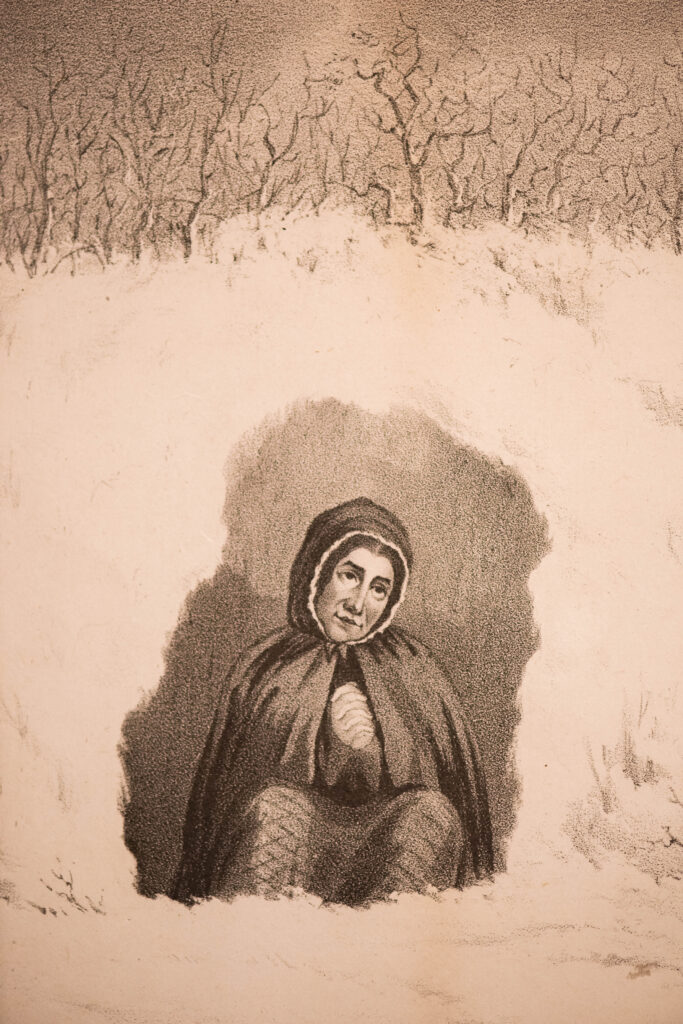
As if in a dream she heard the church bells ringing and the sounds of people moving around her, but she could not see, for an igloo of snow had built itself above and around her in the night. She tried in vain to call out to them, but had no voice and felt so weak.
Days went past, marked only by the ringing bells and a faint glow of sun through Elizabeth’s pale white prison, and Elizabeth lapped at the melting snow to quench her thirst, and sipped sparingly at the brandy in her flask for strength. Only on the fourth day did she find buried deep in her pockets some hazelnuts and a nutcracker she had bought for her husband in the market. This nutcracker perhaps saved her life, for with the food between her lips, she regained some strength.
Tearing a piece of her bright red handkerchief, Elizabeth tied it to a twig and pushed it through the roof of her snowy tomb. The effort proved too much for her, however, and she sank back down to sleep. But this exertion was not in vain, for a man named William Muncey, passing through the common, spied the flash of red and called over his friend John Sittle to investigate. The two men called out, “Are you there, Elizabeth Woodcock?”
In a weak voice came the response, “Yes. I am here; and is it you, John Sittle, whose voice I hear? For pity’s sake get me out of here.”
The men dug her out and Elizabeth’s ordeal was done. Eight days and nights had passed while she was stuck beneath the snow, and only her careful rationing of brandy and the chance finding of the hazelnuts and nutcracker kept her going.
John Sittle always maintained that he knew Elizabeth was close at hand and would be saved. “If it is indeed Mrs Woodcock,” he said, “it must be part of the dream I had last night, for I dreamed that I should find a hare today.”
Written by Alex Horn, Museum of Cambridge
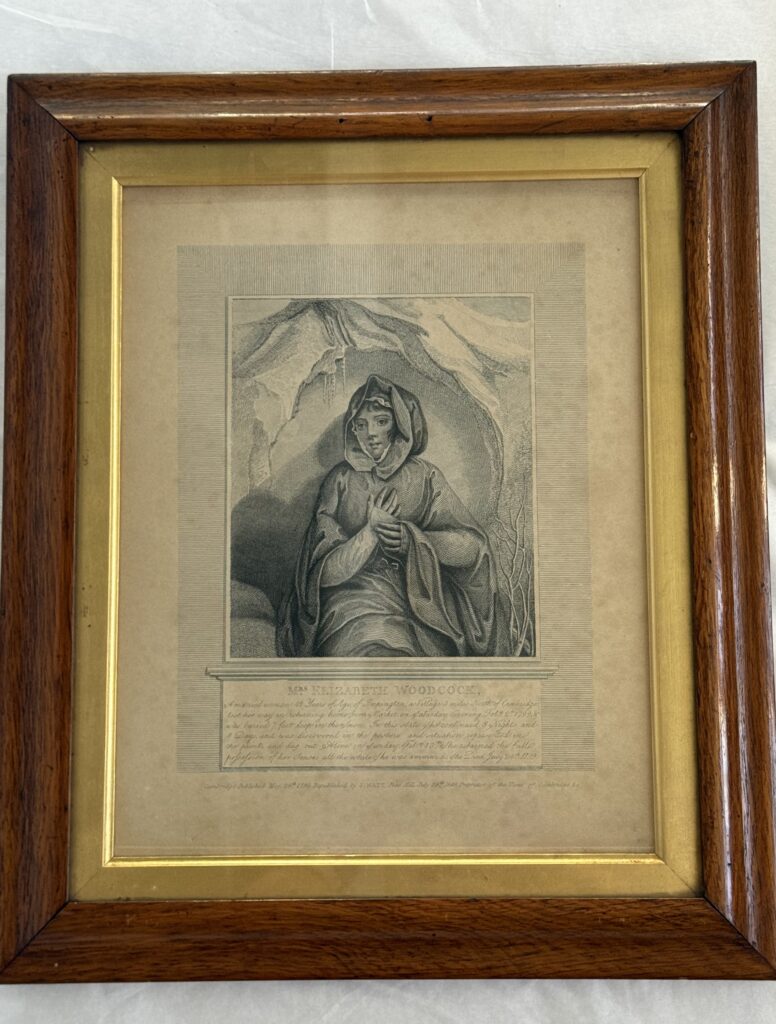
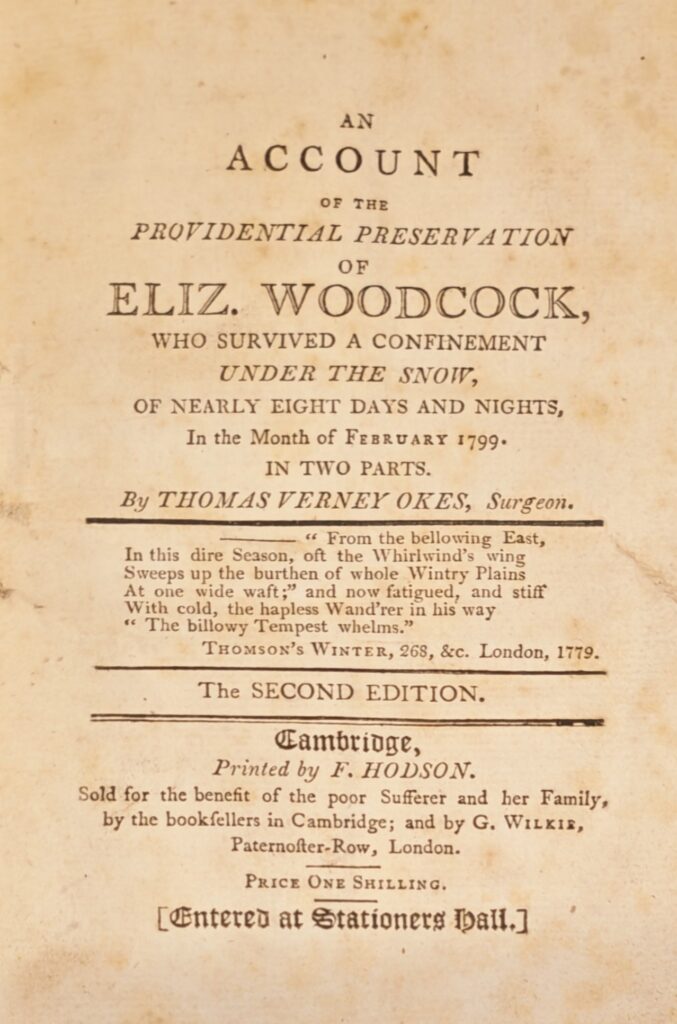
Despite sounding like an unbelievable story, the Museum of Cambridge holds a number of objects relating to Elizabeth Woodcock, a real Cambridgeshire resident who really did survive for eight days in the snow. Among these are the very nutcrackers that are alleged to have sustained her during her ordeal, as well as an account of her condition written by her doctor.