
Calendar Customs
For people living outside towns and cities, a good harvest was essential. Seasonal customs reflected the changing year and the hope for a successful crop.
In summer, folk celebrated long days, warm nights and growing crops. Autumn marked the harvest and preparations for winter. During the dark, cold months, winter festivities brought communities together and offered relief from the harsh weather. Spring brought renewed optimism, with May Day and Easter celebrating new life and the next growing season.
Music, dance, theatre and games helped communities celebrate together and pass traditions from one generation to the next. Across Cambridgeshire, towns and villages developed their own customs, creating a sense of belonging and connecting generations.
Molly dancing, an East Anglian form of Morris dancing, was traditionally performed around Boxing Day and Plough Monday. In Whittlesea, people celebrated the day after Plough Monday by parading the Straw Bear through the streets – a ploughman dressed in a costume made from straw. Whittlesea still has a Straw Bear festival to this day!
Mummers’ plays, – comic folk dramas based on traditional stories – entertained local audiences. Camp Ball, a form of folk football, was played by villagers, often on Shrove Tuesday. At the end of the harvest, a Harvest Queen could be chosen to oversee gleaning (the gathering of crops left in the fields.)
Object labels
- Two wooden swords used in a mummers’ play in Hampshire, 1895. Folklore Society Collection, CAMFK:417.88
- Hat, part of a costume used in a mummers’ play in Hampshire, 1895. CAMFK:418.88
Object Images
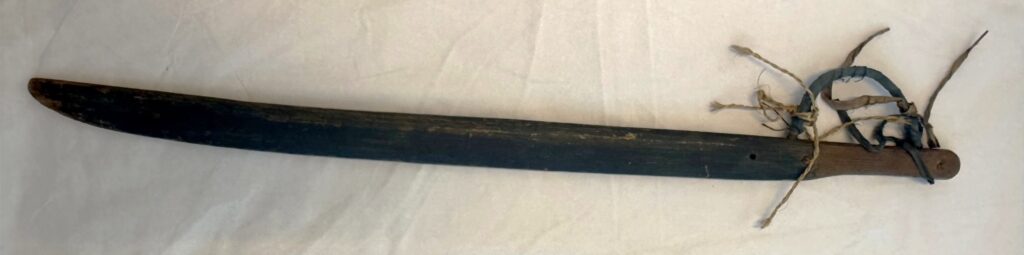
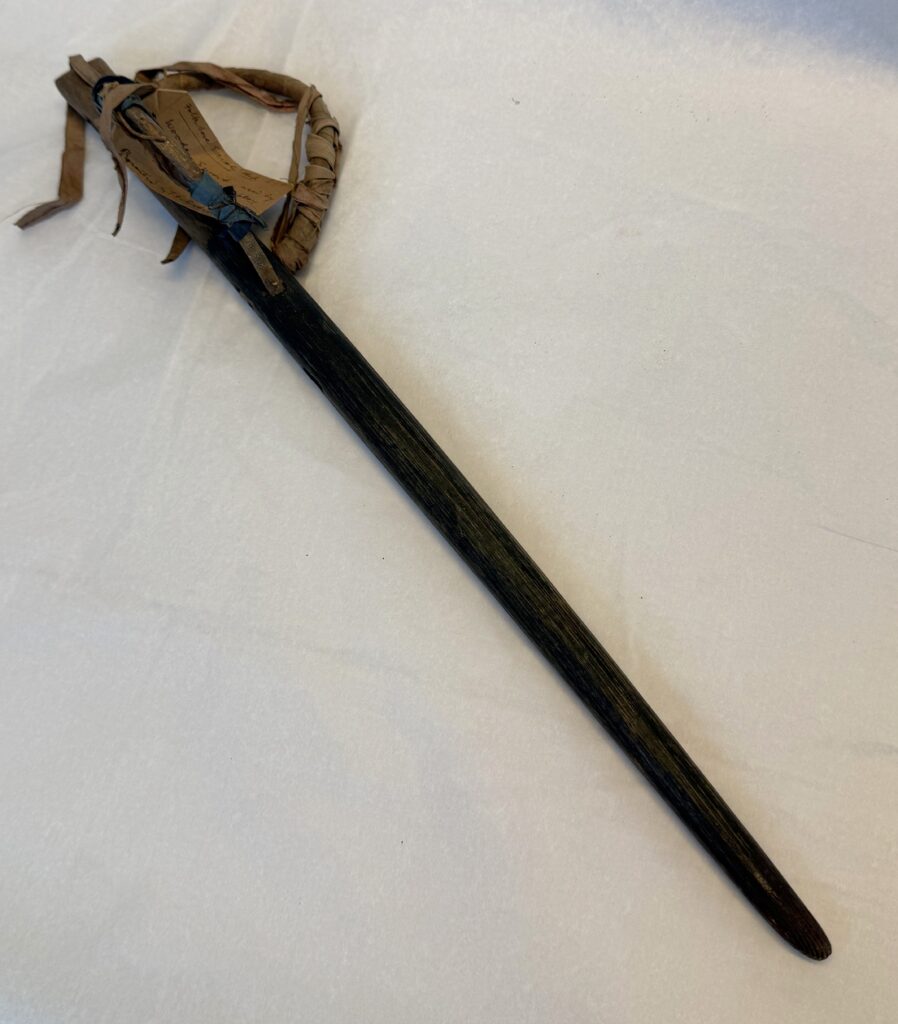
1. Two wooden swords used in a mummers’ play in Hampshire, 1895. Folklore Society Collection, CAMFK:417.88
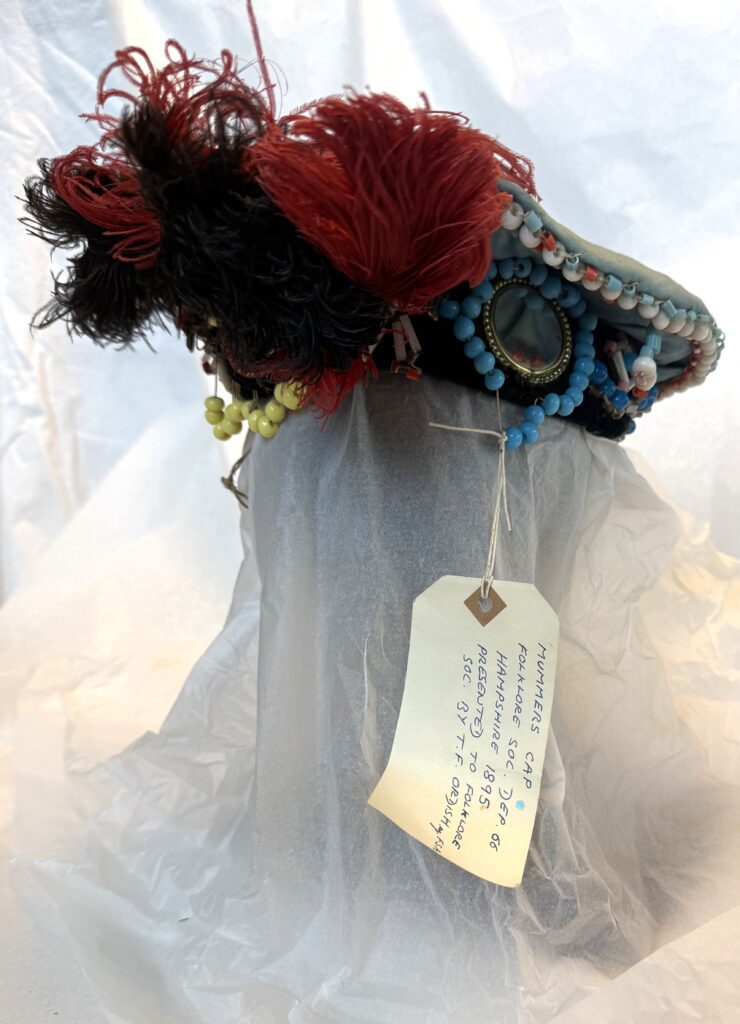
2. Hat, part of a costume used in a mummers’ play in Hampshire, 1895. CAMFK:418.88
More information
Bonus object:
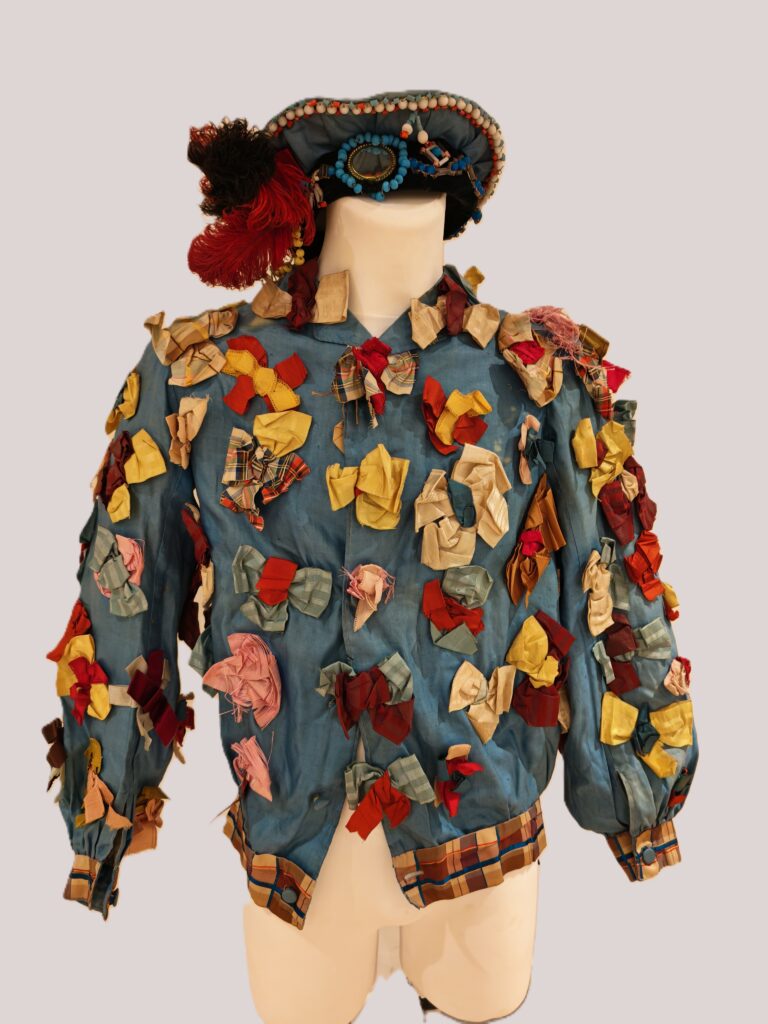
Costume used in a mummers’ play in Hampshire, presented to the Folklore Society by renowned folklorist Thomas Fairman Ordish (1855-1924), 1895. CAMFK:418.88
See more: