
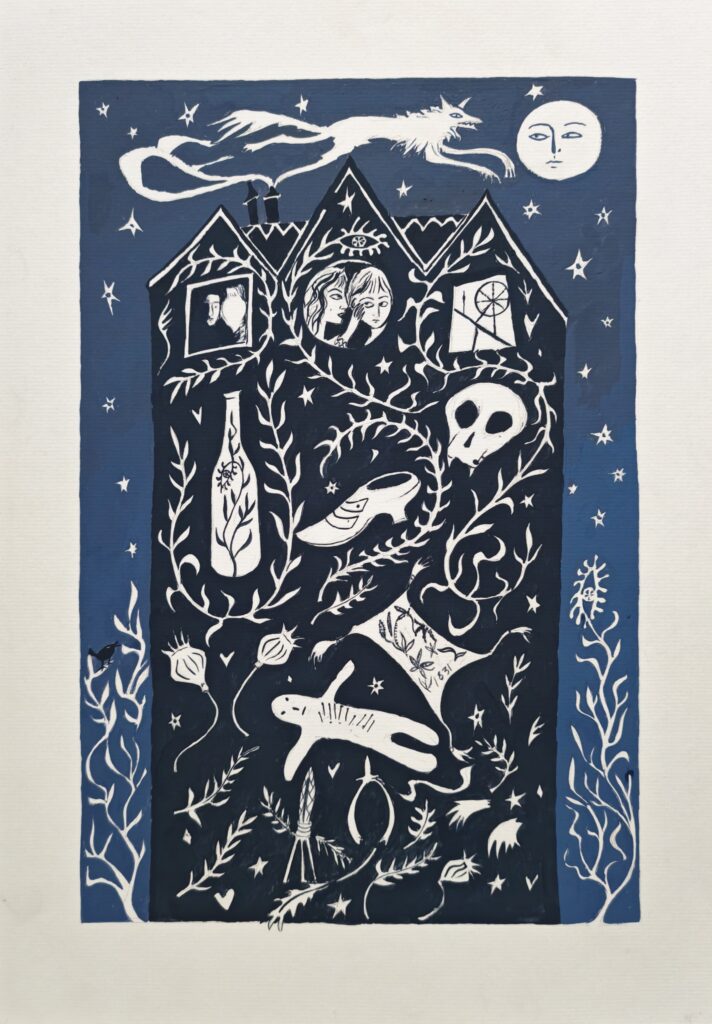
Liminal, Zoe Ansari, 2023, Gouache on Board, Cambridge. An original piece for Folklore at the Museum of Cambridge. Copyright: Museum of Cambridge.
About this exhibition
Folklore means many different things to many different people. Broadly, it encompasses the beliefs, customs and stories of a community. People across the globe have their own distinctive folklore, shaped by their particular landscapes, experiences and circumstances. Yet decades of research by folklorists – researchers who study folklore and the ways it is shared and transmitted – also shows us how stories and traditions travel with people. Tales and practices can be recognised across different communities, but are reshaped by the circumstances and landscapes in which they take root.
Drawing on our collection of British folklore, collected by eminent folklorist and former Museum Curator Enid Porter (1908-1984), this exhibition brings together beliefs, practices, stories and customs from across Britain. Alongside traditions found throughout the country, it explores folklore specific to East Anglia and Cambridgeshire.
Here, we consider folklore as the stories, beliefs and material culture that develop within communities over time. We explore how people in East Anglia responded to, and made sense of, the often isolated and challenging Fen landscape. Or, as Porter herself once said:
“[Folklore is] everything to do with the way of life of the people: the tools they used, the clothes they wore, the things they believed in.”