
The Life Cycle
Folkloric customs and practices were part of everyday life, helping people navigate the uncertainties of the world around them. For those living centuries ago, disease, poverty and harsh conditions were a constant reality. Superstition and ritual could offer comfort and a sense of control when faced with the unknown.
Customs surrounding birth, love and death marked some of the most important stages of life. These could be times of great joy, but also uncertainty and heartache. Tokens, rituals and charms were used to bring luck, happiness and protection.
Customs around mortality and burial helped families mourn their loved ones and find a sense of closure. Death was more commonplace than it is today, and in the face of this many looked for signs and omens. A candle that suddenly spluttered and went out could signal an approaching fatality, while hearing the first cuckoo of the year was thought to foretell illness or death. Colour remaining in the cheeks of a corpse suggested another demise was soon to follow.
But omens were not always about death. People also looked for signs of good fortune. A baby born on a Sunday was said to grow ‘Blithe, bonny, good and gay’. For newlywed East Anglian couples, seeing a soot-covered chimney sweep as they left the church was considered especially lucky.
Some even tried to take fate into their own hands, using tokens, potions and rituals. At weddings, the Best Man might pay a local chimney sweep to appear and bring good luck.
Folkloric beliefs offered signs to look out for and perhaps reassurance about what might come next.
Object labels
- A ‘caul’ mounted on brown paper, CAMFK:143.61
A caul is a piece of the amniotic sac that remains over a newborn’s head after birth. This rare occurrence was once considered a sign of good fortune. Cauls were preserved and given to soldiers and sailors to protect them from harm during wartime. This example was donated to the museum by folklorist W. H. Barrett in 1961. Barrett himself was ‘born in the caul’. - Maternity Pincushion with the message ‘Thou spotless gift, from reeling above, Welcome here sweet pledge of love.’ CAMFK:H010.81
Pincushions were useful gifts given to new mothers after the birth of their child. Pins were used to decorate the cushions, spelling out names and phrases. However, according to tradition, the cushion should only be given after the birth. Otherwise, it was believed to tempt fate and risk a difficult birth for the mother. As the saying goes, ‘For every pin a pain’. - Harvest token or countryman’s favour made from corn. NN
Made from three ears of corn, two of these tokens would be created by a young man hoping to court a young woman. A subtle way of proposing courtship, the young man would pin one token to the left side of his chest and present the other to his sweetheart at church on a Sunday morning.
If, by the following week, the woman was wearing the token on her right side, he had been rejected. However, if she wore it on her left side, she had reciprocated his interest. - Harvest mouse bread made from the last sheaf of the harvest, c. 1919. Folklore Society Collection, CAMFK:429.88
This mouse-shaped piece of baked bread is an example of a ‘Good Friday loaf’. It was customary in Cambridgeshire to bake a very dry loaf of bread on Good Friday and keep it for the rest of the year. If the loaf remained free from mould, it was believed to ensure that the family would be free from want and hunger. If it stayed mould-free, it would be soaked and re-baked on Easter Sunday the following year. It was even said to be good for indigestion. - Dragon’s blood love potion. Folklore Society Collection, CAMFK:437.88
This potion was made using a red powder known as ‘dragon’s blood’, obtained from the fruit of the Calamus draco plant. Lovelorn young people in Cambridgeshire could ask the local wise woman for a potion to improve their appearance and attract a partner. A pinch of dragon’s blood in a cup of tea was said to do the trick. Fortunately, no dragons were harmed in the process! - St Bridget’s cross. Folklore Society Collection, CAMFK:431.88
A more common form of corn dolly, made from the last sheaf of the harvest each year. - Corn maiden or ‘Cailleach’, c. 1895, Scotland. Folklore Society Collection, CAMFK:428.88
This is a more elaborate version of a corn dolly, which is usually a small decorative favour. This example represents the Cailleach, a figure from Gaelic mythology associated with a divine hag or Queen of Winter.
Corn dollies were made from the last sheaf of the crop at the end of the harvest. The corn maiden was believed to invoke the Corn Spirit to ensure a prosperous harvest the following year. - Two chicken wishbones or ‘marriage bones’, 1895, Islay, Argyllshire. Folklore Society Collection, NN
It was a Fen custom for young couples, shortly before marriage, to give a chicken to the local wise woman, who would cook and eat it. She would then return the wishbone, tied with a length of red wool. The bride would keep it under her pillow. When the couple had children, the red wool would be tied around the baby’s ankle as a preventative against rickets. - Burial veil worn by an unmarried woman at a girl’s funeral, nineteenth century, made from starched muslin or gauze. Folklore Society Collection, CAMFK:427.88
Black is traditionally worn at funerals to symbolise the solemnity of the occasion. However, in East Anglia and beyond, white was sometimes worn at children’s funerals to symbolise innocence. When a young girl died, her friends would sometimes accompany her coffin, all dressed in white.
This veil is reported to have been worn by an unmarried woman at a young girl’s funeral. White symbolised the innocence of both the deceased and the mourner. - Two photographs of a Fen funeral party, c 1906. CAMFK:371.75.
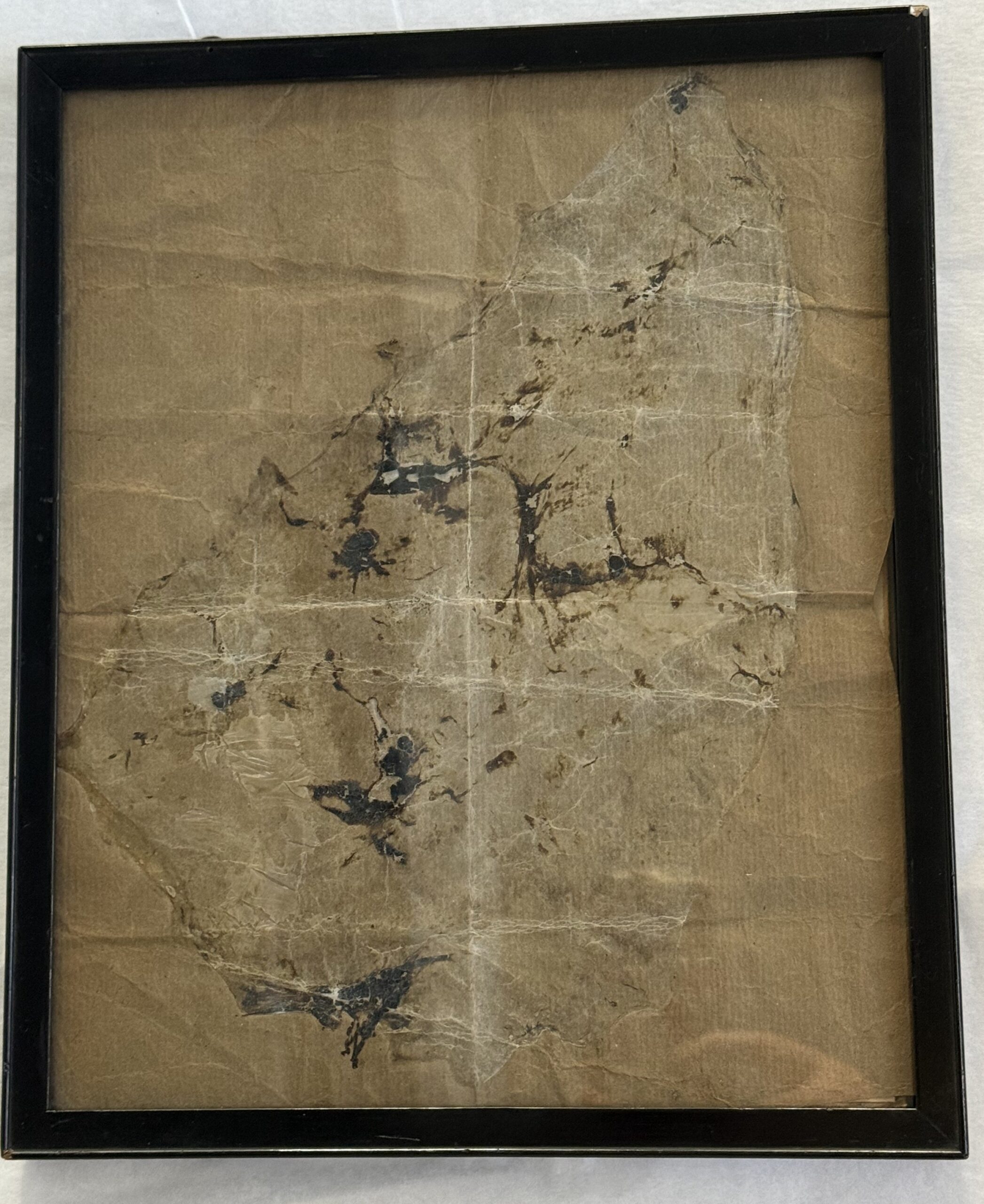
1. A ‘caul’ mounted on brown paper, CAMFK:143.61 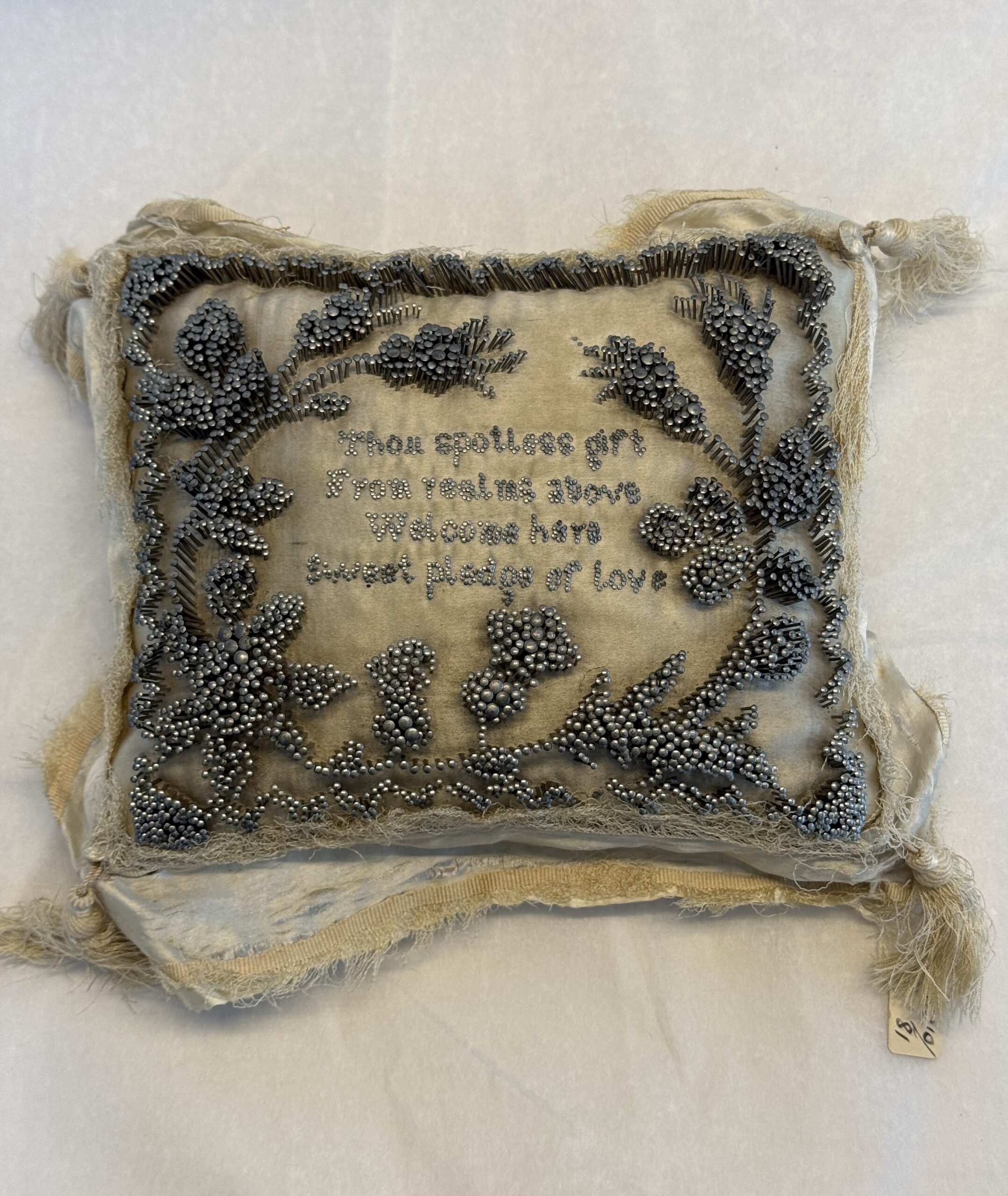
2. Maternity Pincushion with the message ‘Thou spotless gift, from reeling above, Welcome here sweet pledge of love.’ CAMFK:H010.81 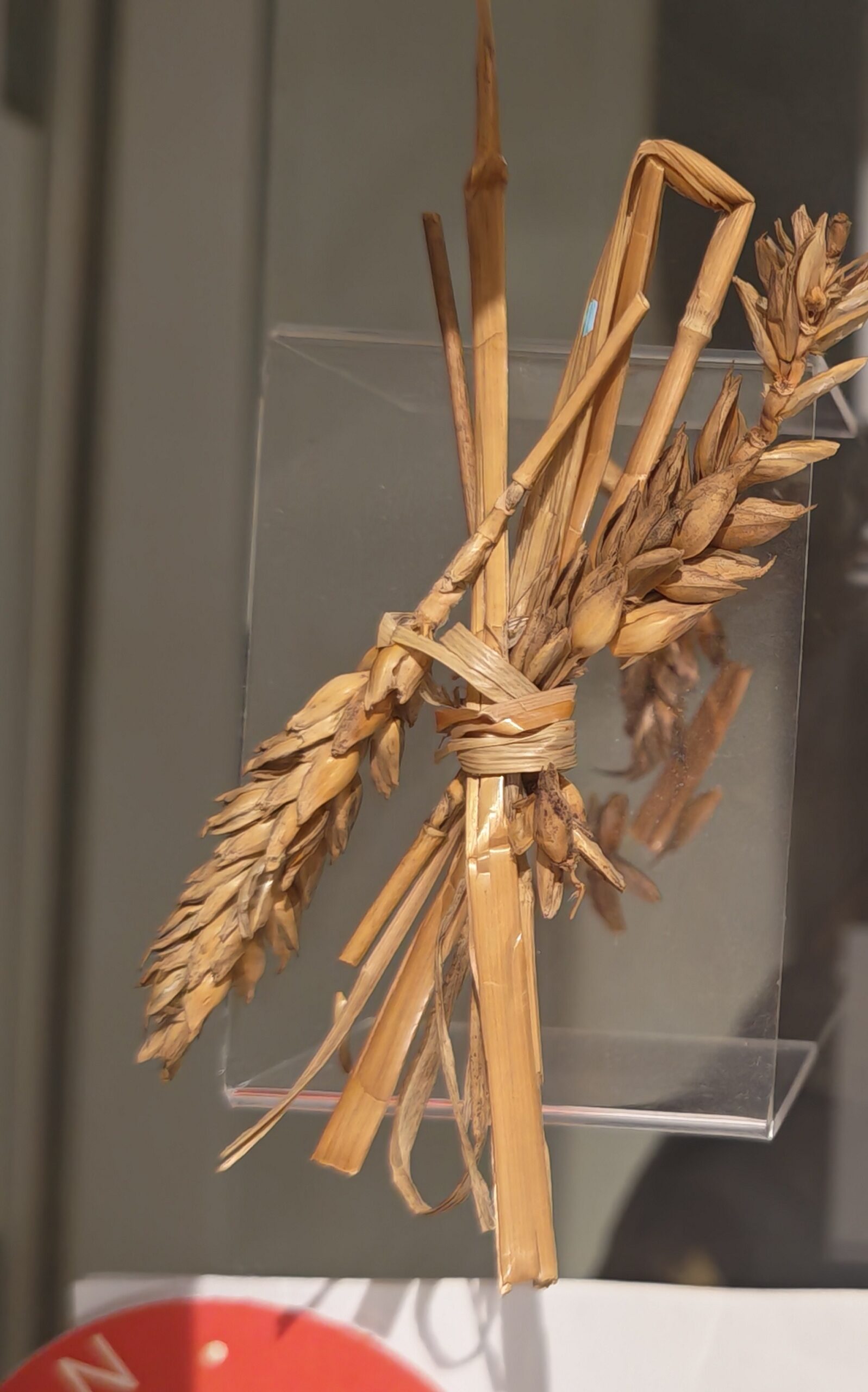
3. Harvest token or countryman’s favour made from corn. NN 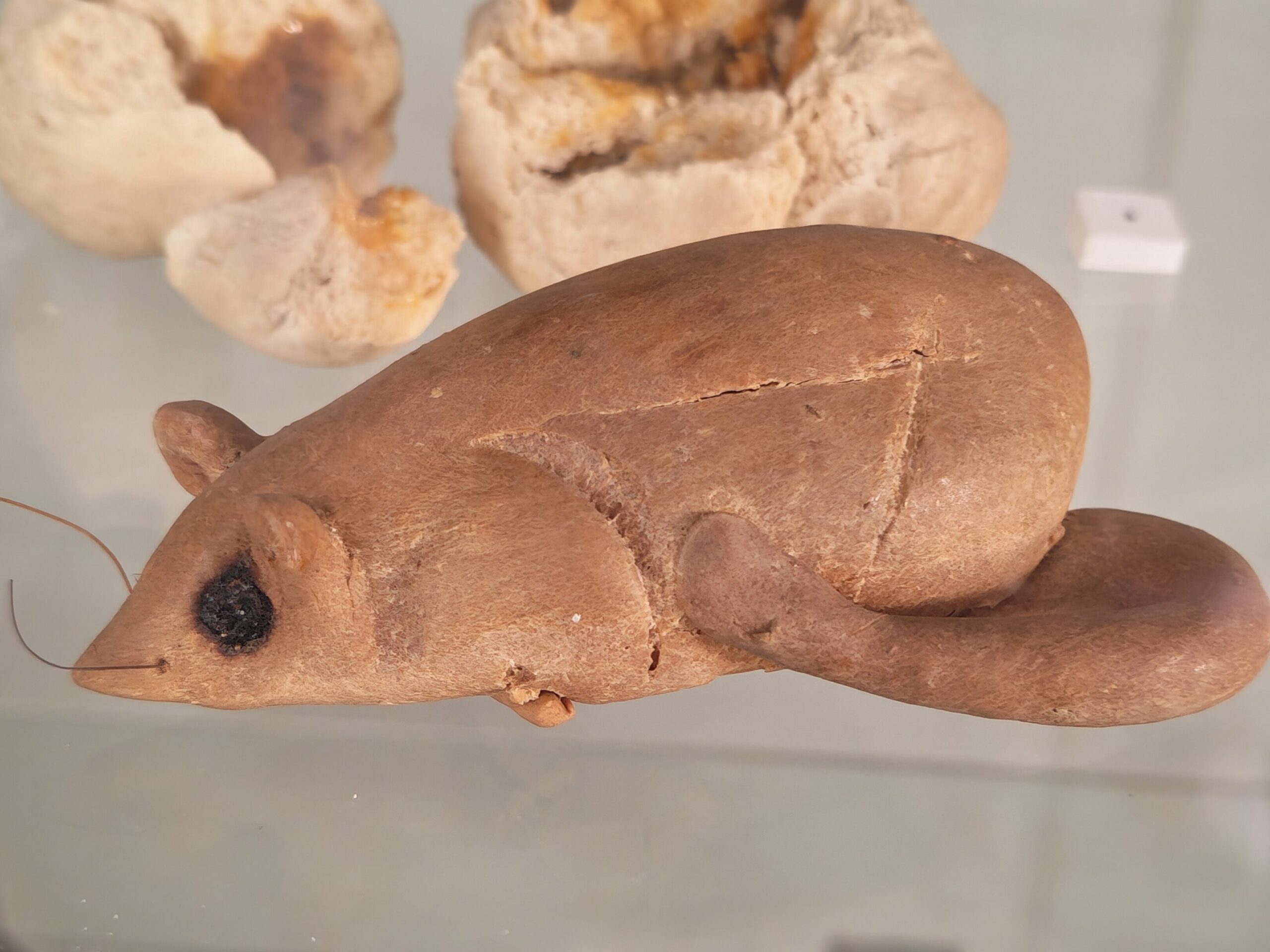
4. Harvest mouse bread made from the last sheaf of the harvest, c. 1919. Folklore Society Collection, CAMFK:429.88 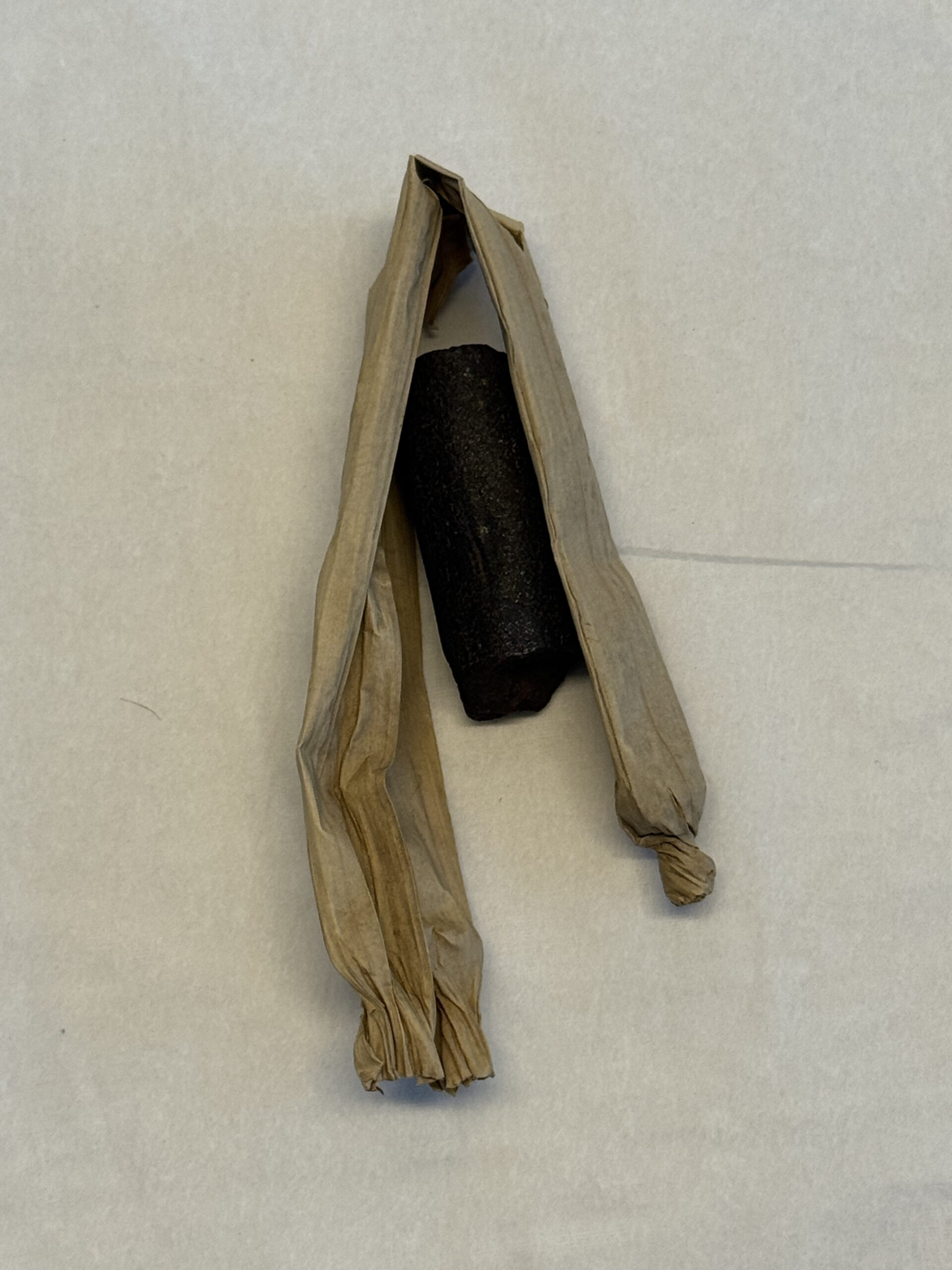
5. Dragon’s blood love potion. Folklore Society Collection, CAMFK:437.88 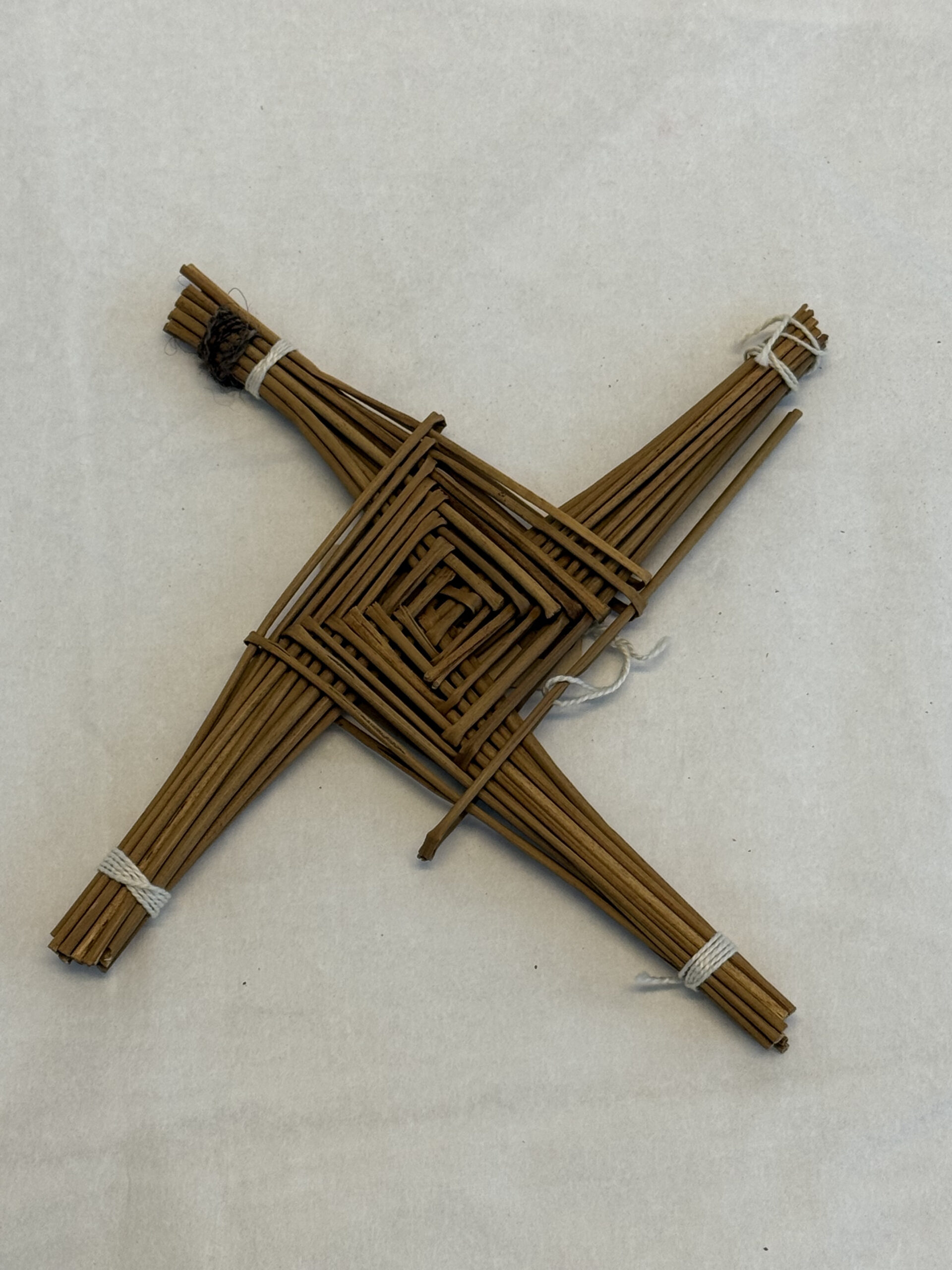
6. St Bridget’s cross. Folklore Society Collection, CAMFK:431.88 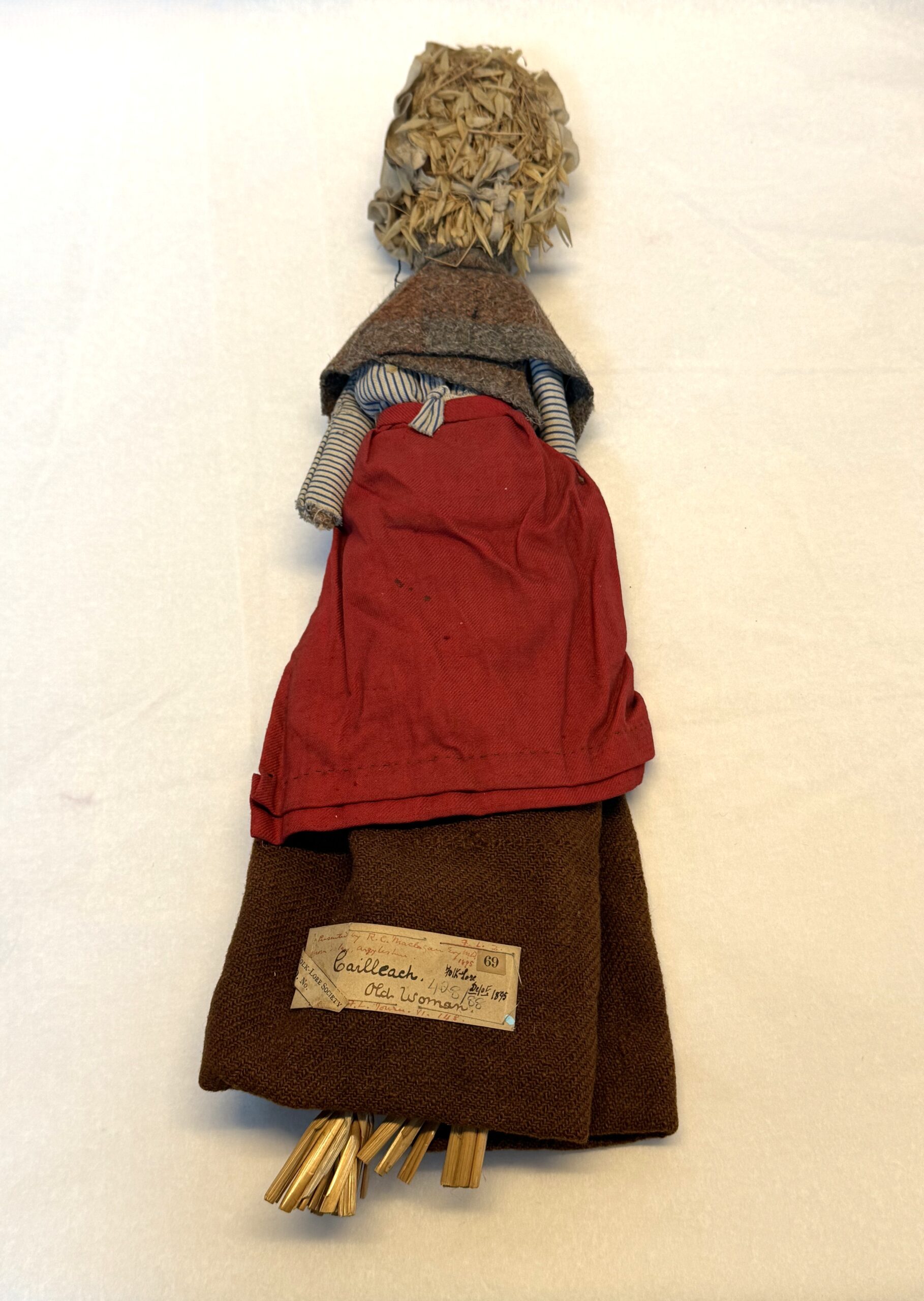
7. Corn maiden or ‘Cailleach’, c. 1895, Scotland. Folklore Society Collection, CAMFK:428.88 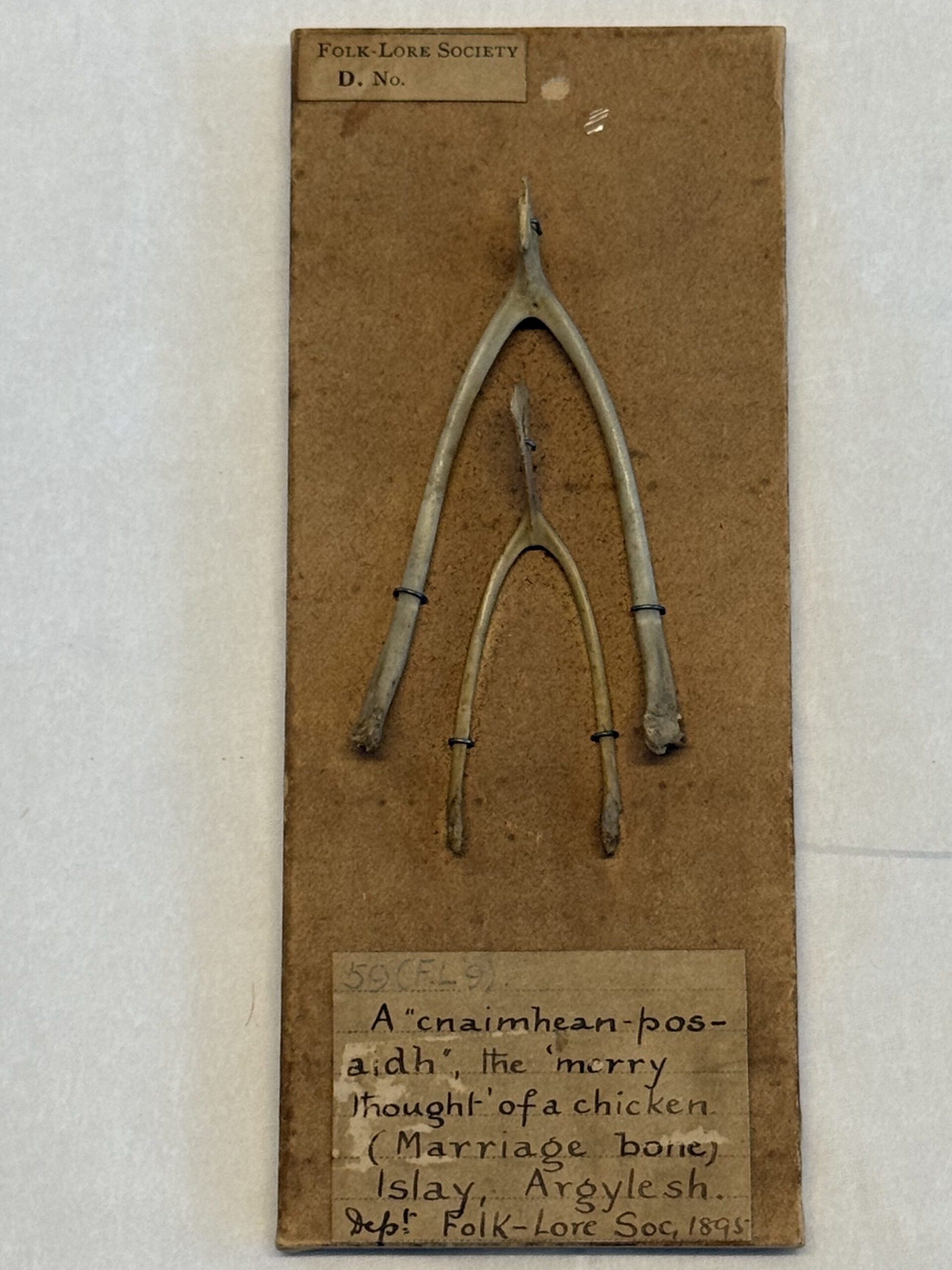
8. Two chicken wishbones or ‘marriage bones’, 1895, Islay, Argyllshire. Folklore Society Collection, NN 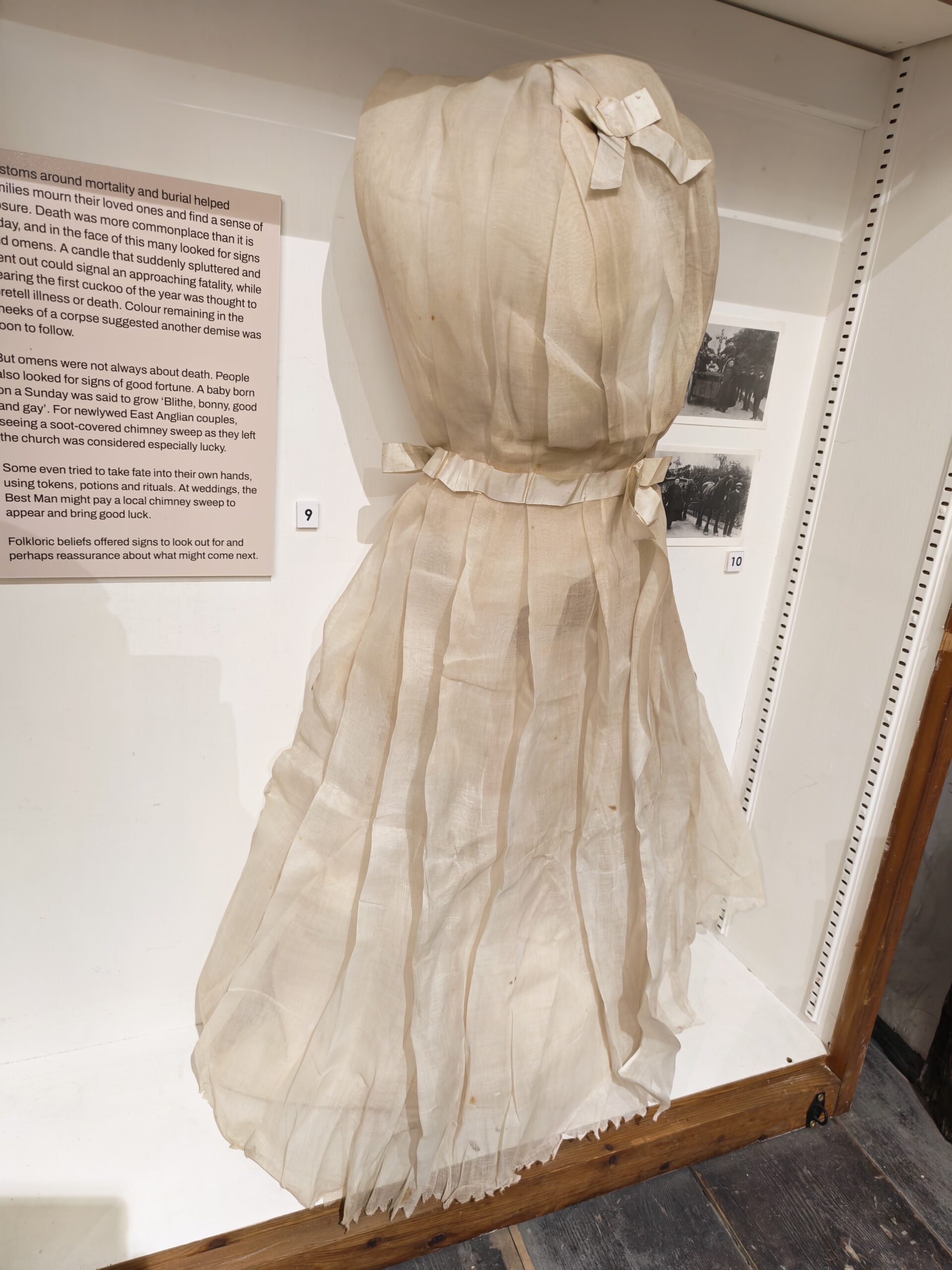
9. Burial veil worn by an unmarried woman at a girl’s funeral, nineteenth century, made from starched muslin or gauze. Folklore Society Collection, CAMFK:427.88 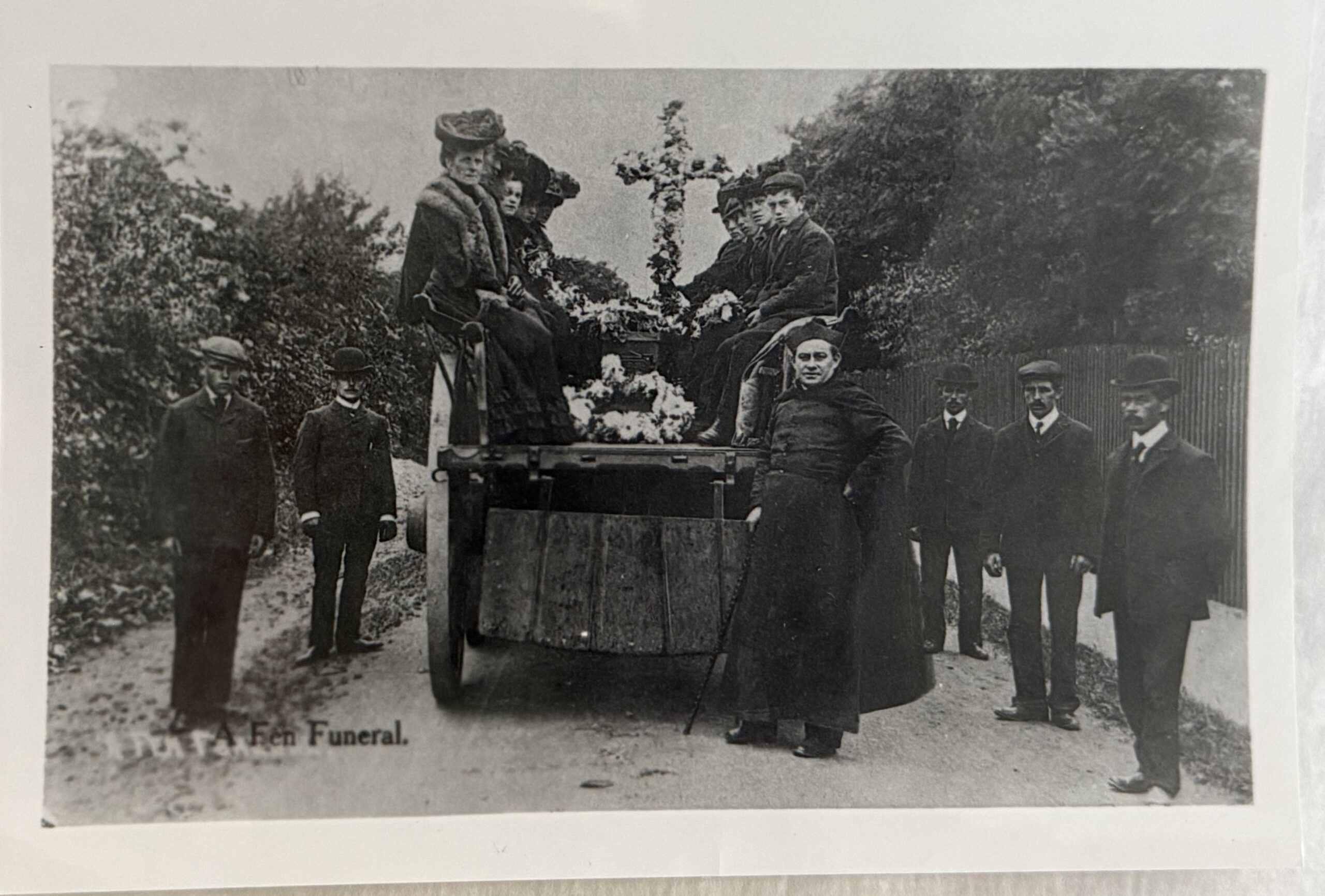
10. Two photographs of a Fen funeral party, c 1906. CAMFK:371.75. 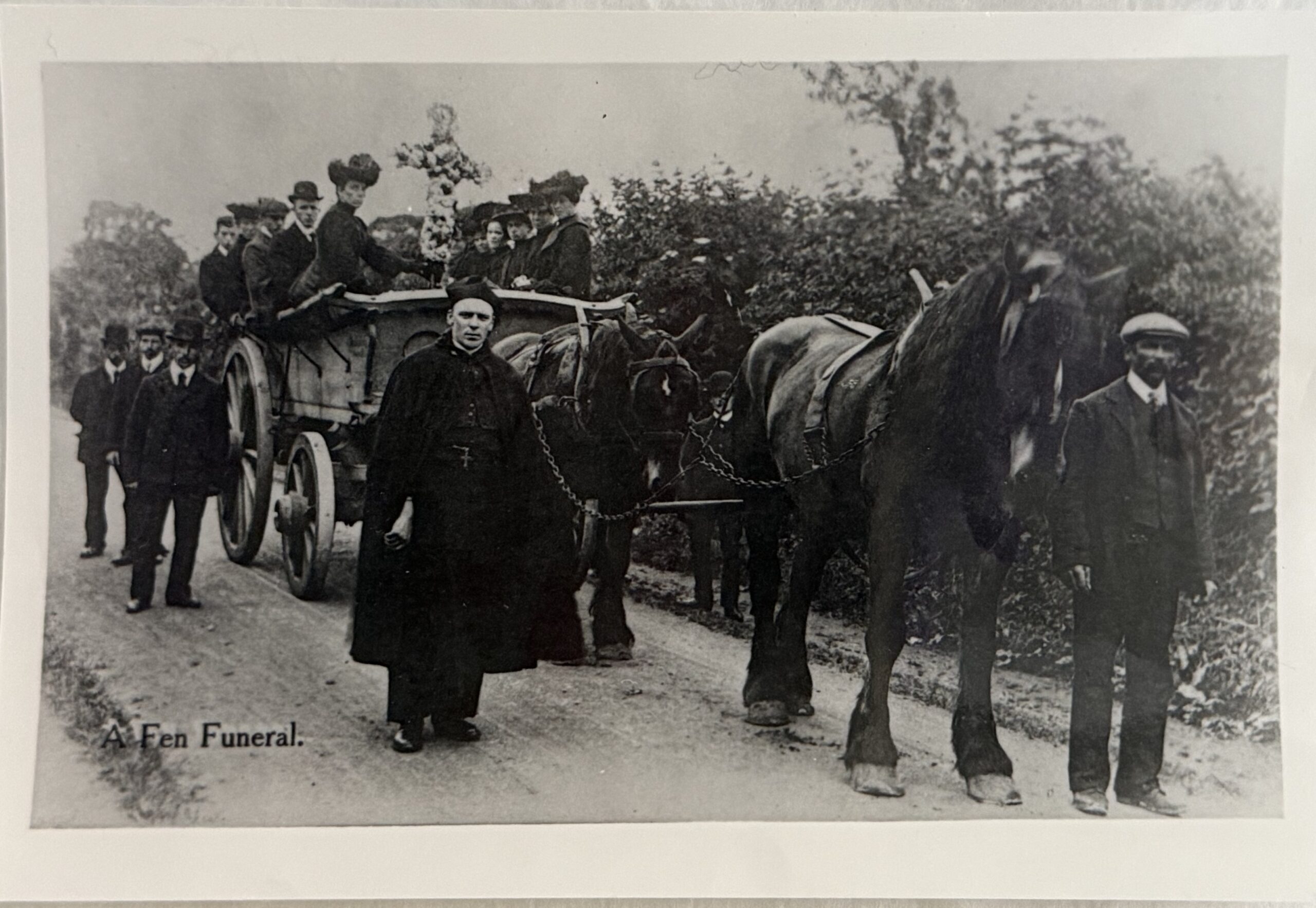
10. Two photographs of a Fen funeral party, c 1906. CAMFK:371.75.
Blog posts on this theme
Writing for the Museum of Cambridge blog, Dr Helen Frisby, explains how ‘rites of passage’ are still as relevant in the 21st century.
Why birth, marriage and death rituals are still important.
Written by Dr Helen Frisby author of Traditions of Death and Burial and Hon. Secretary of The Folklore Society.
Birth, marriage and death rituals remain important in 21st-century Britain because they mark significant moments in people’s lives. Although society has become more modern, diverse and secular, these events continue to provide opportunities for families and communities to come together, celebrate, show support and express their beliefs. These rituals are often described as rites of passage because they mark a transition from one stage of life to another. They can provide a sense of identity, belonging and emotional support.
Birth rituals are important because they welcome a new life into the world. For example, Christian families may arrange a baptism or christening, where a child is welcomed into the Christian faith and promises are made by parents and godparents to support the child’s religious upbringing. Other families may choose a non-religious naming ceremony to celebrate the birth of their child. In some Muslim families, the birth of a baby is marked by the Aqiqah ceremony, which may involve naming the child, shaving the baby’s hair and giving to charity. These rituals allow parents to celebrate their child and introduce them to family and friends. They can also express religious beliefs, cultural traditions and hopes for the child’s future. In modern Britain, birth rituals help create a sense of belonging and strengthen relationships between family members and the wider community.
Meanwhile, marriage rituals remain significant because they celebrate the commitment between two people. Weddings may take place in a church, registry office or another suitable venue. Some couples follow traditional religious customs, while others prefer non-religious ceremonies. For example, a Christian wedding usually takes place in a church, where the couple exchange vows and rings before God and their guests. A Hindu wedding may include the Saptapadi, in which the couple take seven steps together as part of their marriage ceremony. Other couples may choose a civil wedding, focusing on their personal promises and commitment to one another without religious elements. Marriage rituals allow couples to publicly declare their love and commitment in front of the people who are important to them. They also bring families and friends together, helping to strengthen relationships and create lasting memories. Furthermore, weddings can preserve cultural traditions and allow opportunities for family and friends to get together. Even as attitudes towards marriage change, many people still value the opportunity to celebrate their relationship through a meaningful ceremony.
Finally, death rituals are important because they help people cope with grief and remember someone who has died. Funerals, memorial services and celebrations of life give family and friends an opportunity to express their sadness and support to one another. Religious funerals often reflect beliefs about life after death. For example, a Christian funeral may include hymns, prayers and Bible readings, offering hope and comfort to mourners. In Islam and Judaism, the deceased is usually buried as soon as possible, and funeral prayers are offered as part of the religious tradition. Meanwhile non-religious funerals may instead focus on the person’s achievements, personality, favourite music and important memories. For example, family members might share stories about the person’s life or display photographs to celebrate their achievements. Whether secular or religious, rituals can help people accept their loss and begin the grieving process. They also ensure that the deceased person’s life is acknowledged and remembered by their community.
In conclusion, birth, marriage and death rituals continue to play an important role in 21st-century Britain. Even though traditions are always changing, and nowadays people have more freedom to choose how they mark these events, rituals still provide emotional support, bring communities together and give meaning to major life changes. They connect people to their families, cultures and beliefs, while helping individuals and communities recognise important transitions. Therefore, rites of passage, whether religious, cultural or entirely personal, remain valuable in modern British society.
See more: