
Home, Safe Home
Safety alarms, guard dogs and security cameras: we have always found ways to protect our homes from danger. Today, we might fear intruders, but how did the people of the past protect their homes from magic and evil? For centuries, belief in magic and witchcraft was widespread.
During renovations of older buildings, particularly those dating from the 16th century, objects – and sometimes even animals – are often found deliberately hidden within walls, floors and chimneys.
Shoes, mummified animals and ‘witch bottles’ are among the objects believed to have been hidden to ward off evil, bring good luck or protect the home. We have little conclusive proof of exactly why people hid these objects, or how these practices became so widespread.
This is the beauty and mystery of folklore: we often have the evidence, but cannot trace the explanation.
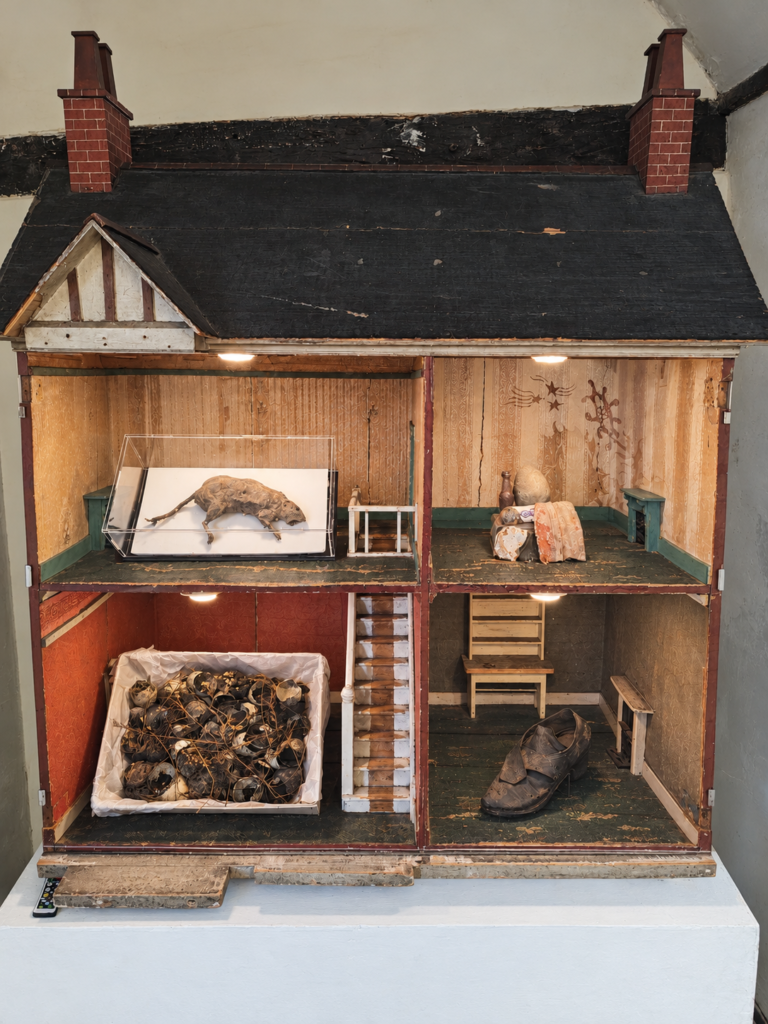
Object labels
- Elizabethan shoe buried beneath the stairs of Swavesey Manor as a protective charm. Folklore Society Collection, CAMFK:44.2006
Concealed shoes have been found across England and beyond, but they are particularly prevalent in East Anglia. They are believed to have protected homes against evil influences. Some scholars suggest that shoes protected homeowners from witches by attracting them with their human scent and trapping them inside. - Good luck hoard made from blackened eggshells, grass and leaves. Found during the renovation of a house in Linton. CAMFK:125.89
At first glance, a collection of eggshells among dried grass and leaves might appear to be the former nest of a bird that has long since flown away. However, closer inspection suggests that this hoard was deliberately placed. As eggshells symbolise new life, this may have been a charm intended to bring luck, prosperity or fertility rather than to ward off evil. - Mummified rat, NN
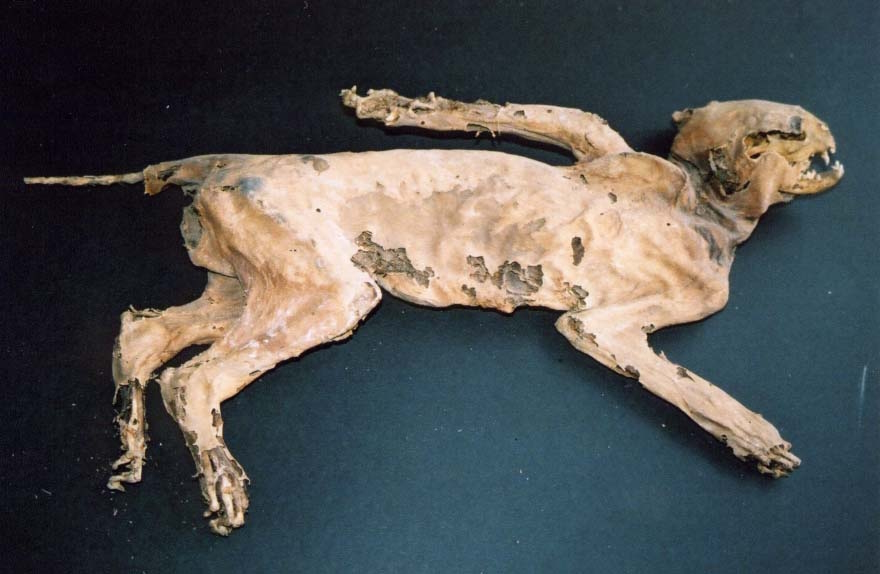
Mummified animals are another form of protective charm, placed in the walls or foundations of buildings. Mummified cats are the most common, possibly chosen because of their ability to catch rats and keep homes free of vermin.
The Museum of Cambridge has a mummified rat preserved in a similar way. Perhaps it was part of a similar ritual, or perhaps it was simply an unfortunate creature that entered a hole in the wall and never left! - Objects from a hoard found in a chimney at Corpus Christi College. CAMFK:412.9
Alongside the bottle, pottery, stones and coin shown here, this hoard also contained scraps of fabric, plaster, hair and hundreds of other pieces of pottery and glass. Its placement suggests that it was deliberately deposited as a protective charm, perhaps by a resident, builder or caretaker.
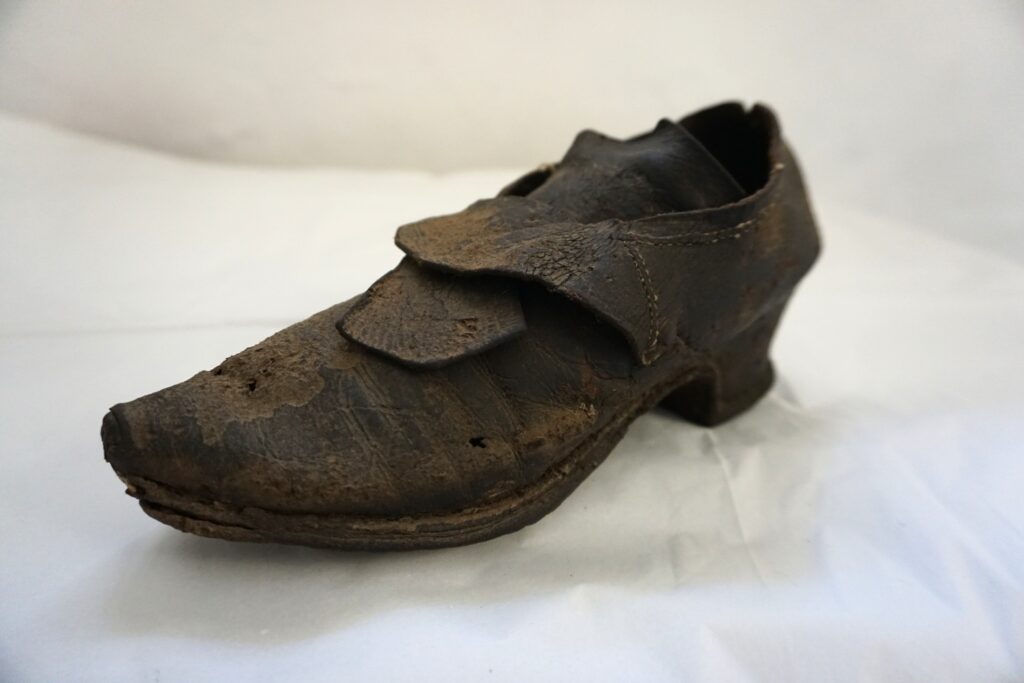
1. Elizabethan shoe buried beneath the stairs of Swavesey Manor as a protective charm. Folklore Society Collection, CAMFK:44.2006 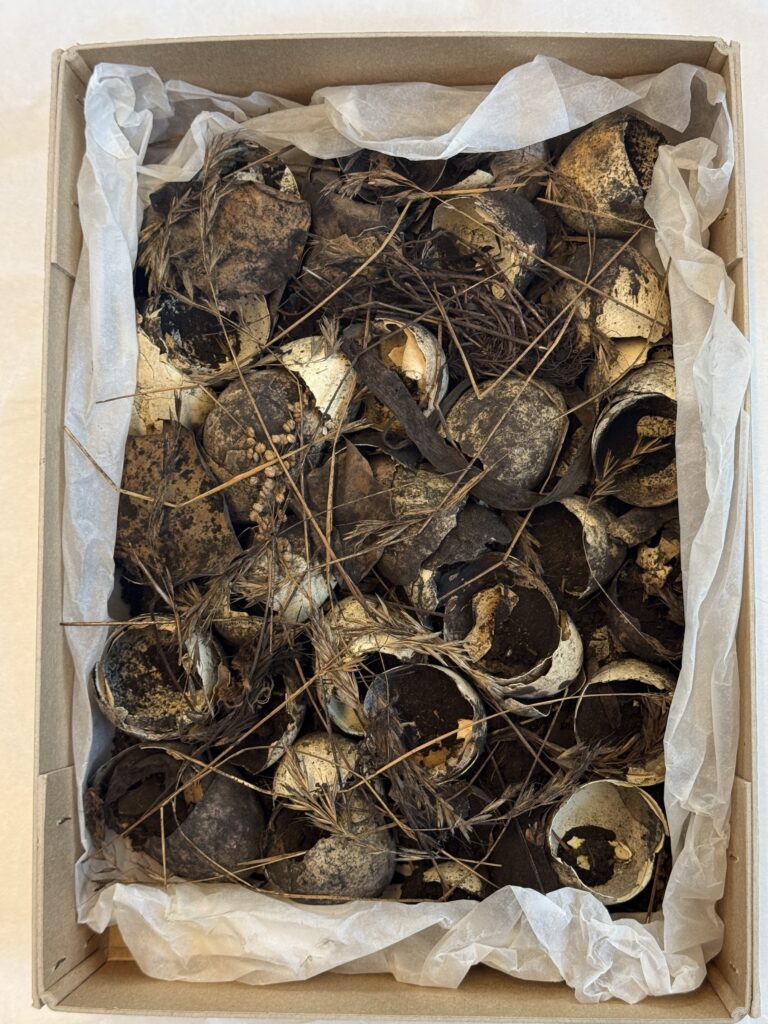
2. Good luck hoard made from blackened eggshells, grass and leaves. Found during the renovation of a house in Linton. CAMFK:125.89. 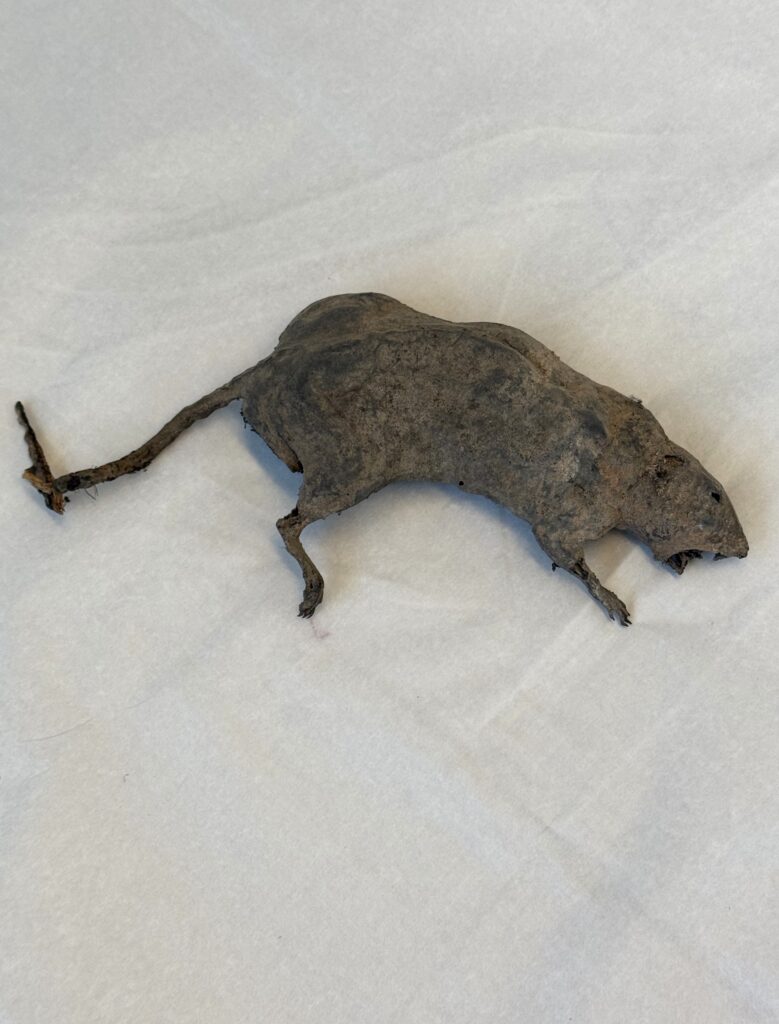
3. Mummified rat, No Number. 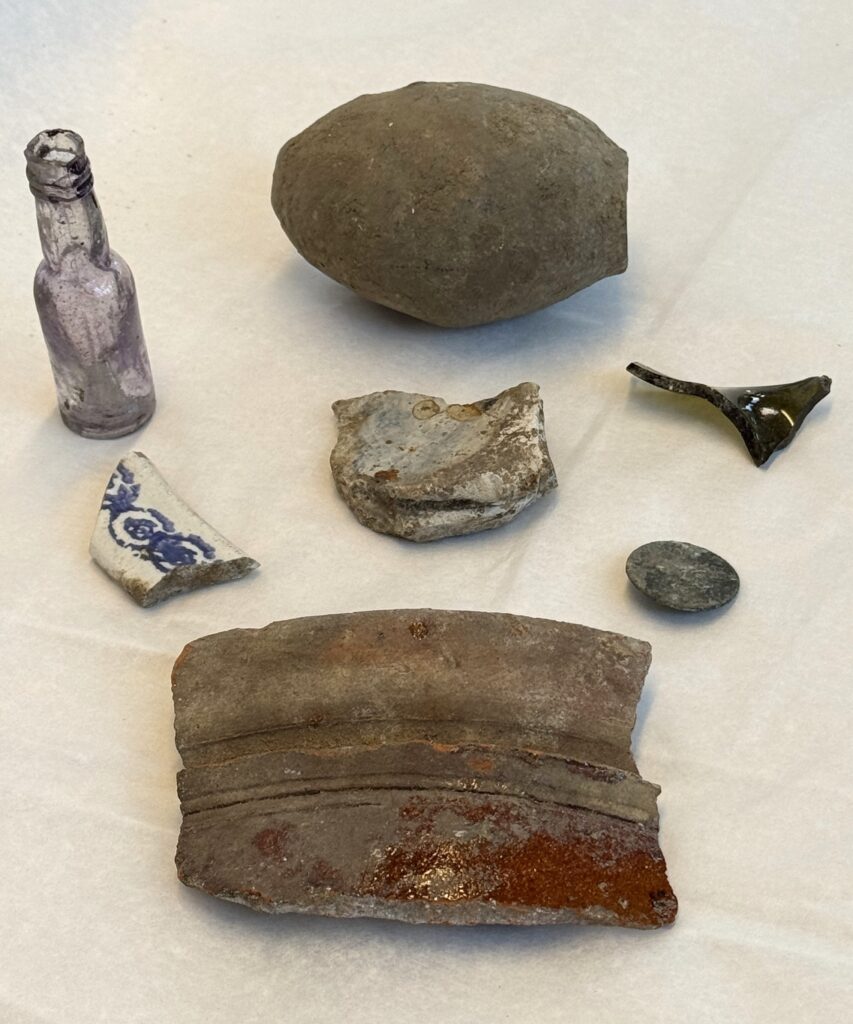
4. Objects from a hoard found in a chimney at Corpus Christi College. CAMFK:412.9. 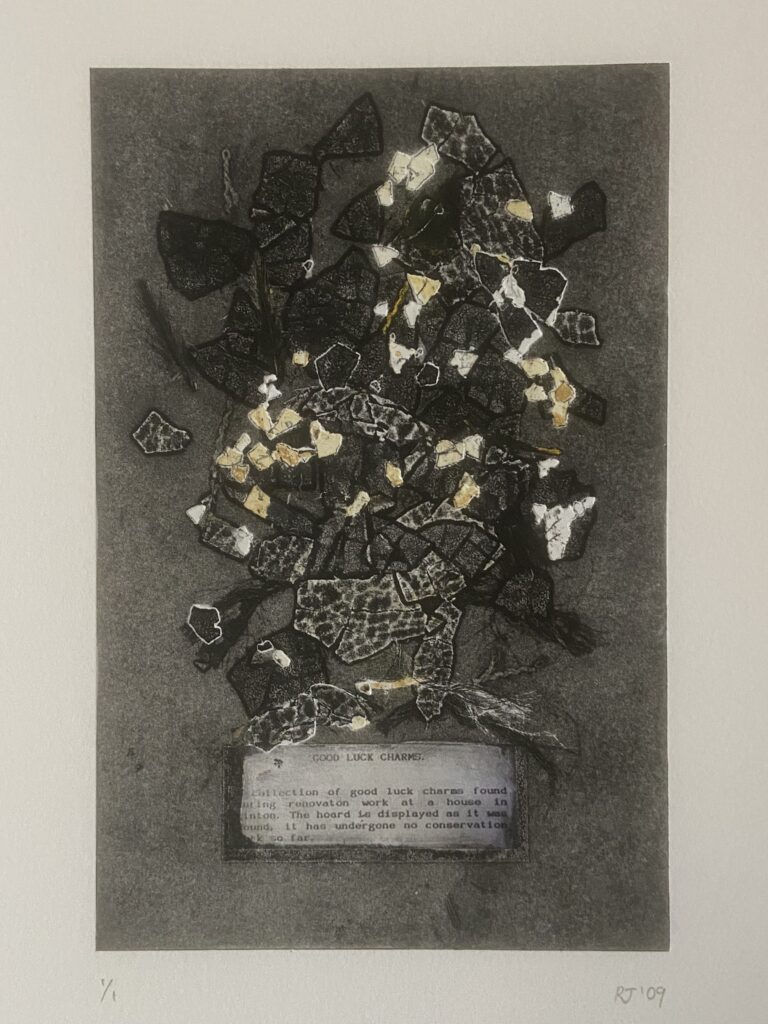
Good Luck Charms, mono print inspired by object number CAMFK:125.89 from the Museum of Cambridge’s folklore collection. Rebecca Jewell, 2009. CAMFK:2026.112.
Blog posts on this theme
Hear from an expert in all things Safeguards and Concealment, Brian Hoggard, researcher of folk magic and author in the subject writes for the Museum of Cambridge blog.
Magical Protection of Buildings
By Brian Hoggard – author of Magical House Protection: The Archaeology of Counter-Witchcraft
In the pre-modern world there was an ever present fear that harm could be caused by supernatural means. People felt that the influence of harmful witchcraft was nearby and there were dangers related to the night sky, ghosts, the faery and even ritual magic. In this hazardous environment a range of measures emerged which could, if deployed correctly, help people to stay safe.
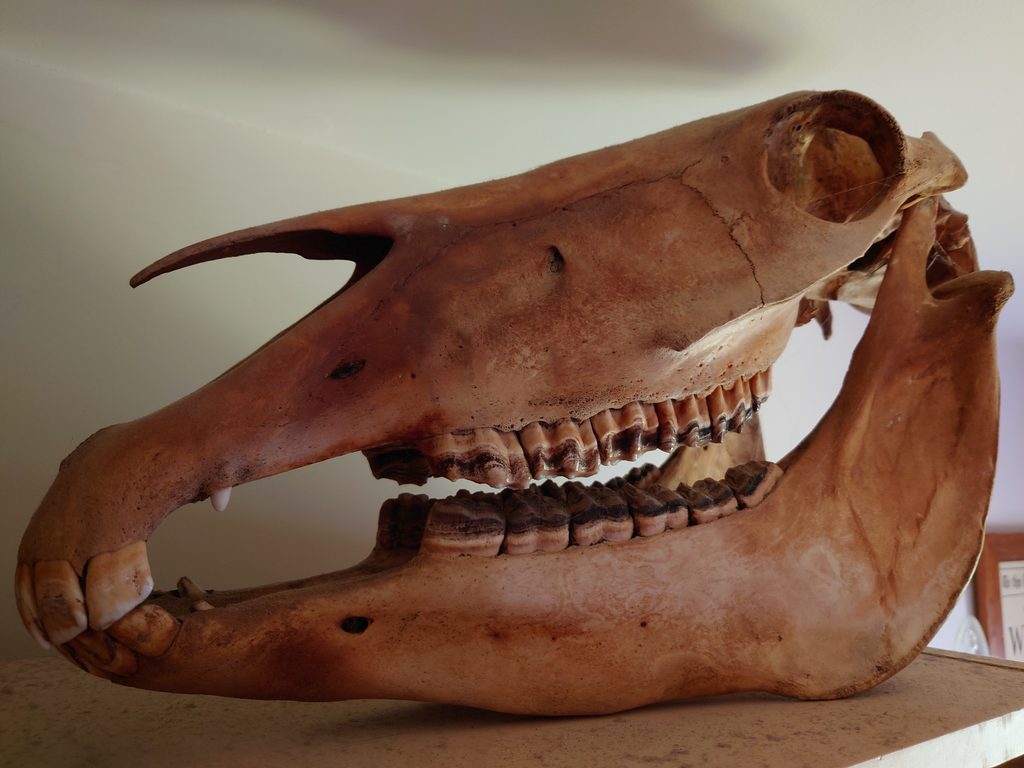
This is evidenced by the wide range of objects which we find hidden within the old buildings all around us. Objects such as cats, horse skulls, witch-bottles, shoes and written charms were regularly concealed within walls and under floors as ways of diverting, trapping or repelling the dark forces which may be trying to enter the home.
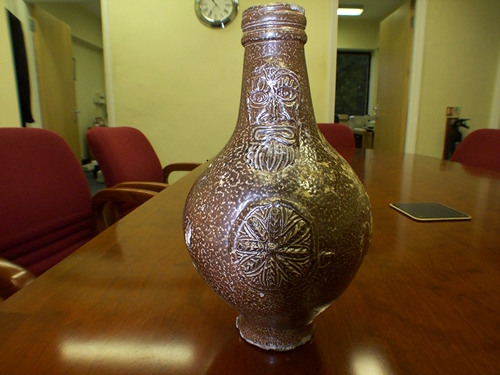
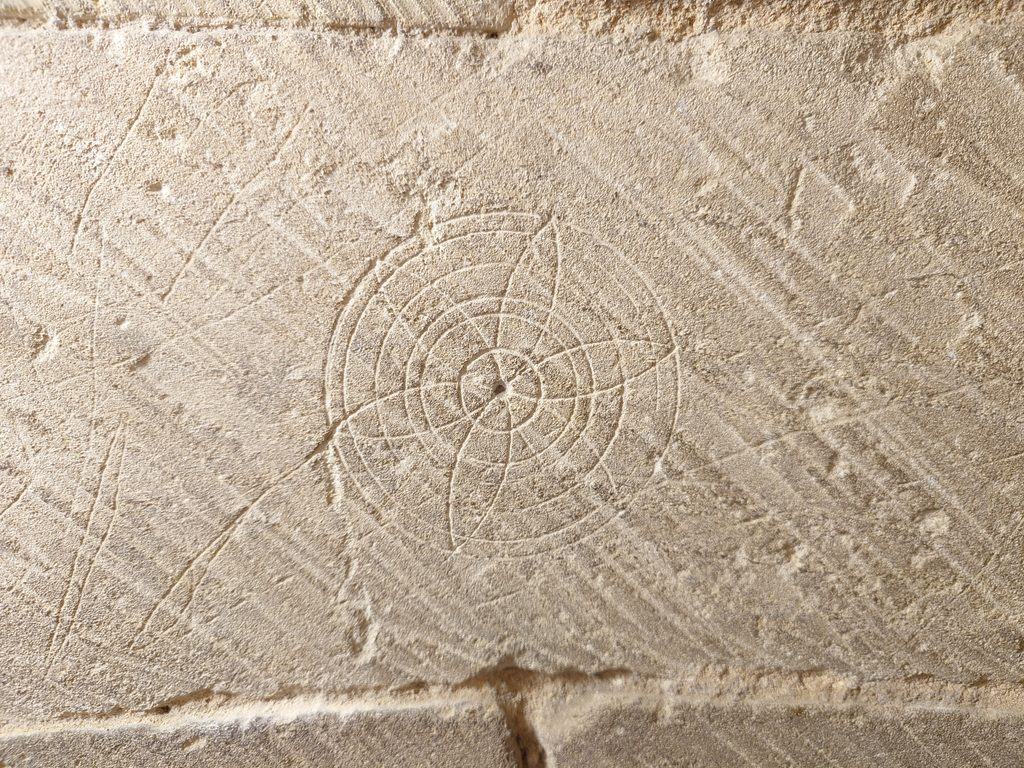
People also carved symbols onto the building materials around them in wood, stone, lead and plaster. Marks such as circles, daisy-wheels and deliberate burn marks kept the darkness away by bringing light where they were placed. Marian marks brought the protective power of the Virgin Mary’s holy spirit and mesh marks sought to entangle or distract dark forces from their evil intent. These marks were generally carved very subtly and are often only easily visible with raking light (shining a torch at the surface obliquely).
This range of practices were all done secretly or subtly so that people didn’t reveal their defences to those around them and they all were complimentary to the range of well known defences which people could employ. Horse shoes above a door, crucifixes on the walls are just a couple of examples but people might choose plants which kept evil away for their gardens in addition of course to practical security measures such as stout doors and strong locks.
Brian Hoggard – author of Magical House Protection: The Archaeology of Counter-Witchcraft (Berghahn Books, 2019), www.apotropaios.co.uk
See more: