
Tall Tales
Folklore traditions and customs are passed down through generations by word of mouth, as well as by the written word. Before modern technology and transport, isolated communities developed their own stories, shared from neighbour to neighbour and from parent to child. Storytelling was an important part of everyday life, acting both as entertainment and as a way to pass on history, wisdom and cautionary tales.
As stories are retold, they evolve. They may become more elaborate or change as they travel between communities – a generational game of telephone.
Folklore is learned through experience and community rather than from books. Thankfully, people have worked to record local customs, stories, and beliefs before they were lost.
W. H. ‘Jack’ Barratt, a Fenman from Brandon Creek on the Norfolk–Cambridgeshire border, grew up listening to local tales. After a lifetime of living and working on the Fens, he recorded the stories and customs he had heard.
Enid Porter, the Museums of Cambridge’s longest-serving curator, worked closely with Barratt to preserve East Anglian folklore. She drew on his manuscripts for several of her books. Both Barrett’s and Porter’s original writings remain in the collection of the Museum today.
Object labels
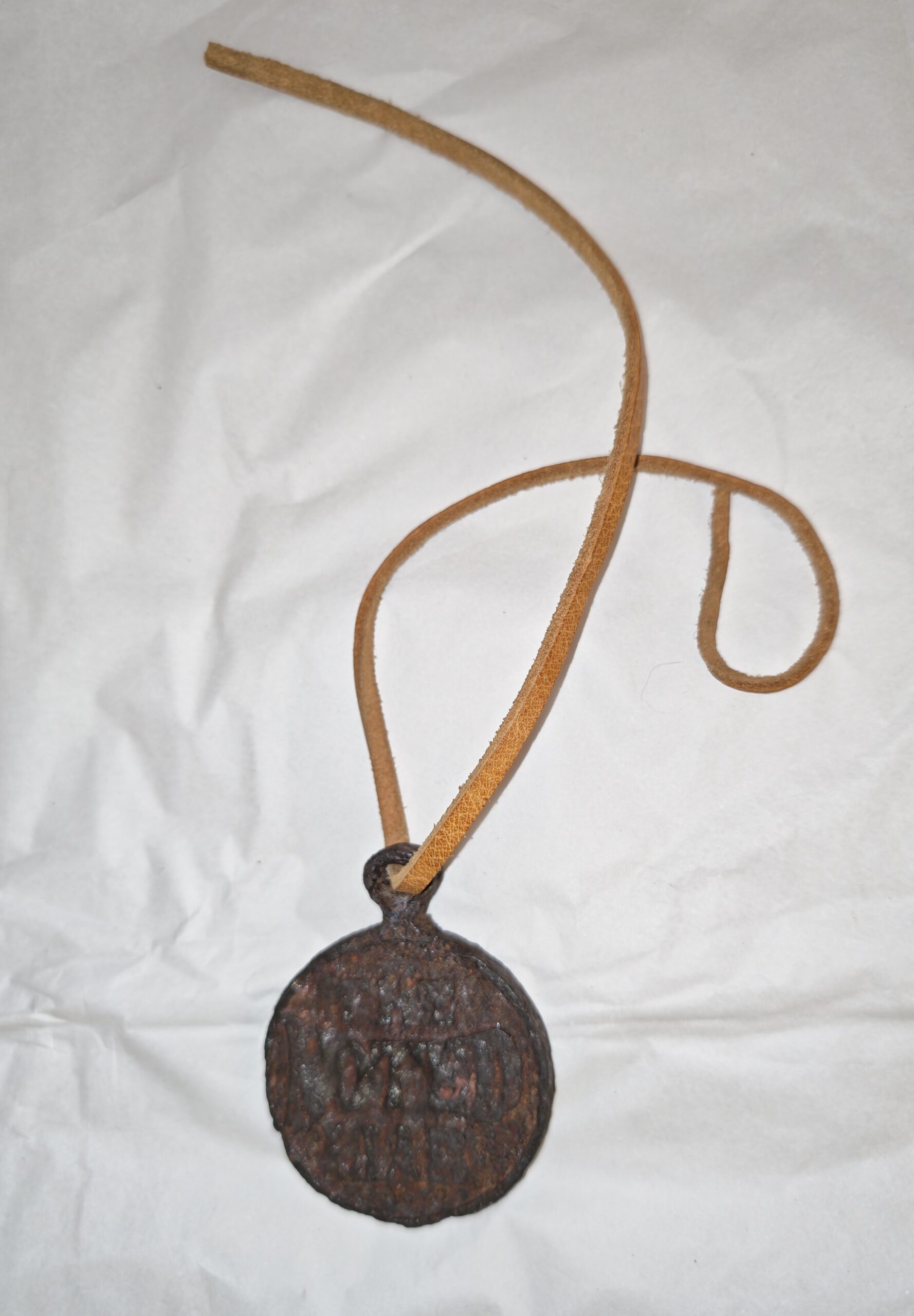
- ‘The Noted Liar.’ Medal given to the person in the pub who told the most believable lie. This medal was found in the garden of a pub that no longer exists. NN
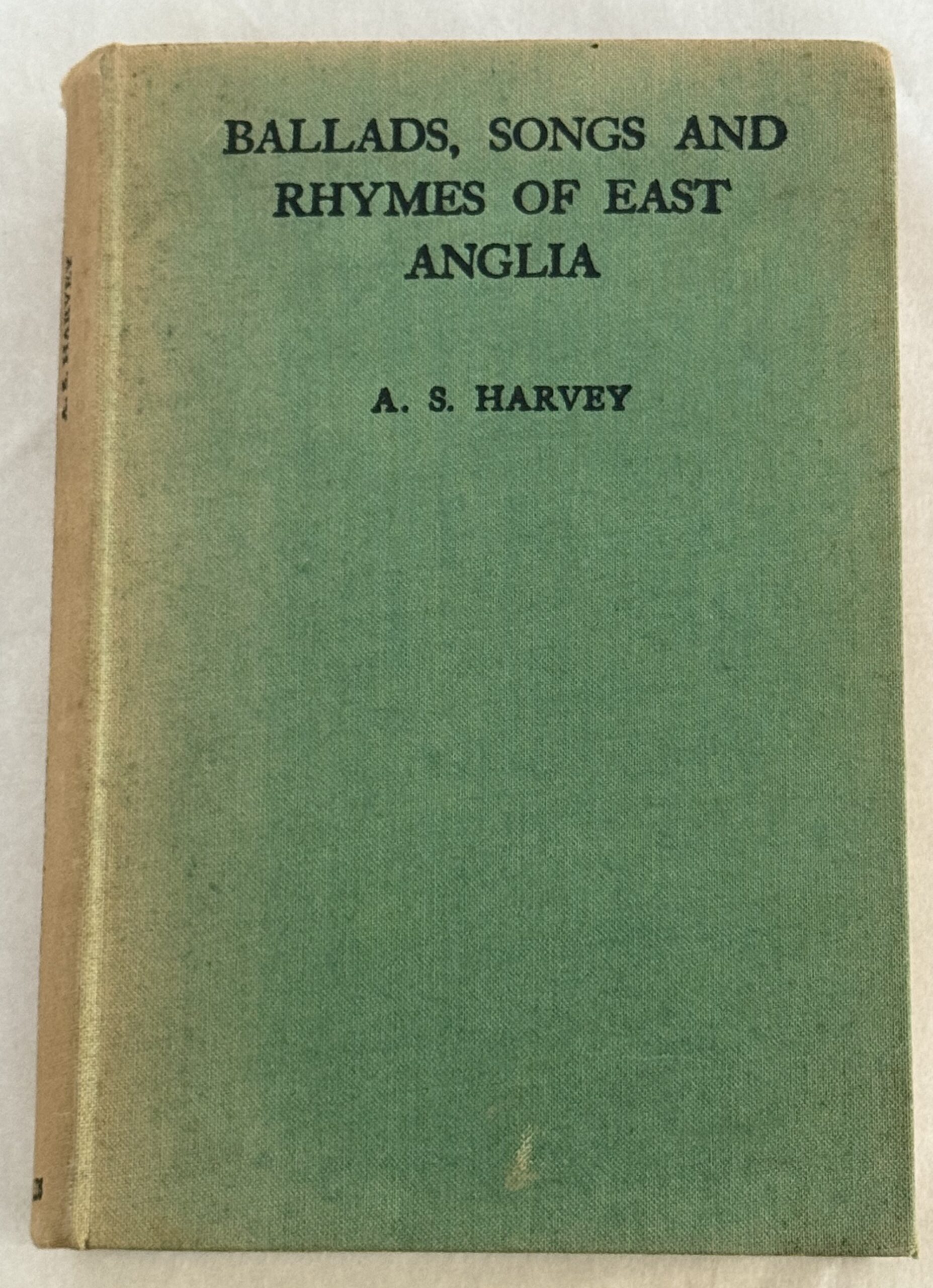
Storytelling was a popular form of entertainment in small communities. Tales, sometimes true, sometimes imagined, and sometimes a mixture of both, helped preserve and pass on local folklore. Pubs and fairs were important social gathering places and occasions, where storytelling brought people together. Storytelling competitions offered a playful way to test the imagination and the art of ‘spinning a yarn’. - Ballads, Songs and Rhymes of East Anglia, A S Harvey, Published; 1936, Jarrold and Sons Limited, Norwich. CAMFK:971.37
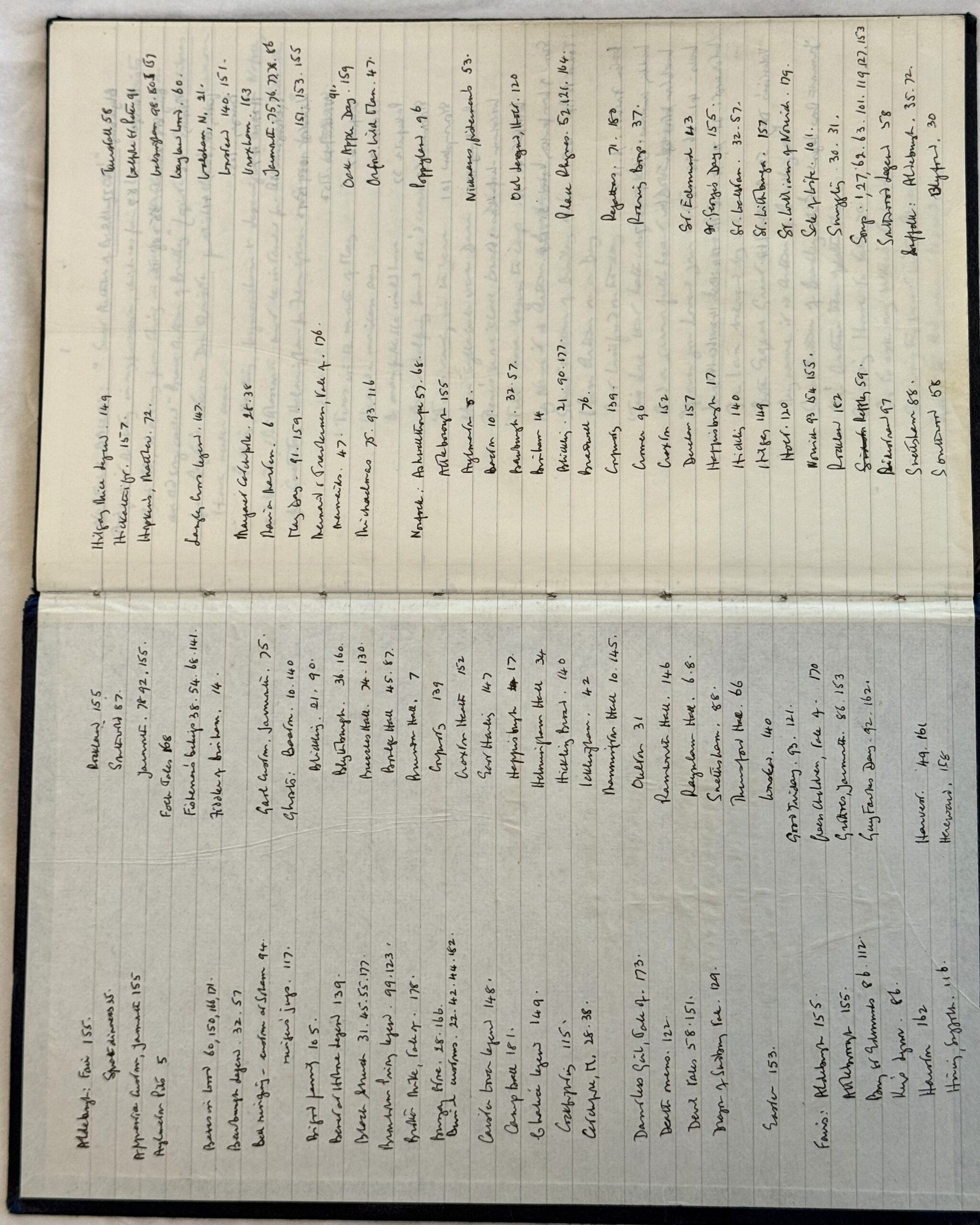
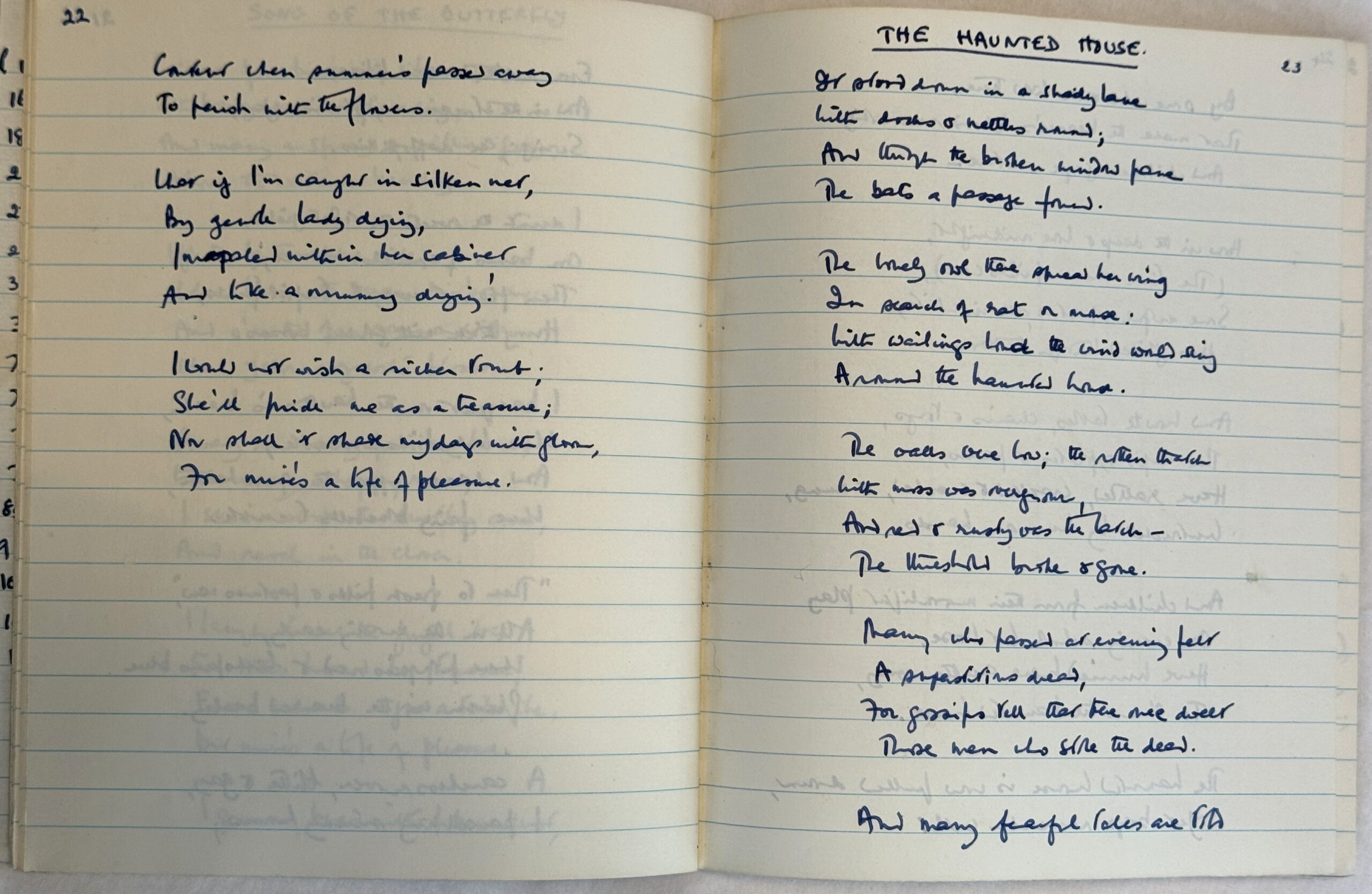
Folk music was often a form of storytelling. Song lyrics could share news, cautionary tales and legends in memorable ways, making them accessible even to those who could not read. Singing folk songs and playing music were also popular social pastimes, bringing people together through shared performance and tradition. - Three notebooks kept by Enid Porter (1947-1976), c. 1947–1976. CAMFK:1288.86
Enid Porter was curator of the Museum of Cambridge, then known as the Cambridge & County Folk Museum, from 1947 to 1976. During this time, she amassed a wealth of research into the history and traditions of Cambridgeshire.
With a particular interest in folklore and local customs, Porter kept meticulous notes of the stories and information she collected. These notebooks, written in her distinctive hand, contain diaries, observations and research relating to local history.
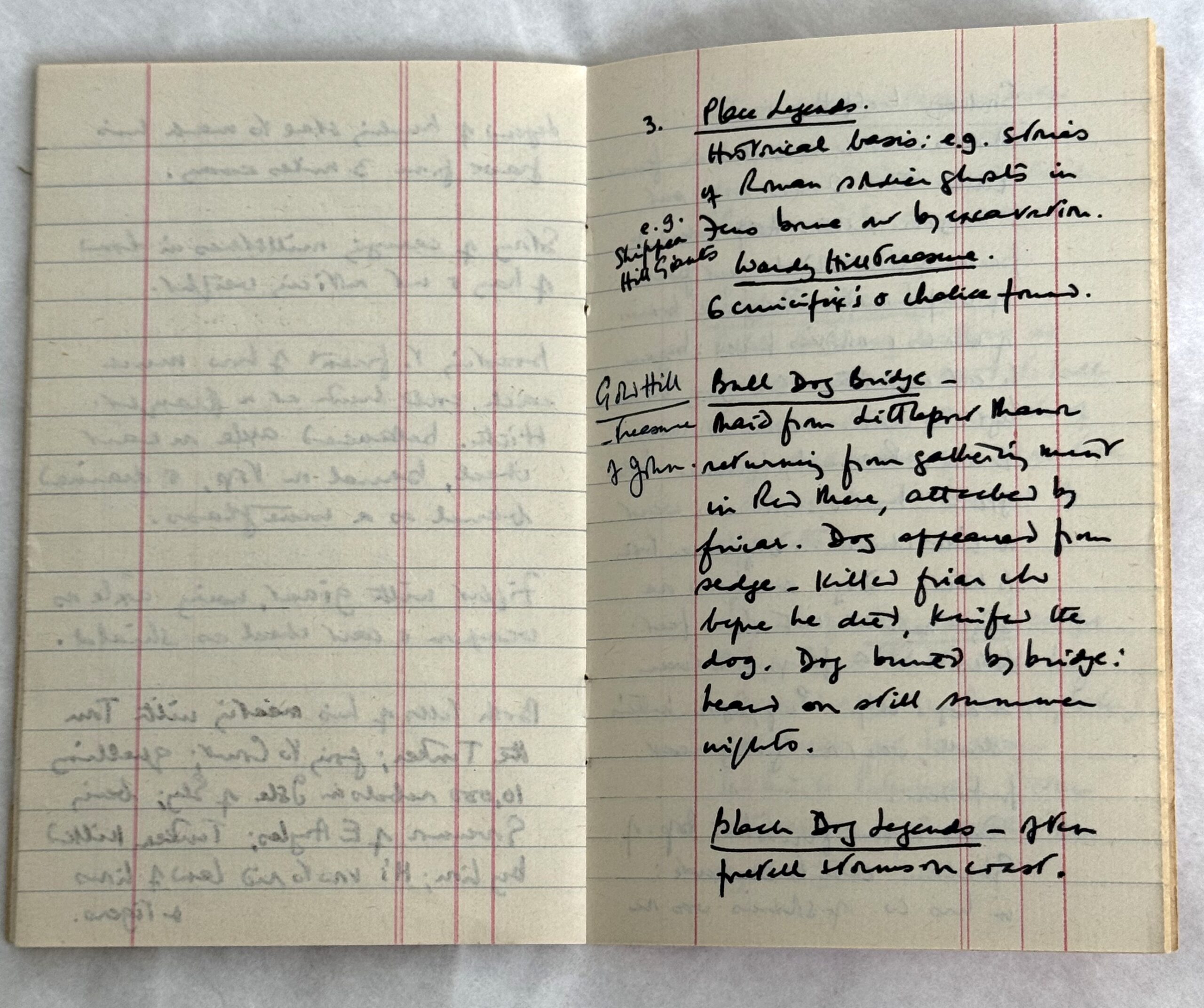
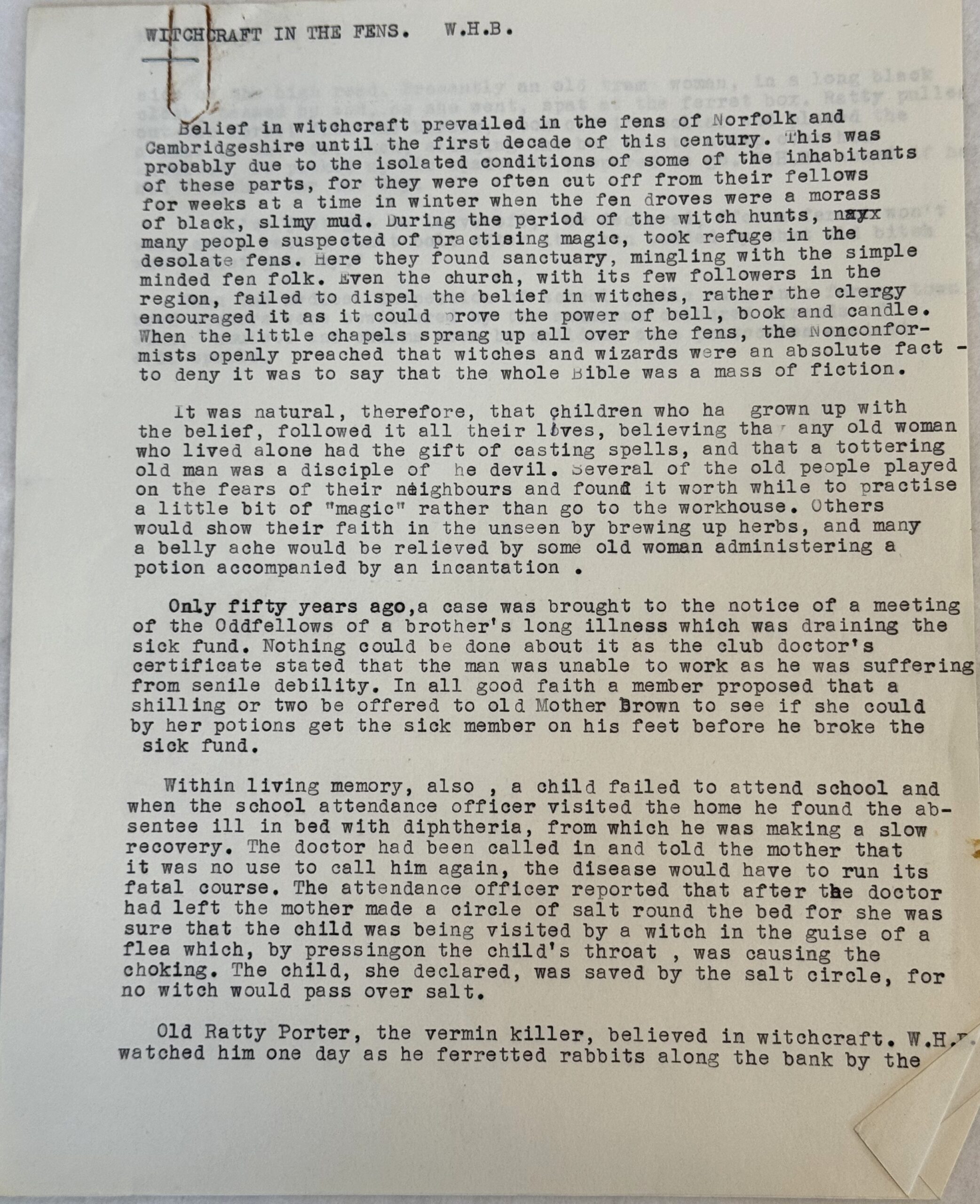
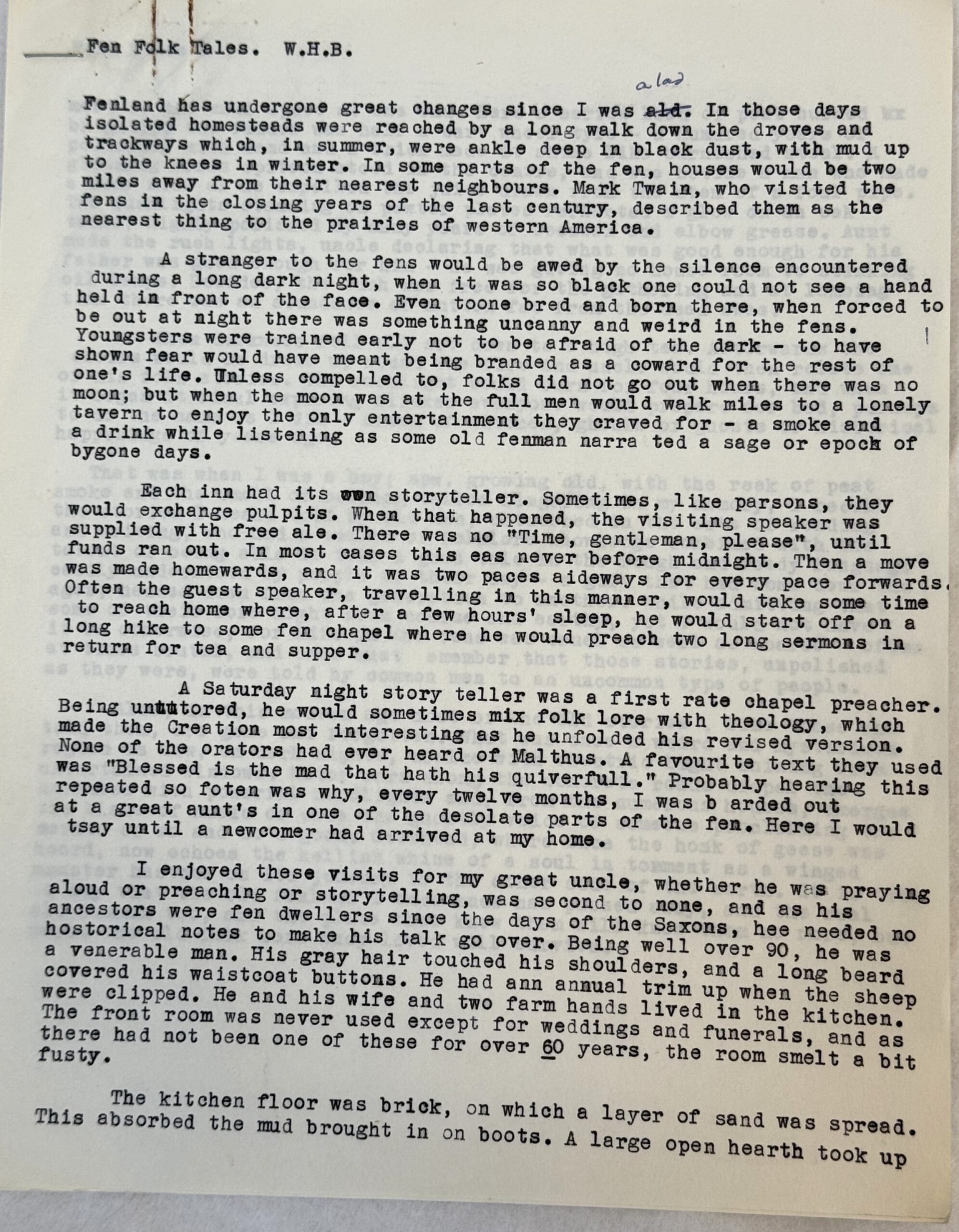
Her extensive research resulted in numerous publications on Cambridgeshire folklore and customs. She is widely recognised as a leading authority on the county’s history and folklore. - Two sections from the original manuscript of Tales from the Fens, entitled ‘Fen Folk Tales’ and ‘Witchcraft in the Fens’. W.
H. Barrett, c. 1963. CAMFK:536.85
W. H. Barrett’s recollections of growing up in the Fens at the turn of the twentieth century have helped shape our understanding of East Anglian folklore.
Enid Porter learned of Barrett’s collection of memories and developed a friendship with him, eventually acquiring his original manuscripts.
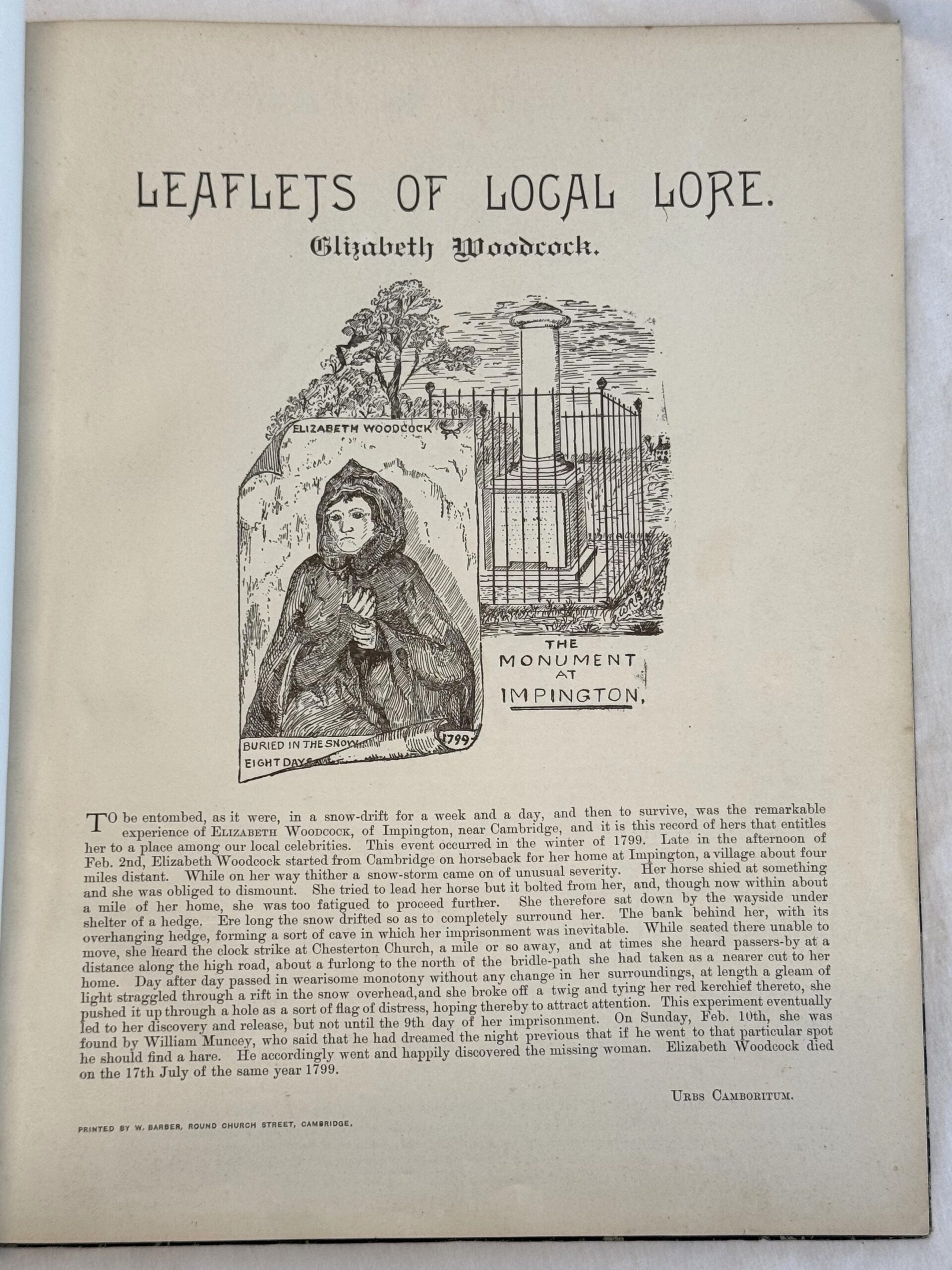
In later life, Barrett became almost entirely deaf, and interviews would be conducted through writing out questions or with the help of his wife Anna. - ‘Elizabeth Woodcock’ from Leaflets of Local Lore: Cambridge, W.R. Brown & Urbs Camboritum, published in 1976 by Newton & Denny, Cambridge. CAMFK:31.46
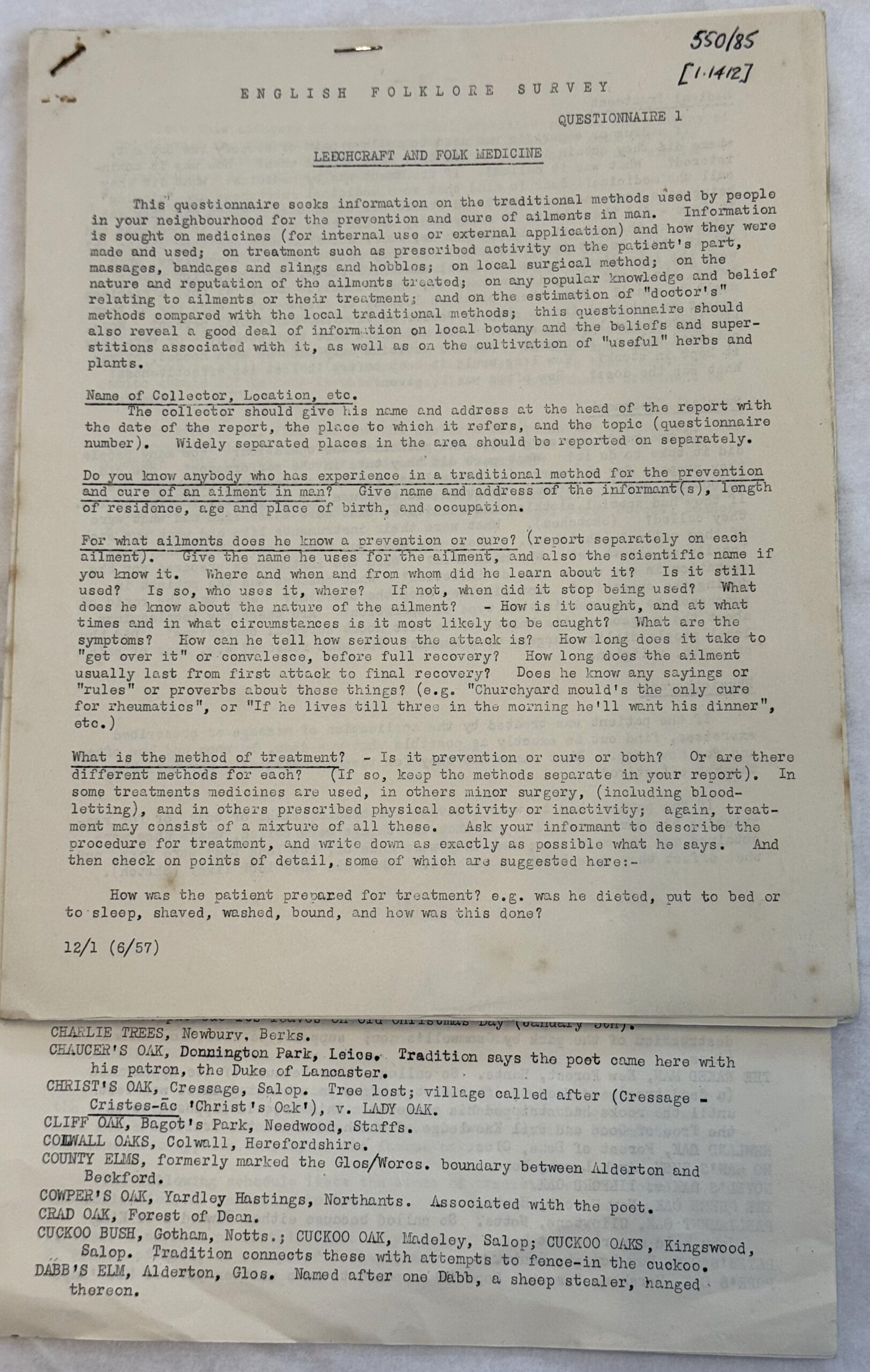
- English Folklore Survey questionnaire, University College London, 1955. CAMFK:550.85.
This questionnaire was part of a study undertaken by University College London in 1955. The study was never completed so findings were never published in full. The survey covers a wide array of topics including medicine, agriculture, entertainment and superstition.
See more: