
Witchcraft: From Fear to Persecution
Magic was not always viewed with suspicion. For thousands of years, and well into the 18th century, it could be seen as a force for good: used for healing, protection and good luck. But magic could also be misunderstood. In close-knit and superstitious communities, fear of witchcraft and dark magic was widespread. When people faced unexplained or unfair misfortune, it was easy to believe that a malevolent force was to blame.
Those known to practise magic could find themselves accused of using dark magic if, for example, a neighbour believed they had been cursed. Such accusations could lead to ostracism, persecution or even execution. People on the margins of their communities were particularly vulnerable, often targeted because of their age, appearance or because they challenged social norms.
Fear of witchcraft was so deeply rooted that protection against witches and dark magic became part of the fabric of everyday life.
Object labels
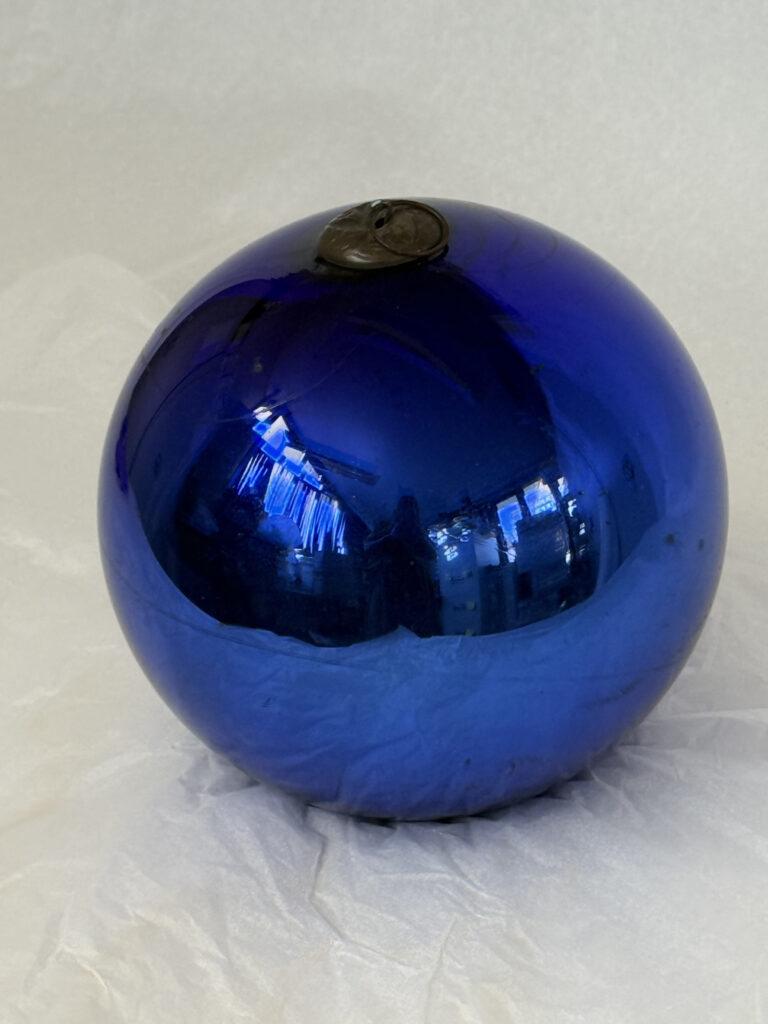
- Witches’ ball, 1721, hung in a window of Merton Grange, Gamlingay. CAMFK: 105.59
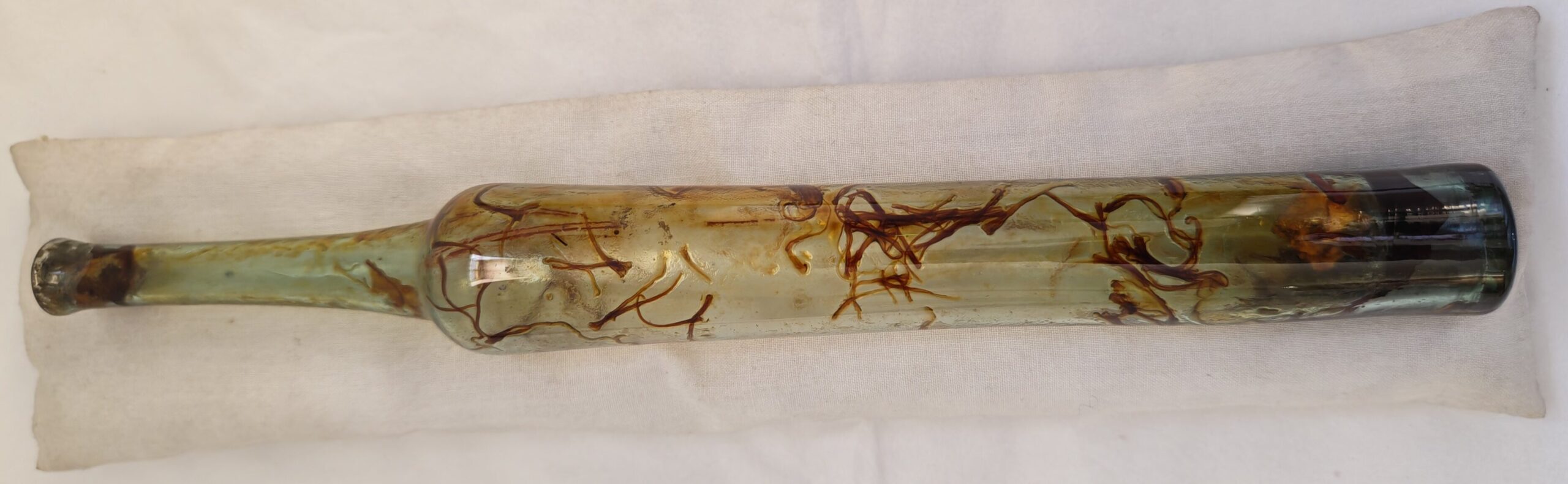
This ball was hung in a window of a house. It is highly debated among folklorists as to how they became associated with witches. One belief associated with it was that the light it refracted would dazzle witches and prevent them from entering. Another belief was that the ball’s reflective properties and bright colours would mesmerise evil spirits, causing them to touch the ball and become absorbed and trapped within it. However, there isn’t any written evidence of glass balls being used for this purpose from the period that they were purportedly used. - Witches’ bottle charm containing silk and wool, with plant strands worked into the glass. Used as a protective charm against witches. CAMFK:1479.37
A witch’s bottle was used as a protective charm against witches and the bad luck and havoc they were believed to bring. These bottles contained a variety of materials, including pins, nail clippings, urine and rosemary. They were buried within the walls, floors and fireplaces of buildings to protect their occupants.
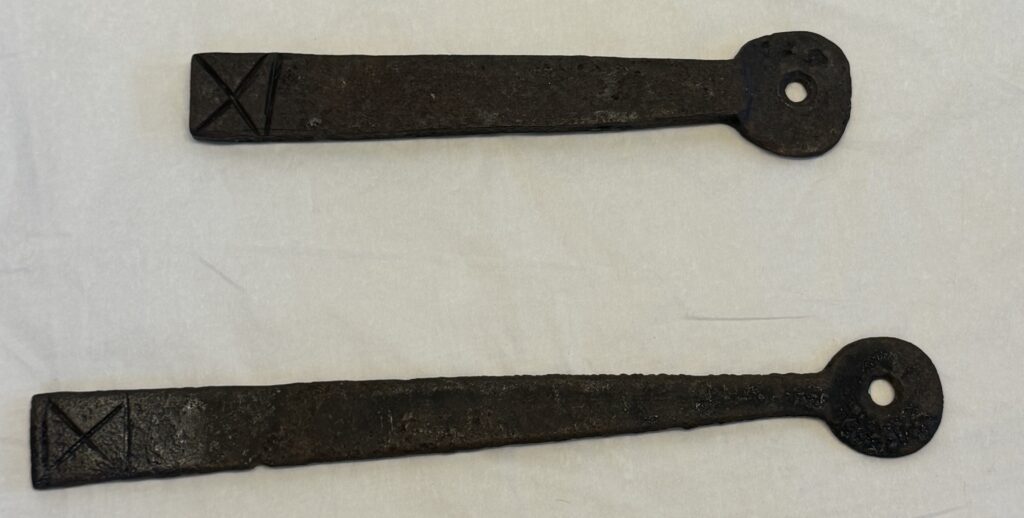
- Two iron door latches featuring ritual marks. Folklore Society Collection, NN
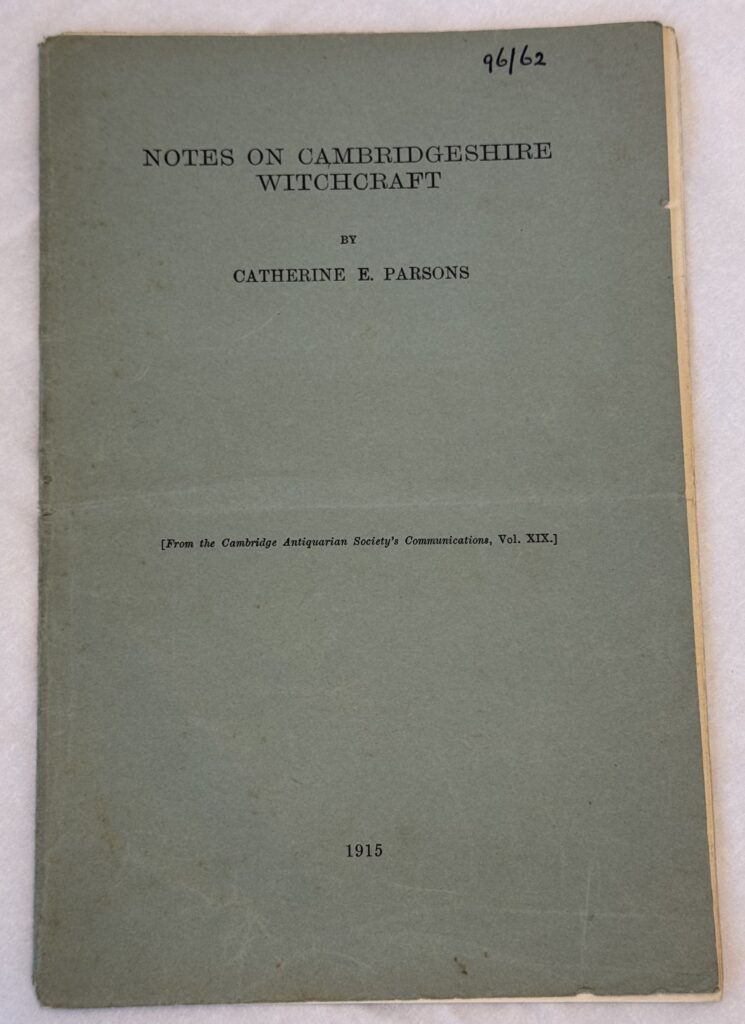
Ritual marks such as these can be found across the county on buildings dating from the sixteenth and seventeenth centuries. Often known as ‘witch marks’ they are found around doorways, windows and chimneys, it is believed these marks were intended to protect vulnerable points of a building from evil spirits and witches. - Notes on Cambridgeshire Witchcraft, Catherine E. Parsons, published in 1915 in the Cambridge Antiquarian Society’s Communications, vol. XIX. CAMFK:96.62
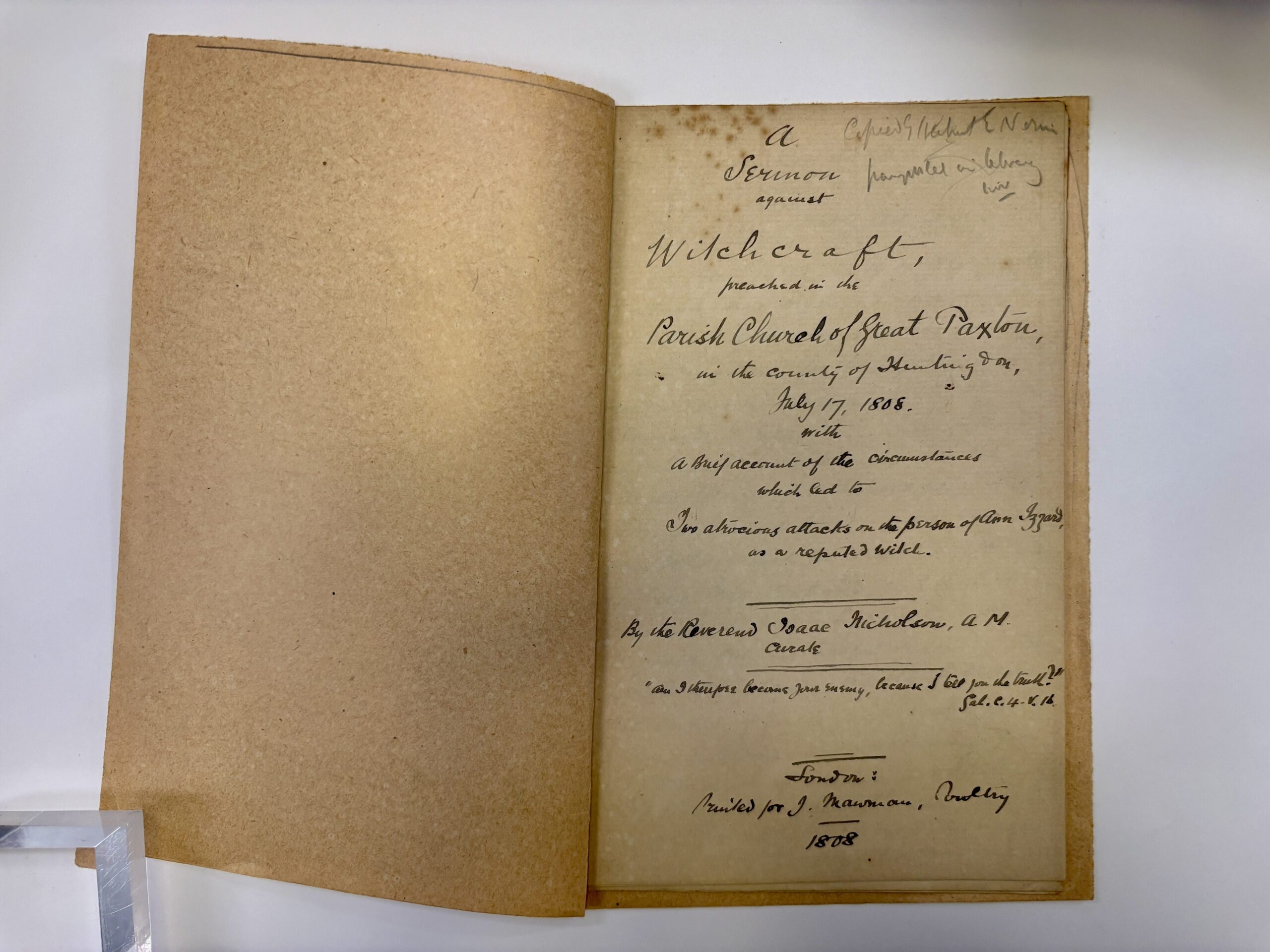
- A Sermon Against Witchcraft, Preached in the Parish Church of Great Paxton, in the County of Huntingdon, July 17, 1808. Transcript by Herbert Norris (1859–1931). Loan from the Norris Museum, St Ives, Cambs,UMS/PAXTN/42.
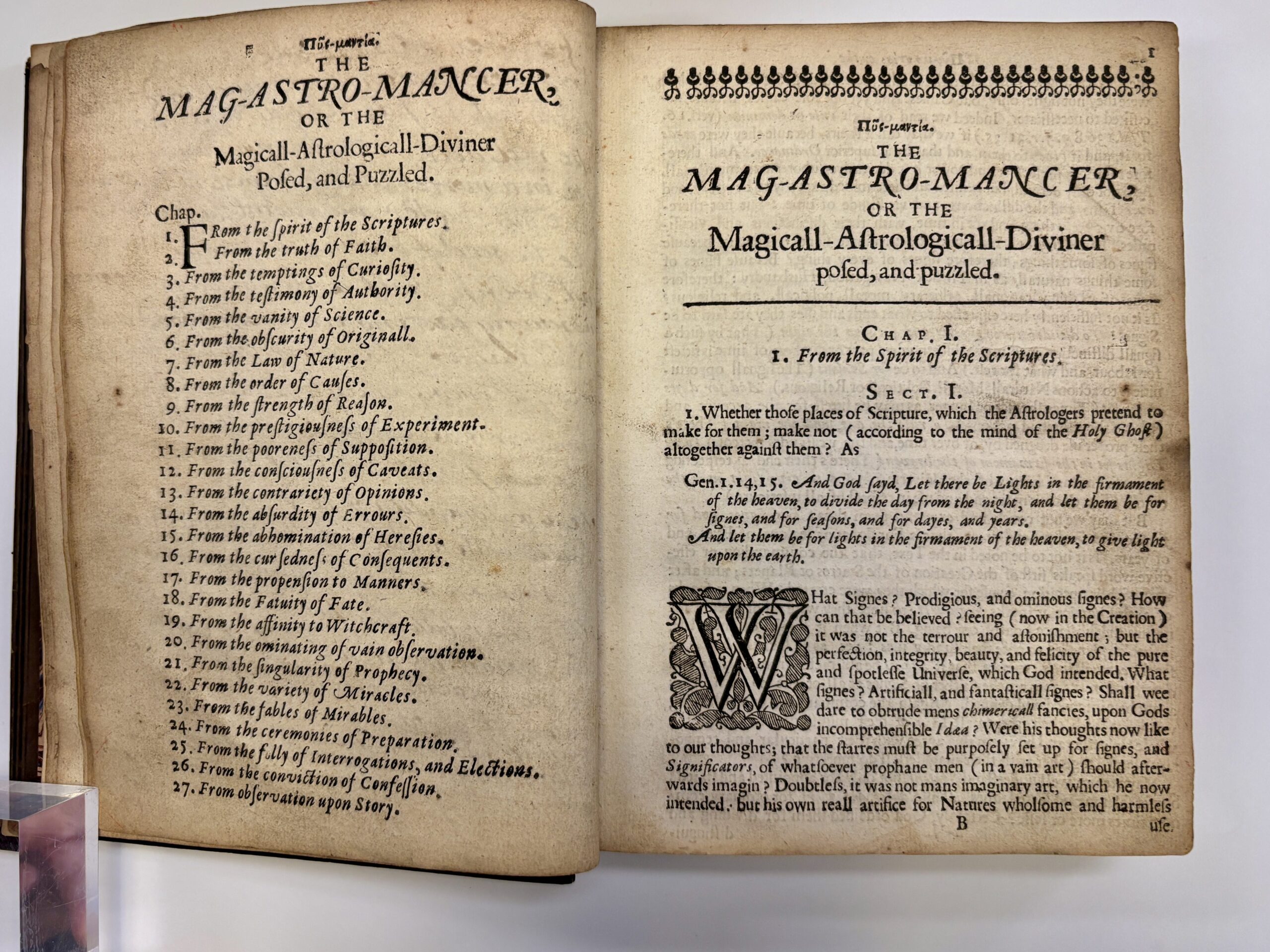
In this sermon, the Reverend Isaac Nicholson of Little Paxton Parish Church aimed to encourage his parishioners to turn away from superstitious beliefs. Recounting the attack on Ann Izzard, a local woman accused of witchcraft, Nicholson highlighted the dangers of accusations and mob violence. Isaac Nicholson was a former student of Queens’ College, Cambridge. - The Mag-Astro-Mancer, or the Magicall-Astrologicall-Diviner Posed, and Puzzled. John Gaule, minister of Great Staughton in the County of Huntingdon. Published in 1652 by Joshua Kirton at the King’s Arms, St Paul’s Churchyard, London. Loan from the Norris Museum, St Ives, Cambs.BP/2177
John Gaule dedicates this book to his fellow Huntingdonshire resident, Oliver Cromwell. The book condemns the use of magic. Interestingly, the inside cover features illustrations and instructions for cures for warts and toothache dating from the 1760s.
Object Images
1. Witches’ ball, 1721, hung in a window of Merton Grange, Gamlingay. CAMFK: 105.59
2. Witches’ bottle charm containing silk and wool, with plant strands worked into the glass. Used as a protective charm against witches. CAMFK:1479.37
3. Two iron door latches featuring ritual marks. Folklore Society Collection, NN
4. Notes on Cambridgeshire Witchcraft, Catherine E. Parsons, published in 1915 in the Cambridge Antiquarian Society’s Communications, vol. XIX. CAMFK:96.62
5. A Sermon Against Witchcraft, Preached in the Parish Church of Great Paxton, in the County of Huntingdon, July 17, 1808. Transcript by Herbert Norris (1859–1931). Loan from the Norris Museum, St Ives, Cambs, UMS/PAXTN/42
6. The Mag-Astro-Mancer, or the Magicall-Astrologicall-Diviner Posed, and Puzzled. John Gaule, minister of Great Staughton in the County of Huntingdon. Published in 1652 by Joshua Kirton at the King’s Arms, St Paul’s Churchyard, London. Loan from the Norris Museum, St Ives, Cambs, BP/2177
See more: