
By Dr N Henry
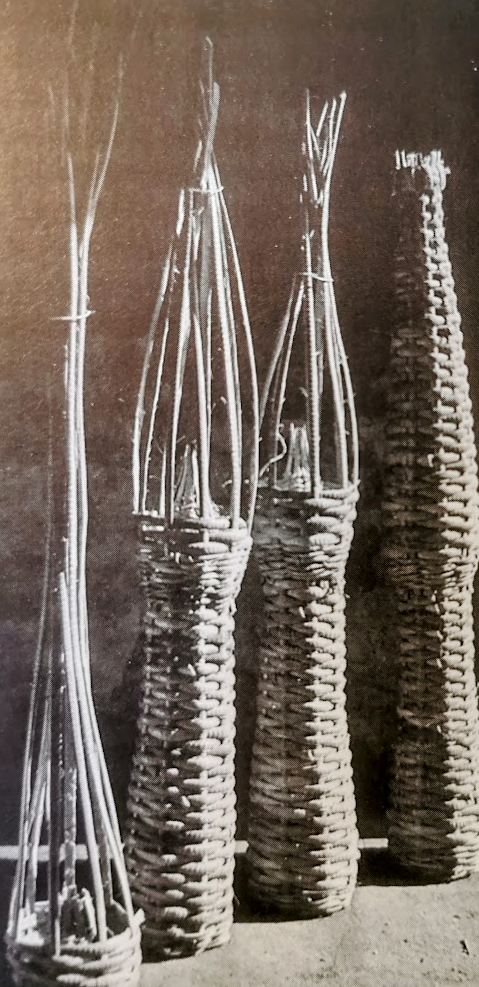
The Museum of Cambridge has on display several eel hives (tubular traps made of basketry) that were made by the people of the Fens. The hives were usually made from cut willow, and were around four feet long and took about four hours to make. The narrower end of the hive held the bait and was closed with a weighted bung. The hives had two internal compartments. Nita Luxford in her book A working Life on the Great Ouse describes how they worked:
“The eel entered the wider end and smelling the bait, passed through the gate into the first compartment. The sharpened edges of the gate prevented the eel from returning and it wiggled backwards into the baited compartment where it became trapped.”
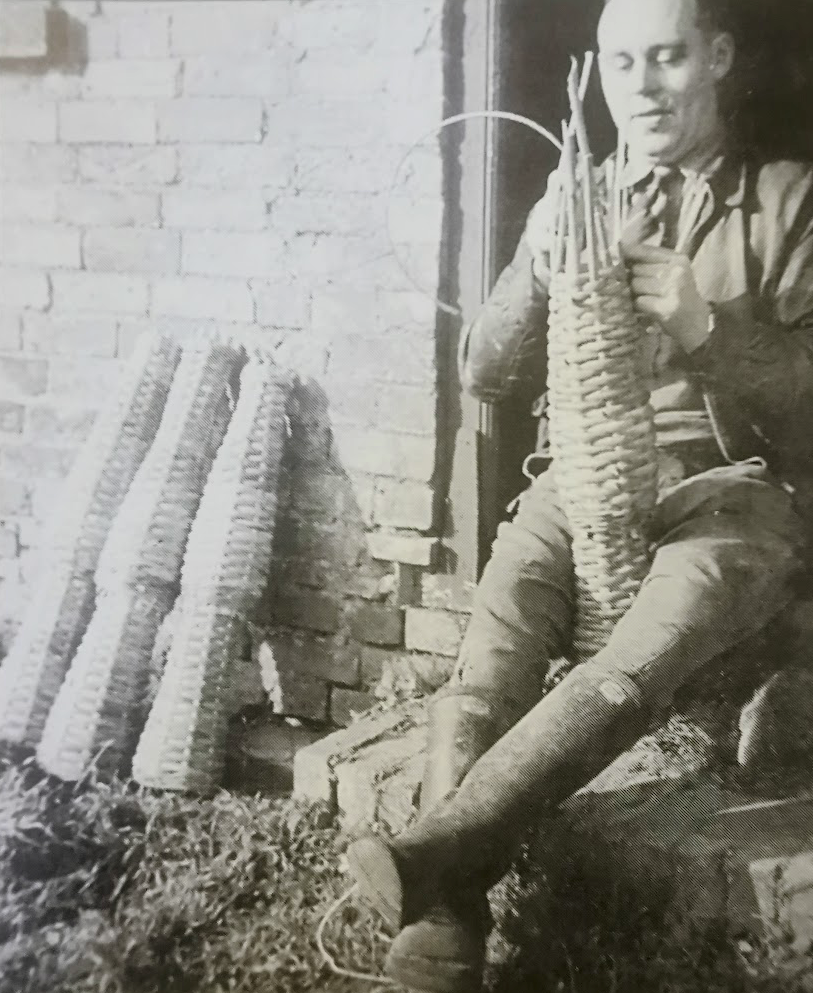
These hives were once used by the Metcalfe family of Holywell in the Fens, a family of rush-cutters, eel hive-makers and eel-catchers. Tom Metcalfe Arnold who died in 1994 was the last to make such a living on the river Great Ouse in Holywell.
The very pretty village of Holywell sits on the banks of the River Ouse and is worth a detour this weekend, after your visit to the Museum of Cambridge of course! The village inn, Ferry Boat Inn, is thought to be one of the most historic inns in England; it stands next to an important river crossing point between St Ives and Over which was served by a ferry until the 1940s. There the road and the river met. The site is now a beauty spot where leisure boats can moor for free for 48 hours to enjoy a couple of nights dining at the inn. The view of the Ouse is stunning; reeds, rushes, willows, fish, eels and wildfowl used to flourish there, and the landscape still retains some of its ancient beauty with the riverbanks filled with rushes bending in the windy spring weather.
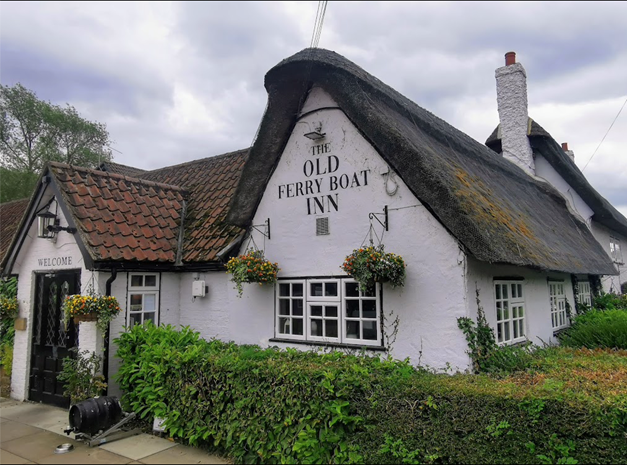
The Ferry Boat Inn is reputed to be haunted by the ghost of Juliet Tewsley who is thought to have hanged herself nearby after being rejected by a handsome but callous woodcutter in the early eleventh century. As suicide was very much frowned upon in those days, she was denied a church funeral and was instead buried near the inn. When the inn was subsequently extended, her grave became integrated into the floor of the inn and the slab can be seen today next to the dining tables. Every 17th of March (the day of Juliet’s death) the slab is said to move and her ghost to appear.
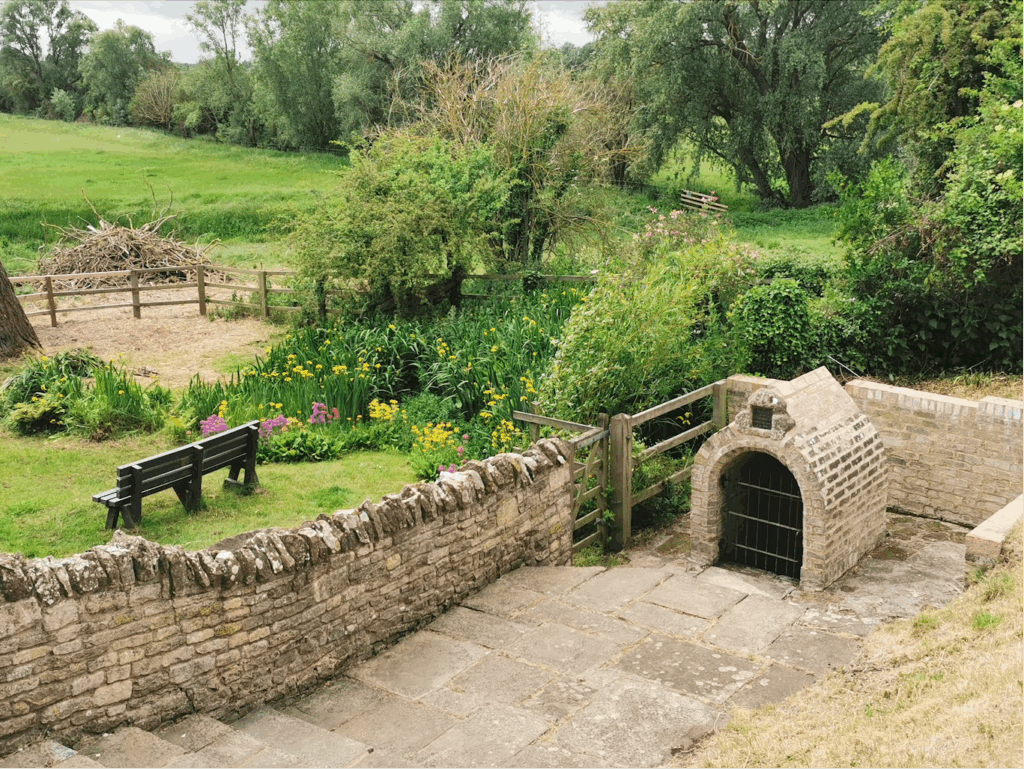
Holywell is a village full of surprises. Next to the church lies a sacred spring that is said to have the power to heal, reveal true love (maybe a reference to Juliet’s misfortune) and drive away devils. The village takes its name after the well that was once a Saxon baptismal pool. A sprinkle of this sacred water, accessible from the nearby wildflower garden, is sure to make all your wishes come true!
More information on the Fens and the culture of the Fenland people can be found at the Fen and Folklore room at the Museum of Cambridge, which explores an ancient way of living that was rooted in nature, fishing, the harvesting of rushes and wild fowling.