
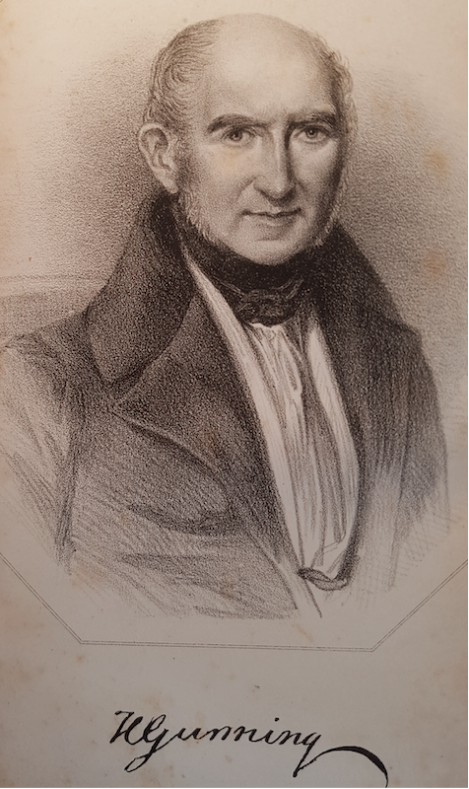
Henry Gunning’s Reminiscences of Cambridge is an important witness of life in Cambridgeshire in the late 18th and early 19th centuries.
Born in Thriplow, a village eight miles from Cambridge, Henry became a student at Christ’s College in 1784 before starting a lifelong career as a University Bedell in 1789 at 21 years old. Bedells were university officials whose duty was originally to serve writs and collect fines but became mainly ceremonial from the mid nineteenth century.
Henry Gunning mingled with many famous people during his time at University of Cambridge, such as Professor Adam Sedgwick, but he never forgot his native village and, most of all, his foster mother Mary Hutchinson, the woman who raised him and taught him to read. He spent every Christmas with her, as he recalls in his Reminiscences:
“The sports commenced on Christmas Eve, and continued until Twelfth-day, concluding with a very joyous evening. Of these festivities the humblest of the villagers were enabled, either by their own providence, or by the bounty of their more wealthy neighbours, to partake. The children of the poor were taught to sing hymns and carols appropriate to the season; and went around the village, for several evenings preceding Christmas-day, to sing them before the houses of the inhabitants, and never failed to return home well furnished with provisions of a better kind than their own stores afforded, or with money to purchase them.
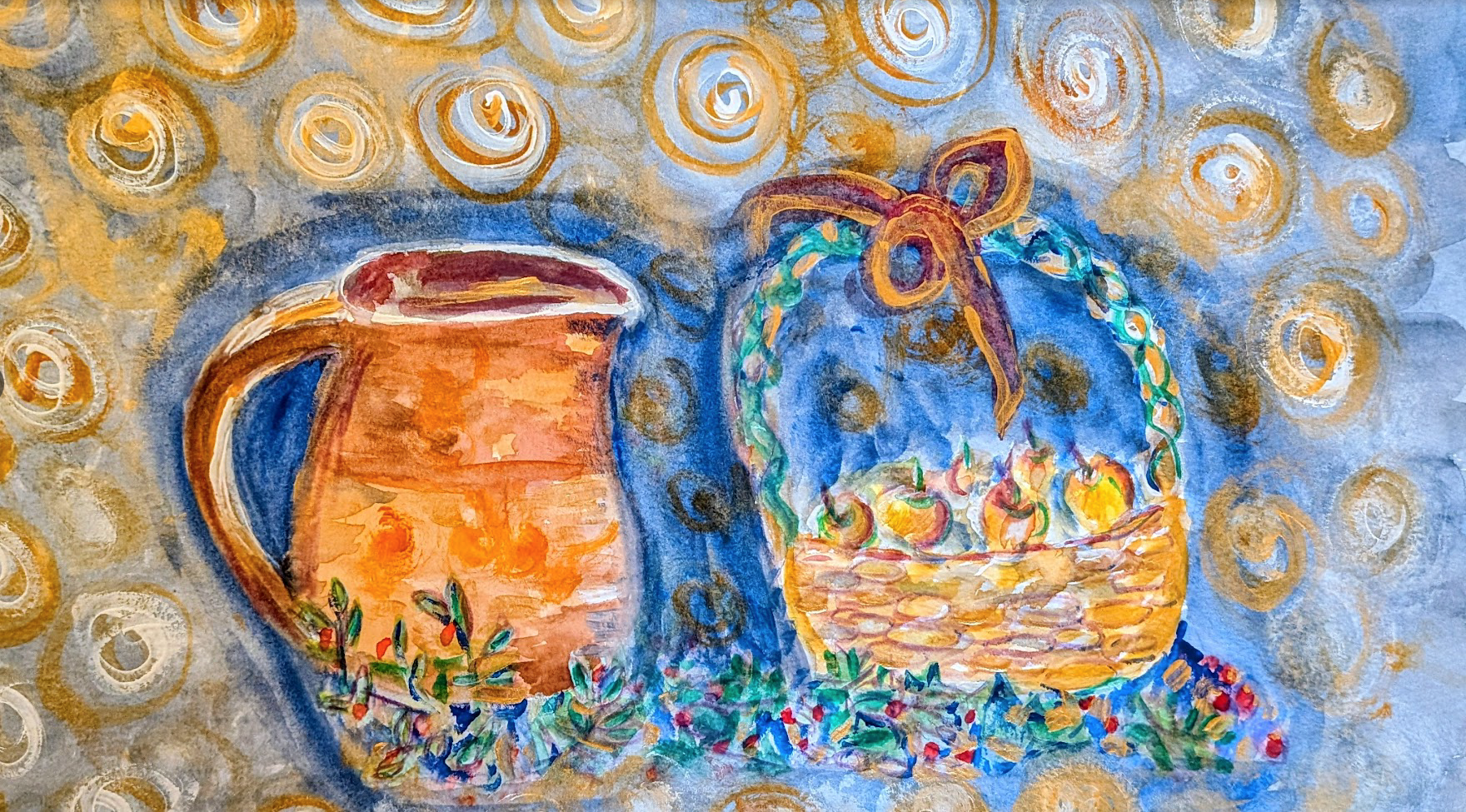
My foster-mother, to whom all of us had been sent in turn, always dined with us on Christmas-day. The good old woman (whom we dearly loved) always brought with her a jug of her richest cream, and a basket of her choicest apples. She joined heartily in all our sports; but her greatest gratification was to hear me read a chapter in the Bible, always selecting the 37th chapter of Ezechiel, which she never failed to request me to read a second time before she took her departure.
She delighted to have lived to see her prediction verified, that one whom she had taught his letters should “turn out so great a scholar”, of which she considered the being able to read a chapter in the Bible without hesitation furnished abundant proof. One thing only was wanting to make her perfectly happy, and that was, to have seen her “dear child” in his cap and gown. She had resided more than sixty years within eight miles of Cambridge, but had never visited the place. She died the following spring (1785), after a very short illness. The class of females to which she belonged exists no more. I loved her when living, and, at a distance of nearly seventy years, I think with respect and affection of Mary Hutchinson.”
Henry Gunning was born into a middle class family that employed a “foster mother,” meaning a wet nurse or childminder, to look after the children. All the Gunning children seem to have been “sent” to her to be raised by her until they were old enough to attend school. Such arrangements, common in aristocratic families and later in middle class families, often meant that children spent more time with their foster mother than their parents and therefore developed very strong emotional ties with the former. This seems to be the case here.
Mary taught Henry how to read. The Bible was one of the most accessible book for ordinary people and was often used as the door to literacy. The chapter from Ezekiel which Mary enjoyed was especially entertaining as it recalls a vision by Ezekiel of bringing back to life stacks of rattling and disconnected dry bones.
Mary Hutchinson is portrayed as a fun woman who “joined heartily” in all the Christmas “sports”, meaning the games that were played on Christmas Day such as apple bobbing, a very popular game during that period. The apples brought by Mary might have been used for that purpose before being eaten or cooked. Mary Hutchinson appears to have been a mother figure for Henry Gunning as he recalls how she longed to see “her dear child” in his “cap and gown”, the traditional outfit of Cambridge student.
Mary Hutchinson was a simple woman whose nurturing love and sense of fun was forever connected by Henry Gunning with the Christians festivities in Thriplow, his native village. Although Mary had never set foot in Cambridge (only eight miles away), let alone in the University, she did empower a child to become a confident and successful adult through her simple love and attention. It is not surprising that Henry Gunning forever associated this special time of the year, Christmas, with this woman to whom he felt he owed everything.
REFERENCES:
Gunning, Henry, Reminiscences of the University, Town and County of Cambridge from the year 1780, volume 1, London, 1854 (passage quoted is on pages 13 and 14)
See also the entry on Capturing Cambridge: