
Written by Dr Emily Levick, PHD, Disability Heritage Research Volunteer
Supported by Milly Westbrook, Collections and Projects Officer at Museum of Cambridge
This research piece was made possible by a two-year initiative made possible by a £99,802 grant from the Esmée Fairbairn Collections Fund through the Museums Association. This ground-breaking project will place disabled individuals at the forefront of researching, curating, and sharing the histories of disabled people in Cambridgeshire.
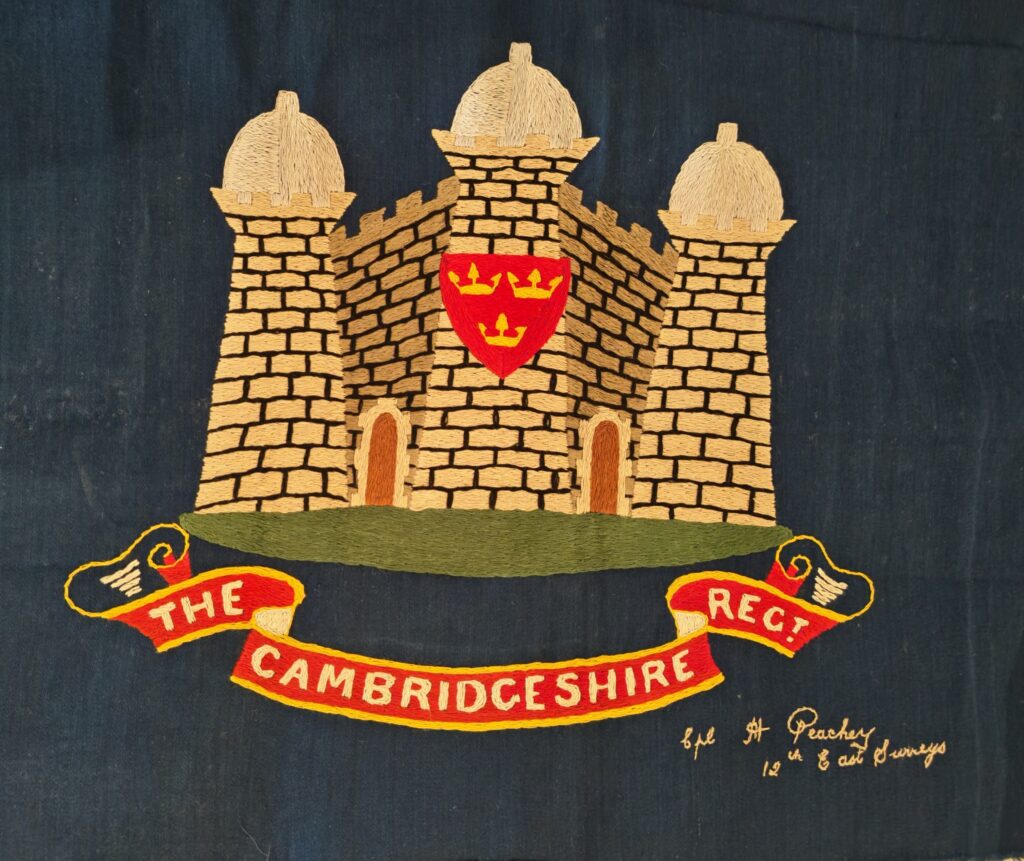
CAMFK:229.63 An embroidery of a regimental banner for the Cambridgeshire Regiment. Worked by Corporal. H. Peachey (12th Eastern Surreys) when a patient at First Eastern General Hospital.
The Museum of Cambridge holds a small but remarkable collection of embroideries worked by convalescing soldiers during the First World War. Stitched while the men were recovering from often life-altering injuries in the First Eastern General Hospital, these textiles tell a powerful story of resilience and hope.
The images they depict, and the obvious care taken to create the embroideries, emphasise the importance of needlework to men whose lives had been transformed through life at the Front. Having witnessed unspeakable horrors in the trenches, and suffered debilitating injuries which in some cases led to lifelong disabilities, the opportunity to calm the mind and body with the soothing, rhythmic work of embroidery was therapeutic to the convalescents.
Unlike knitting, which, after being learned, could be performed almost on autopilot, embroidery required attention and focus. To shell-shocked and otherwise traumatised men recovering in the First Eastern, such focus served as a welcome distraction from the memories of the war they had left behind, as well as the pain and discomfort caused by their wounds.
Who were these men? What was life like in the hospital where they worked these embroideries? And what can these unassuming textiles tell us about the important role of needlework in the process of healing?
The Hospital
The First Eastern General Hospital occupied the area known as The Backs, on the site of what is now Cambridge University Library. It was the first and largest of the territorial hospitals to be mobilised by the War Office at the outbreak of the First World War, and historians consider it the largest contribution made by Cambridge to the war effort.
Mobilised just one day after the start of the war, on 5th August 1914, the Hospital was welcoming its first patients just ten weeks later, on 7th October 1914. This remarkably swift construction was possible because of the meticulous planning by the War Office from as early as 1908. At its heart, the design and construction of the Hospital was a local achievement: its architect, Charles Frederick Skipper, and builder, Arthur Negus, were both Cambridge men.
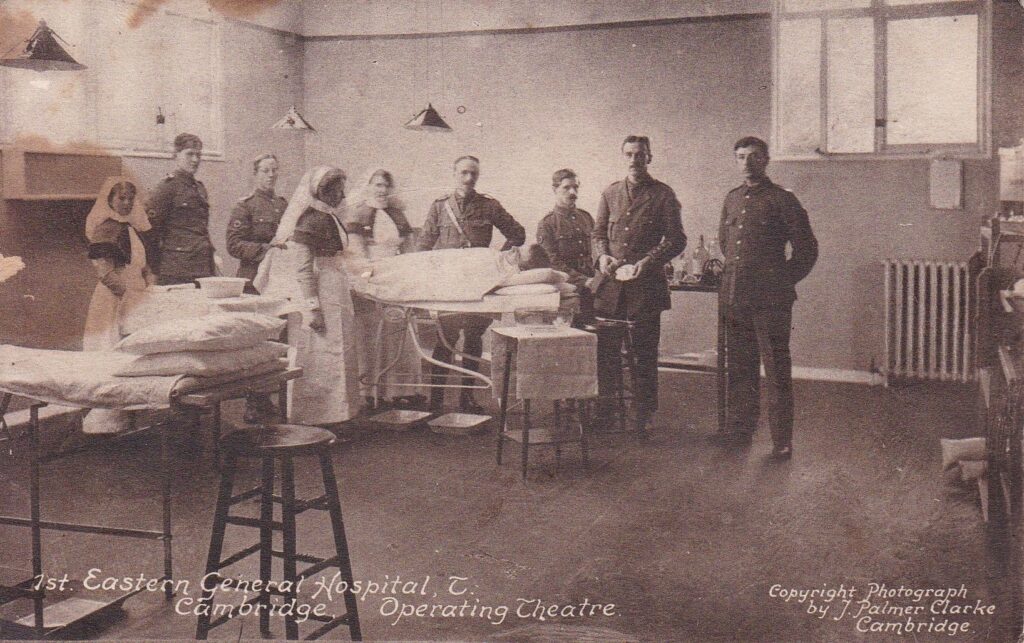
Built on a ten-acre cricket field jointly owned by Clare and King’s Colleges, the First Eastern cost just £25,000 and included operating theatres that used the latest medical practices. The proximity to medical facilities at Addenbrooke’s, as well as the strategic position of the railway, made Cambridge the ideal location to build this pioneering military hospital.
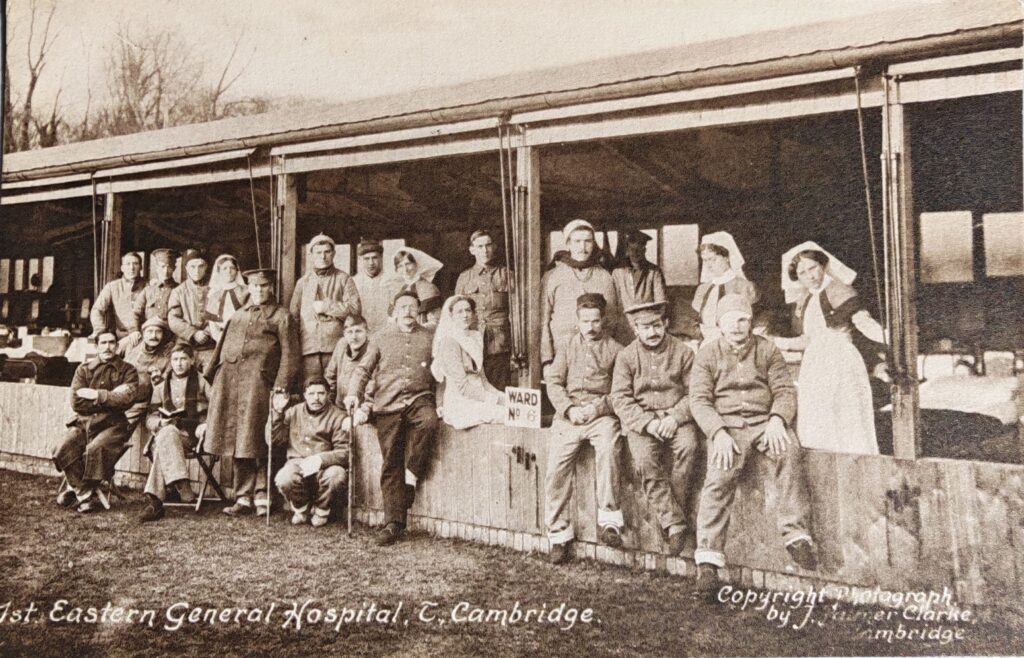
It consisted of prefabricated wooden huts with felt roofing and asbestos cladding. Utilitarian in design, the entire Hospital was on a single level, with no stairs. The wooden huts contained at least 24 wards, running in rows east to west, each of which held up to 60 beds. The central walkway of the Hospital gave each ward access to the kitchens, administration offices, and operating theatres.
At its peak, the Hospital had 1,700 beds, and over the course of the war, more than 70,000 wounded soldiers were treated there.
The Patients
We can get some idea of the kinds of disabilities experienced by the wounded in wartime by looking at some of the common wounds suffered by the men admitted to the First Eastern. Soldiers arrived at the Hospital with a variety of injuries. Frequently, they would be caked in mud, dried blood, and pus from infected wounds.
Life in the unsanitary conditions of the trenches inevitably meant that many of the men were also infested with lice and suffering from frostbite. Sometimes, wounds were so severe that the only option was limb amputation. Those affected would have experienced lifelong physical disability because of losing one or more limbs or other parts of the body (facial injuries were not uncommon in wartime, and missing noses or facial features could be reconstructed through prosthetics).
The First Eastern’s large-scale, open-air construction also provided ideal conditions for the treatment of tuberculosis (TB), a contagious bacterial disease primarily affecting the lungs.
Bullet and shrapnel wounds were a very real threat to soldiers on the Front Line. Shrapnel wounds could blast away the skin, leaving gaping, raw wounds that cut to the bone. The First Eastern included a pioneering bath ward – effectively a large swimming pool – in which the severely injured men were placed on lilos and a saline drip flushed out the bloody mess of their wounds.
Less severe wounds, known colloquially as a ‘Blighty’, were often welcomed by soldiers in the trenches, as such injuries meant at least temporary reprieve from the fighting and a return to England for treatment. However, most men who were sent home to recuperate from their injuries were ultimately sent back to the Front, a fact that was a source of pride for the country as it highlighted the excellent medical facilities and treatments on the Home Front.
Life in the First Eastern
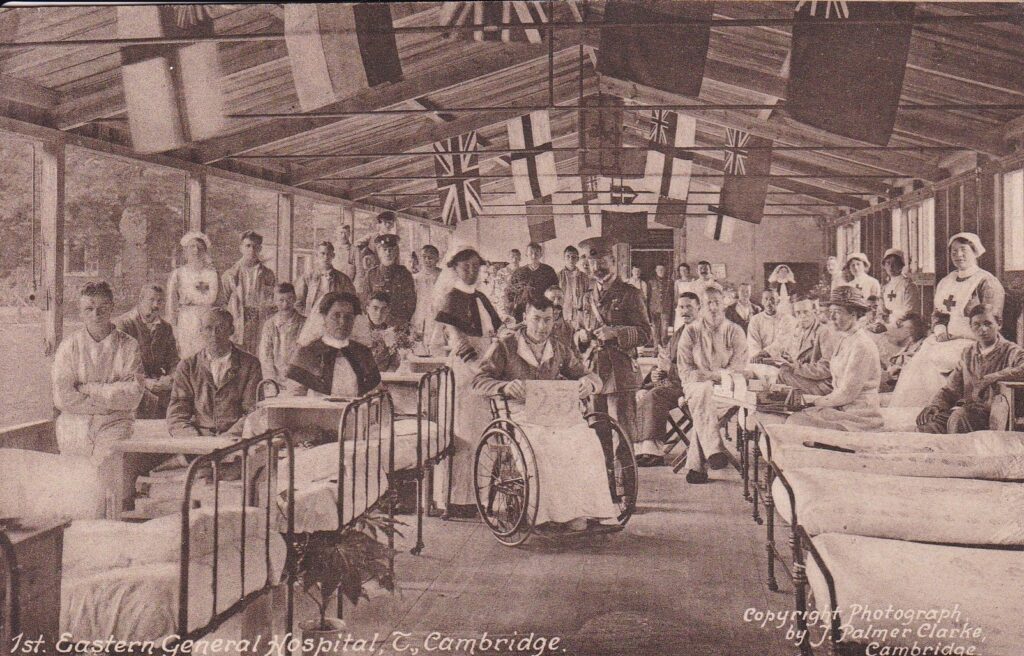
Contemporaries somewhat idealised hospital life, selling picture postcards to raise funds for medical resources. These images showed an idyllic and highly sanitised view of life in the First Eastern, which was often far removed from the reality of unbearable pain, debilitating wounds, and heavy labour by the Hospital staff.
A more realistic perspective can be gleaned from the Hospital’s bi-monthly newspaper, the First Eastern General Hospital Gazette, which ran until February 1917 and reached a circulation of around 7,000. This publication included contributions from patients as well as staff, and it provides a more balanced understanding of what daily life was like in the First Eastern.
Cambridge locals were an important feature of the Hospital. They volunteered entertainments, including theatrical and musical performances, concerts, and lantern slide shows, as well as visiting the sick and wounded and offering to take them out for recreational drives in their motor cars.
The soldiers were generally seen as heroes, and the opportunity to support them was important for the people of Cambridge to demonstrate their patriotism and contribution to the war effort.
Convalescing soldiers at the First Eastern were encouraged to pursue a range of activities which helped to heal body and mind. Those who were well enough played sports such as football and rugby, while others helped with carpentry work.
As well as furniture, items made in the workshop included crutches and walking sticks, attesting to the number of disabled patients housed in the Hospital following amputation surgery. Even the men who were unable to leave their beds took up handicrafts, especially knitting, crochet, and needlework. Their handiwork was sold to raise funds for the Hospital.
Afterlife of the Hospital
The Armistice in November 1918 did not spell the end of the First Eastern, although its function as a hospital ceased at this point. Cambridge faced an acute housing crisis in the post-war period, and the prefabricated huts that had once housed wards for the war wounded now found a new purpose as temporary housing.
Known as the Burrell’s Walk Estate, the first occupants moved in by December 1919, and the estate continued in use until the land was eventually reclaimed in 1924 for the site of what is now the University Library.
A Brief History of Needlecrafts for Wounded Soldiers in the First World War
Needlecrafts played an important role in the convalescence of injured soldiers during and after the First World War. Often dealing with not only physical disabilities but also mental health challenges following the traumatic experiences of trench warfare, recuperating soldiers found the gentle, repetitive practice of needlework therapeutic for body and mind.
The stitching process itself allowed the mind to focus safely on something positive and productive, and the soft, comforting nature of textiles will undoubtedly have provided a welcome contrast to the hard brutality of warfare.
Although the War Office initially expressed concern that embroidery and knitting – traditionally associated with women – would emasculate soldiers, they proved popular among men who benefited from the rhythmic, relaxing, and calming act of sewing.
Kits designed by the Royal School of Needlework were sent out to soldiers arriving from the Front, providing what we would think of today as occupational therapy. While providing therapeutic benefits for the soldiers as their minds and bodies healed from the trauma of war, learning embroidery skills also served a more practical purpose.
The reality was that severely disabled veterans would need to find alternative employment outside of the army, and being adept at needlework was a valuable skill. It would help to ensure the men’s employability when they re-entered civilian life.
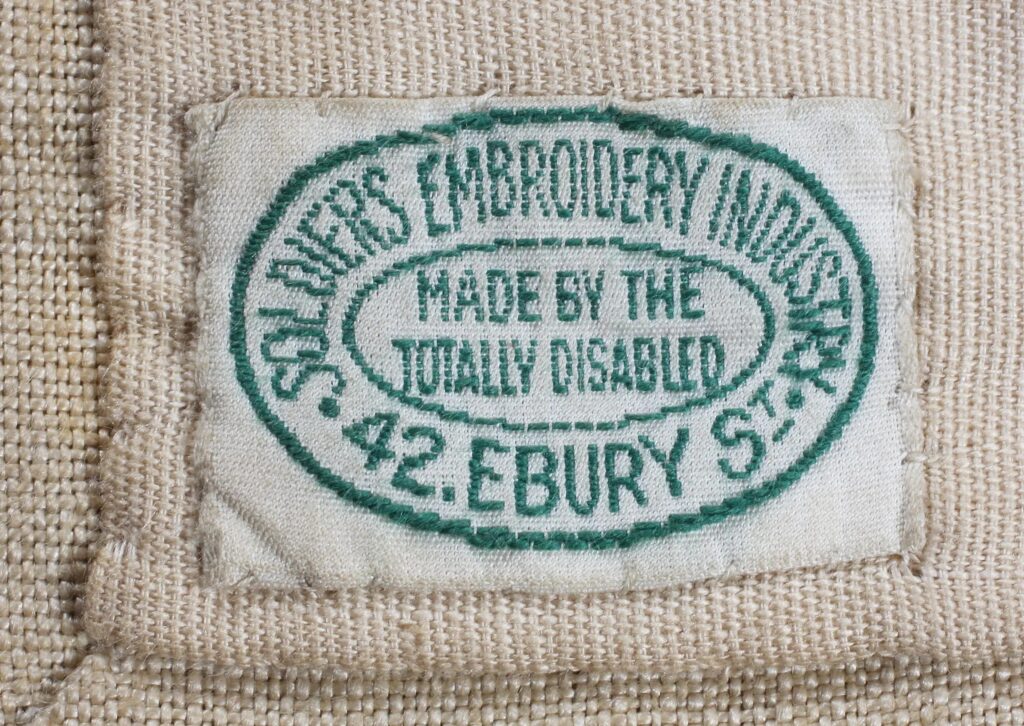
Spearheaded by embroidery specialist Ernest Thesiger, the Disabled Soldiers’ Embroidery Industry supported disabled veterans by providing needlework that could be worked on at home. Thesiger, himself severely wounded during the First World War, became aware of the unemployment of wounded soldiers following their medical retirement.
Noting that ‘there still remains a large number of men who, though in many cases unwounded, are nonetheless totally disabled’ – or shell-shocked – he believed that it was as important for the mind to be occupied as it was for the body. The embroiderers earned an average of 10s a week for their work, which supplemented their army pensions.
Importantly for Thesiger, ‘the work itself affords so much interest that it has a marked effect upon a man’s health’.
Specific works embroidered in the First Eastern General Hospital
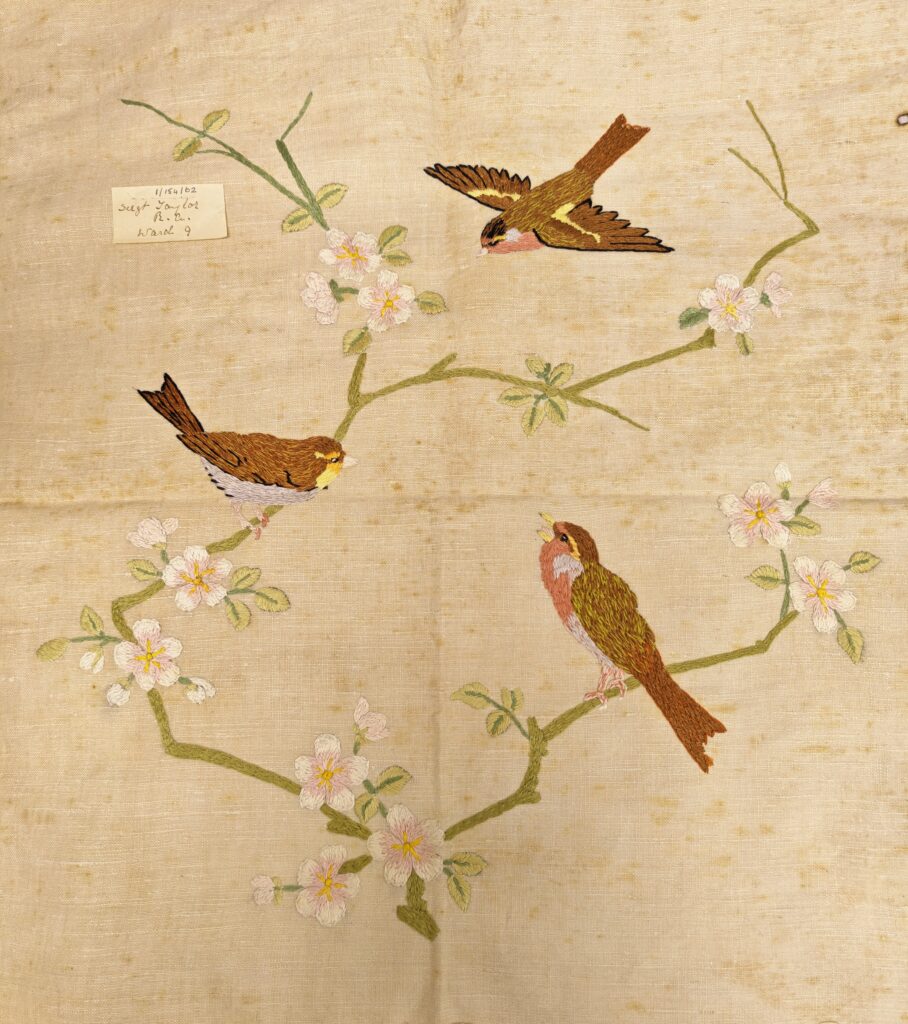
CAMFK: 1.154.62. Needlework picture of birds and almond blossoms. Made by wounded soldier Sargent Taylor, Ward 9, First Eastern General Hospital.
White ground fabric with embroidery detail of birds and flowers on stems. The birds are worked in browns, yellows, black, greys, and pinks. The flowers are worked in white with shades of pink, and yellow centres, while the green stems provide connection between the components and bring the imagery together.
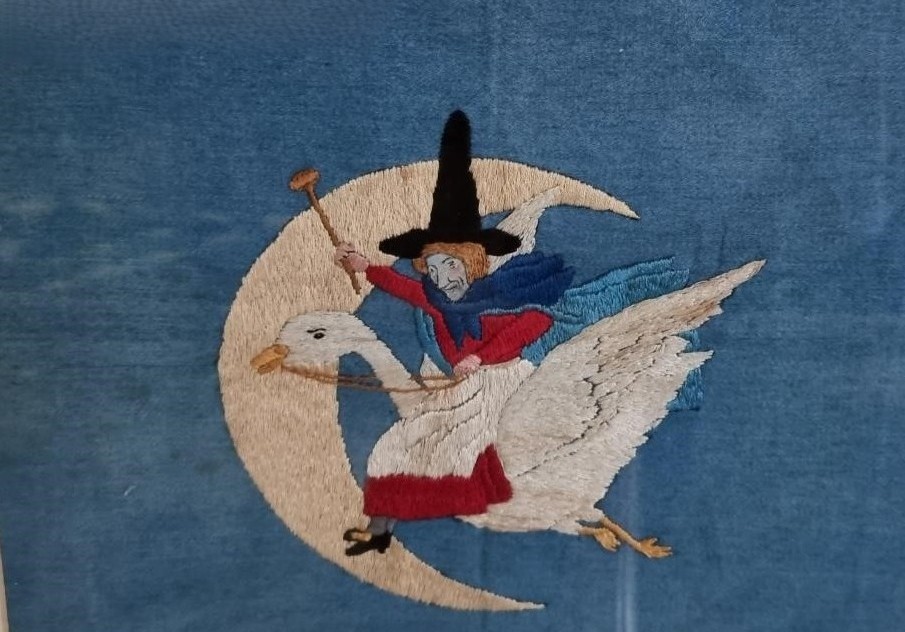
CAMFK: 2.154.62. Needlework embroidery of Mother Goose made by a wounded soldier at First Eastern General Hospital.
Blue ground fabric with central embroidered image of Mother Goose mounted on a goose against a backdrop of a crescent moon. The goose is worked in cream shades with wing feathers highlighted with dark blue outlines. Mother Goose wears a black pointed hat, a long red dress, blue flowing cape and a cream apron. Her facial details are carefully picked out in dark backstitching to emphasise her expression.
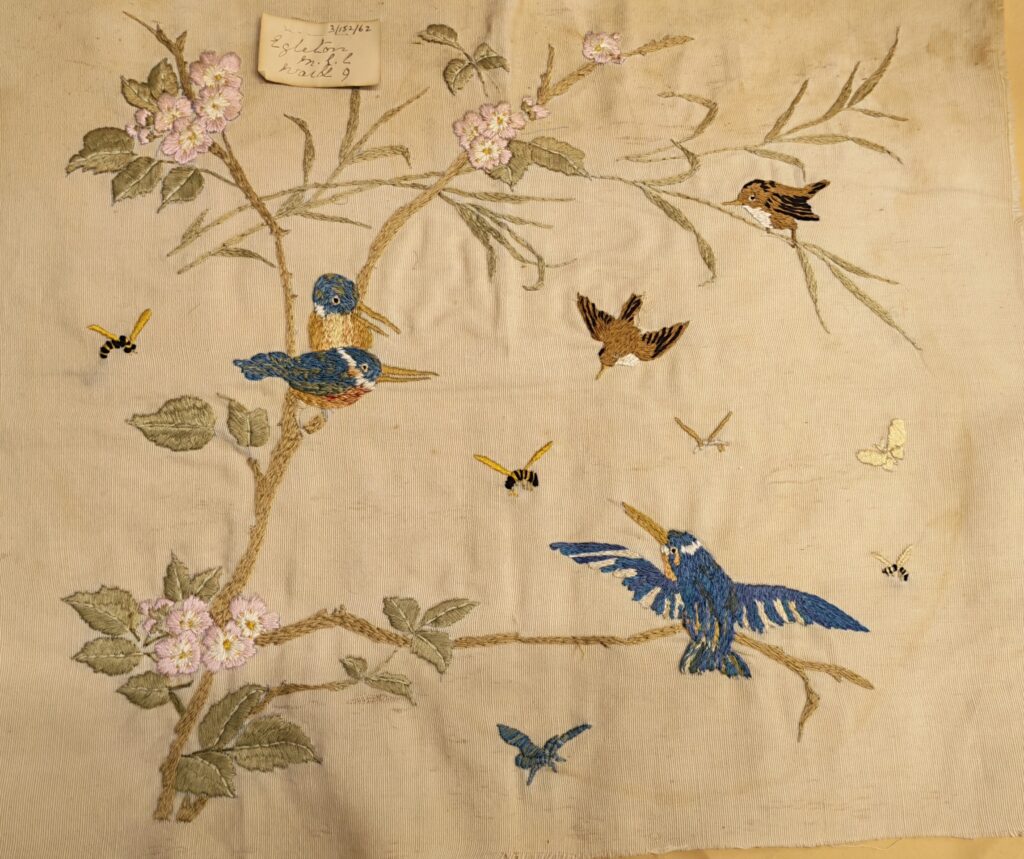
CAMFK: 3.154.62. Needlework of hummingbirds made by a wounded soldier at First Eastern General Hospital.
Cream ground fabric with embroidered detail of birds and flowers on branches. The birds, which include kingfishers, are worked in blues, greens, white, and shades of orange and brown, while smaller birds in the background are worked in shades including brown and black. The flowers are pale pink-edged with white centres and yellow pistils. Meandering branches in brown bring together the otherwise separate elements of the piece, punctuated by grey-green leaves. This piece was embroidered by an unknown maker.
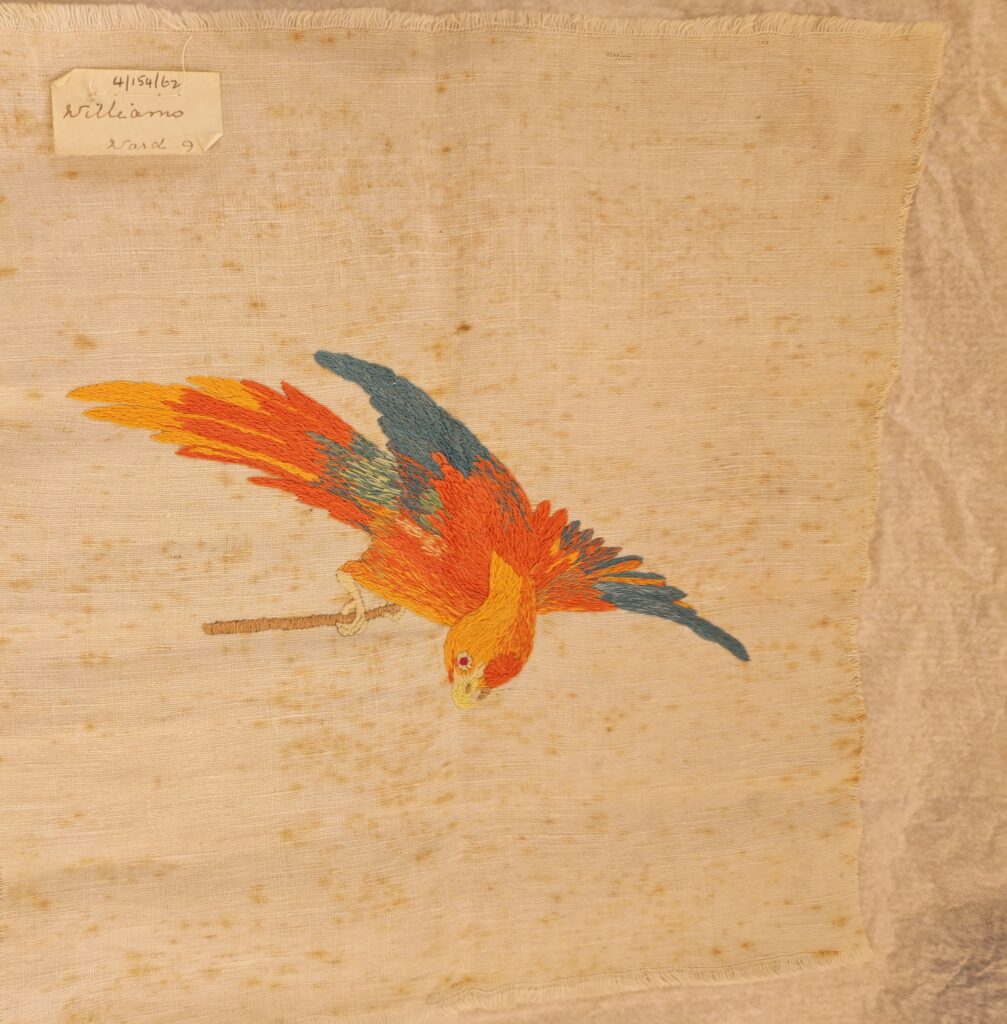
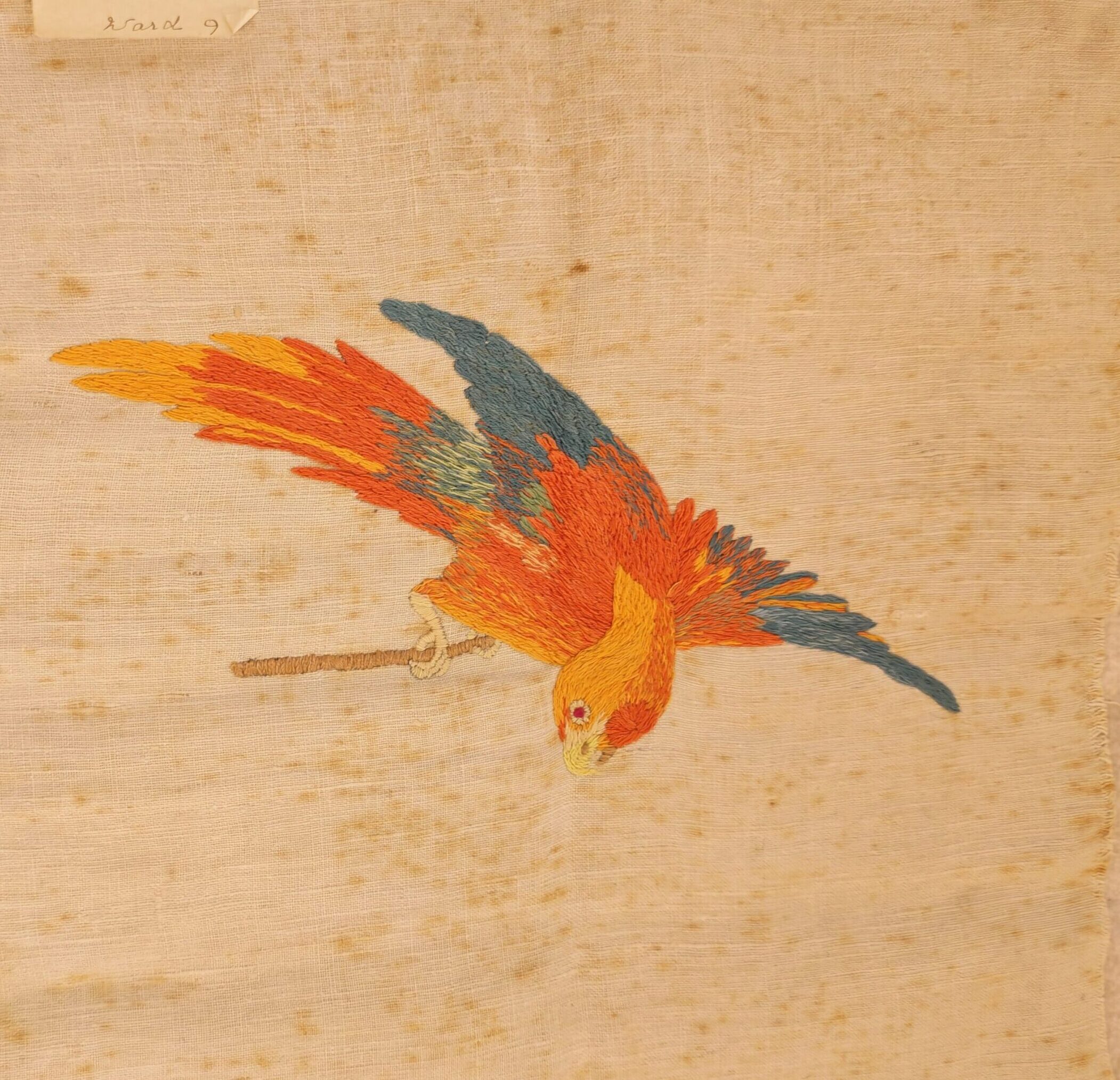
CAMFK: 4.154.62. Needlework picture of a parrot. Made by wounded soldier ‘Williams’, Ward 9, First Eastern General Hospital.
White ground fabric with embroidered image of macaw parrot on a perch. The bird is worked in shades of red, orange, blue, green, and yellow. This piece was worked on Ward 9 by a convalescent whose name is recorded only as ‘Williams’.
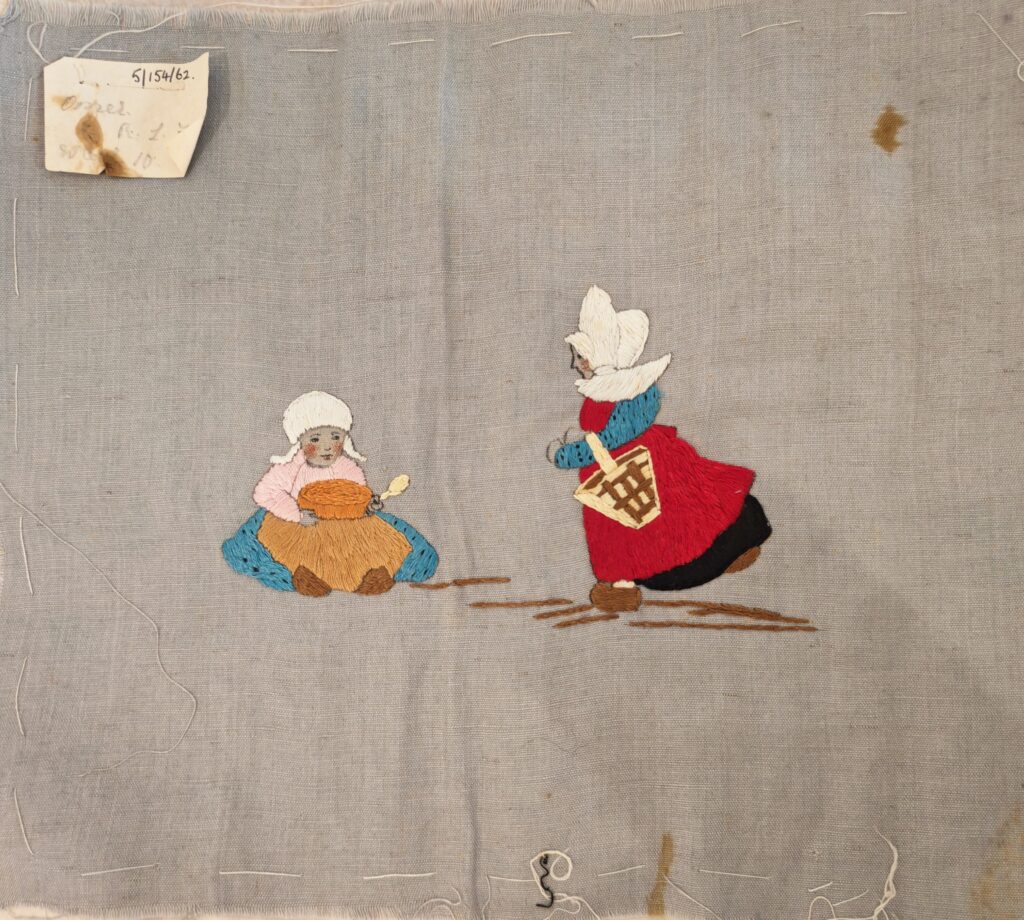
CAMFK: 5.154.62. Needlework picture of two Dutch children. Made by wounded soldier ‘Osrer, B L F’, Ward 10, First Eastern General Hospital.
Pale grey ground fabric with an embroidered image of two women. Both women wear brown clogs and white bonnets or caps. The woman on the left is crouching on the ground holding a loaf of bread in one hand and a wooden spoon in the other. She wears a pale pink blouse, blue skirt, and brown apron, and her facial features are delicately picked out to accentuate her expression and pink cheeks. The woman on the right wears a wide white collar with bright red cloak and a black skirt, with a blue shawl around her shoulders. She carries a large basket over her left arm. This piece was worked on Ward 10. The only identifying information for this embroidery is the name ‘Osrer, B L F’.
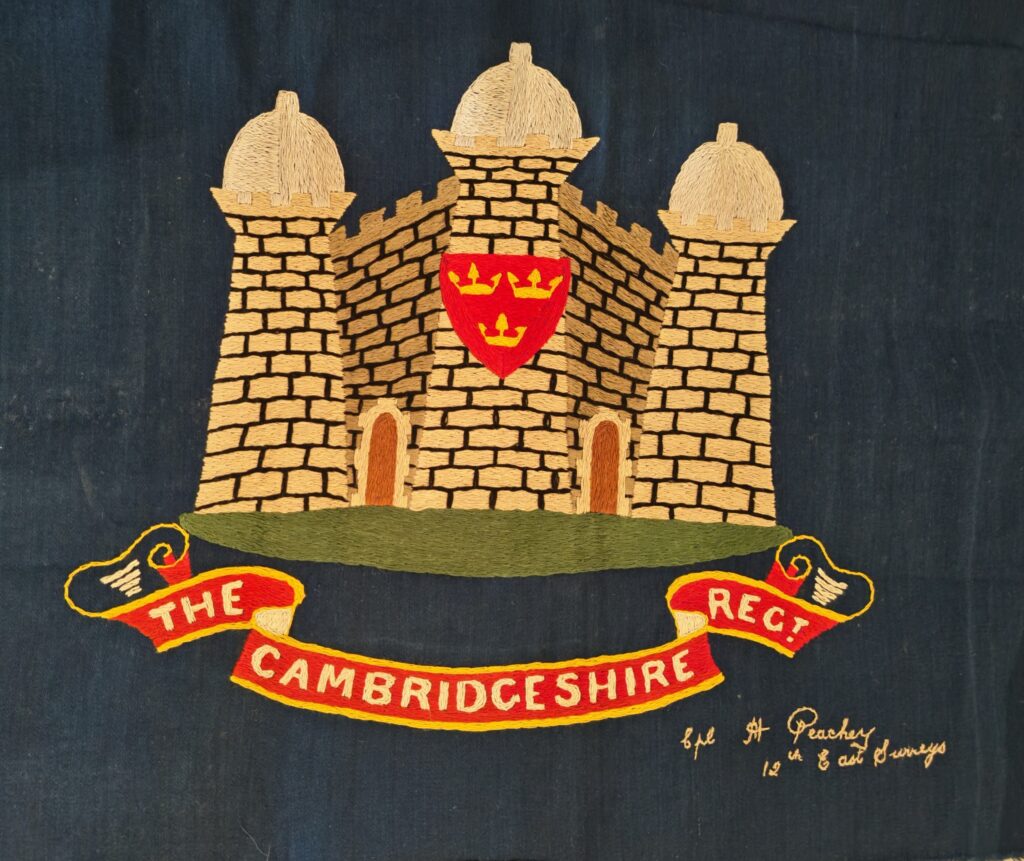
CAMFK: 229.63 An embroidery of a regimental banner for the Cambridgeshire Regiment. Worked by Corporal. H. Peachey (12th Eastern Surreys) when a patient at First Eastern General Hospital.
Navy blue ground fabric embroidered with the badge of the Cambridgeshire Regiment. The image depicts a fortified castle with turret windows and three crenelated towers. On the central tower is a red shield bearing three yellow crowns. Below the castle is a red scroll reading ‘The Cambridgeshire Regt’. This embroidery was worked in the First Eastern General Hospital in 1916 by Corporal H. Peachey, from the 12th (Service) Battalion, East Surrey Regiment. This infantry unit was recruited at the start of World War One as part of ‘Kitchener’s Army’. It was raised in Bermondsey, South East London, and was active between 24th May 1915 and 10th June 1919.
Sources:
Anonymous, ‘Ernest Thesiger’s Embroidery’ (no date): https://www.ernestthesiger.org/Ernest_Thesiger/Embroidery.html
Anonymous, ‘Ernest Thesiger and the Disabled Soldiers’ Embroidery Industry’ (no date): https://www.ernestthesiger.org/Ernest_Thesiger/Disabled_Soldiers_Embroidery_Industry.html
Brannick, Beau, ‘Coping Through Stitch: Soldiers Recovering in Hospital and the Embroideries that Passed the Time’ (2025): https://www.museumofcambridge.org.uk/2024/04/coping-through-stitch-soldiers-recovering-in-hospital-and-the-embroideries-that-passed-the-time/
Capturing Cambridge, ‘First Eastern General Hospital’ (no date): https://capturingcambridge.org/museum-of-cambridge/museum-exhibit-stories/first-great-eastern-general-hospital-trinity-college/
Every Stitch a Story, ‘The Soldiers Embroidery Industry’ (11th April 2022): https://everystitchastory.co.uk/2022/04/11/the-soldiers-embroidery-industry/
Royal School of Needlework, ‘With Honour: 150 Years of the RSN: Virtual Exhibition’ (2025): https://royal-needlework.org.uk/virtual-exhibition/with-honour/
University of Cambridge, ‘From the Front to the Backs: Story of the First Eastern Hospital’ (2025): https://www.cam.ac.uk/research/news/from-the-front-to-the-backs-story-of-the-first-eastern-hospital
Wikipedia, ‘12th (Service) Battalion, East Surrey Regiment (Bermondsey)’ (12 February 2025): https://en.wikipedia.org/wiki/12th_(Service)_Battalion,_East_Surrey_Regiment_(Bermondsey)