Written by Sully Newman, Collections Volunteer
Supported by Milly Westbrook, Collections and Projects Officer at Museum of Cambridge
Here at the Museum of Cambridge, we aim to provide volunteering opportunities across all aspects of the museum, from Front of House and tour guiding to behind-the-scenes work in collections and research.
Hear from Sully Newman, who joined us at the Museum of Cambridge for a week-long Collections Volunteer placement. With Sully’s help, we were able to complete important cataloguing work, ensuring our objects are properly cared for and accurately processed.
Volunteering at the Museum of Cambridge in Collections provided me with an invaluable opportunity to gain hands-on experience with historical objects and to understand the behind-the-scenes work that makes each visitor experience enriching. During my placement, I was involved in a range of tasks that offered insight into the practical, research, and curatorial aspects of museum work.
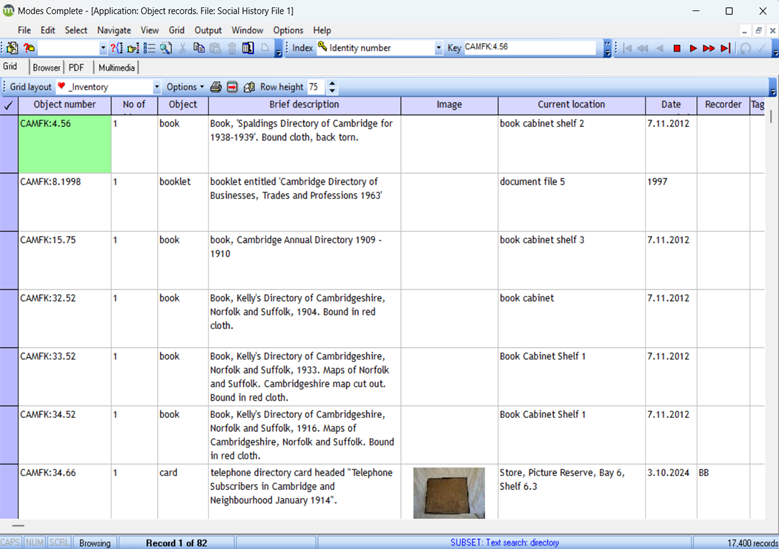
A significant part of my role involved cataloguing accessions relating to local Cambridge history using the Museum’s Modes database. This required careful attention to detail to ensure each entry was accurate and comprehensive. Proper cataloguing is essential for accessibility, allowing researchers, staff, and the public to locate objects and understand their historical context. Working with the database highlighted the importance of digital record-keeping in maintaining both accuracy and long-term preservation.
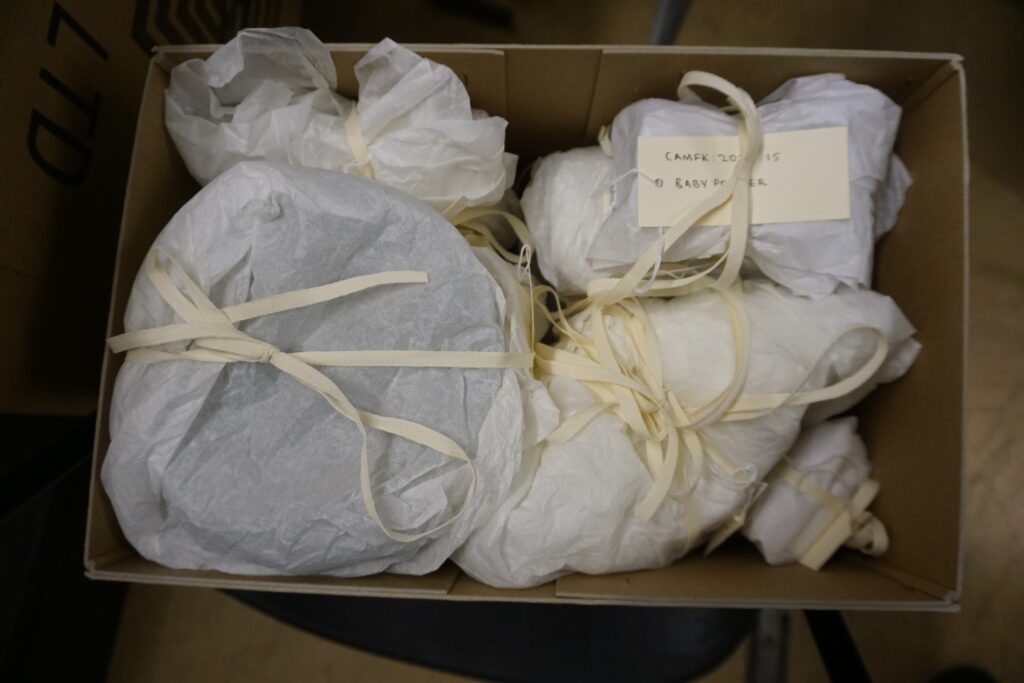
I also photographed, repackaged, and relocated objects in accordance with strict handling procedures. These tasks reinforced the importance of careful handling and storage in protecting fragile and historically significant items. Each object presented its own challenges, helping me to develop an understanding of the standards required to maintain the integrity of museum collections.


An especially rewarding part of my placement was supporting the Museum’s project on disabled heritage. I identified relevant objects within the collection and assisted in updating their records. In addition, I revised existing object descriptions to enhance detail and identified instances where previous records conflicted with modern cultural sensitivity standards. This work highlighted that museums not only preserve objects but also shape the narratives they tell about history, making inclusivity and thoughtful interpretation just as important as historical accuracy.
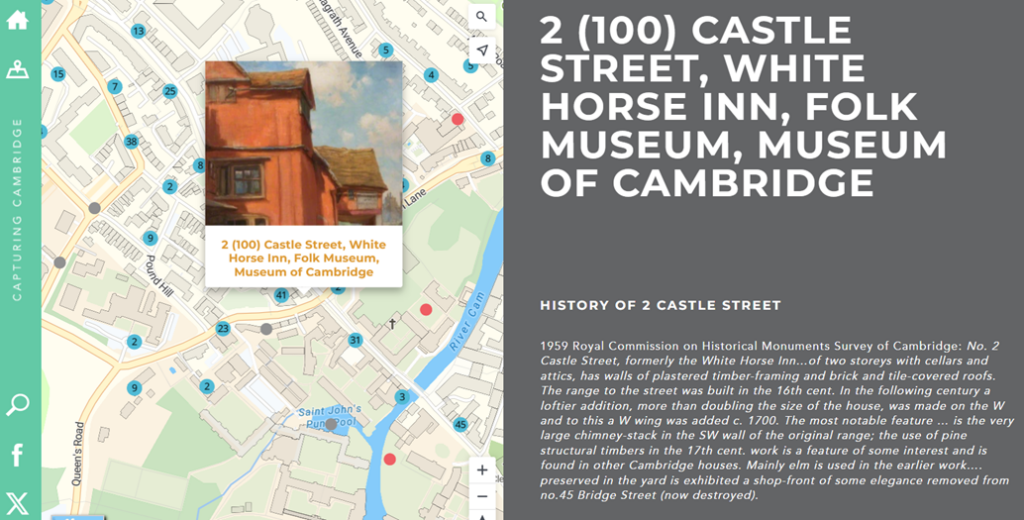
I also cross-referenced the Museum’s collection with external resources, such as the Capturing Cambridge database, to respond to researcher enquiries. This demonstrated how museums connect their collections to broader historical knowledge, supporting scholarship and providing context for objects in meaningful ways.
Furthermore, the Museum of Cambridge’s independent status means that each member of staff fulfils a variety of roles beyond their formal job description. This structure allowed me to gain a diverse range of experiences, from cataloguing and object handling to research support and curatorial tasks, offering a broad perspective on museum operations that would be difficult to achieve in a larger institution. It was especially inspiring to see how the Museum’s success is driven not by each person’s efforts but by their collaboration and their collective enthusiasm for local heritage.
Overall, the placement offered a comprehensive view of museum practice, combining practical handling, digital cataloguing, and research support. It gave me a deeper understanding of the care, precision, and thought required to maintain and interpret historical collections. Above all, it provided insight into how museums balance preservation with accessibility.
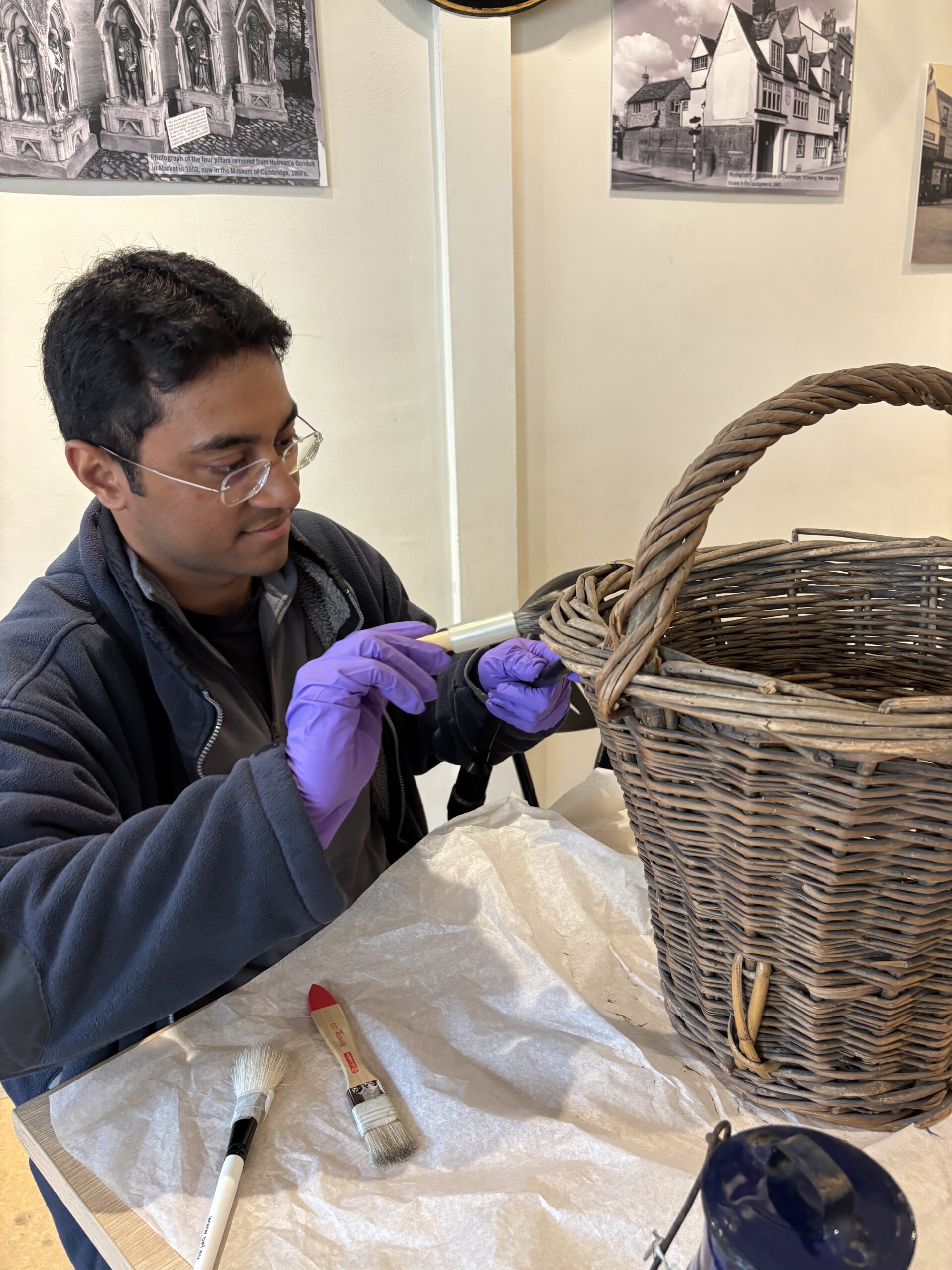
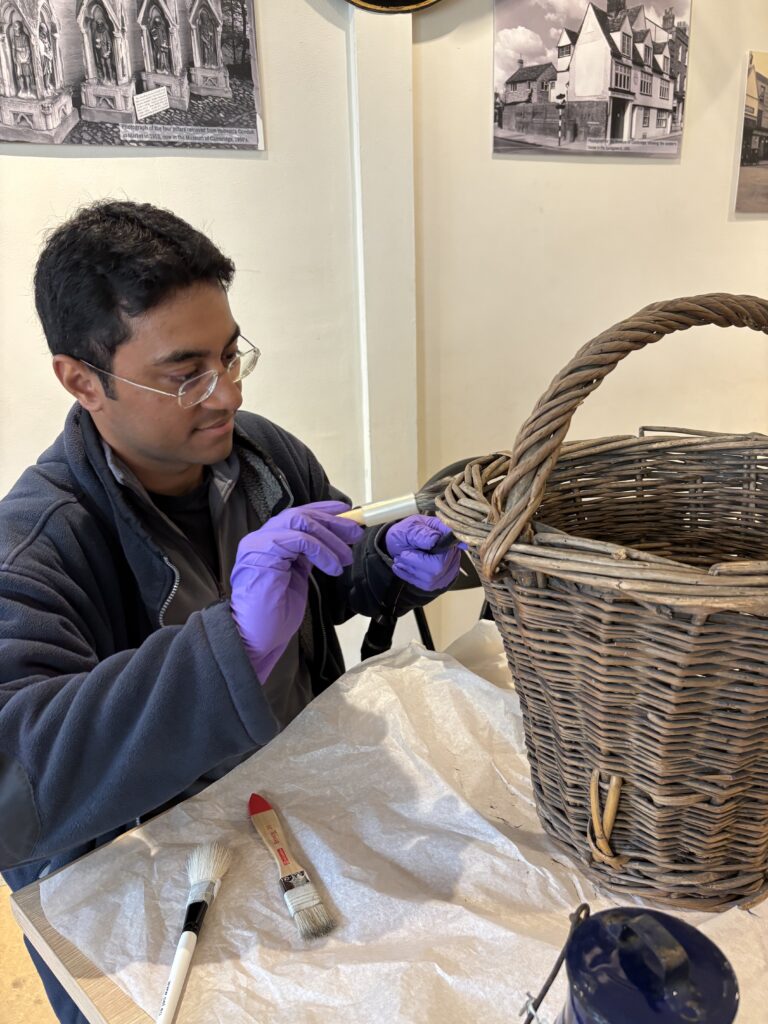
The experience was particularly enjoyable thanks to the welcoming team, whose support enabled me to take initiative in all tasks while knowing guidance was available when needed. Milly, the Museum’s Collections and Projects Officer, was extremely proactive in teaching me how to work professionally using a range of cataloguing tools. She also delegated to me ample tasks each day in a well-structured manner and allowed me to tailor each day according to which aspects of collections care I personally wished to gain more experience in, making this volunteering placement unique and extremely rewarding. Most exciting was using a
conservation vacuum and brush to clean objects,
which is something I hadn’t done before!
The Museum of Cambridge is the independent social history museum of the City and County of Cambridgeshire. As a registered charity the Museum relies on your support to enable volunteering opportunities such as this.
For more information on how to support the Museum of Cambridge’s vital work to preserve local history for future generations, visit www.museumofcambridge.org.uk or phone 01223 355159.