
By Milly Westbrook Volunteer and Operations Officer
Visiting Cambridge? Here’s how to make the most of it! Skip the usual tourist trail and dive into the city’s rich heritage by exploring its independent museums.
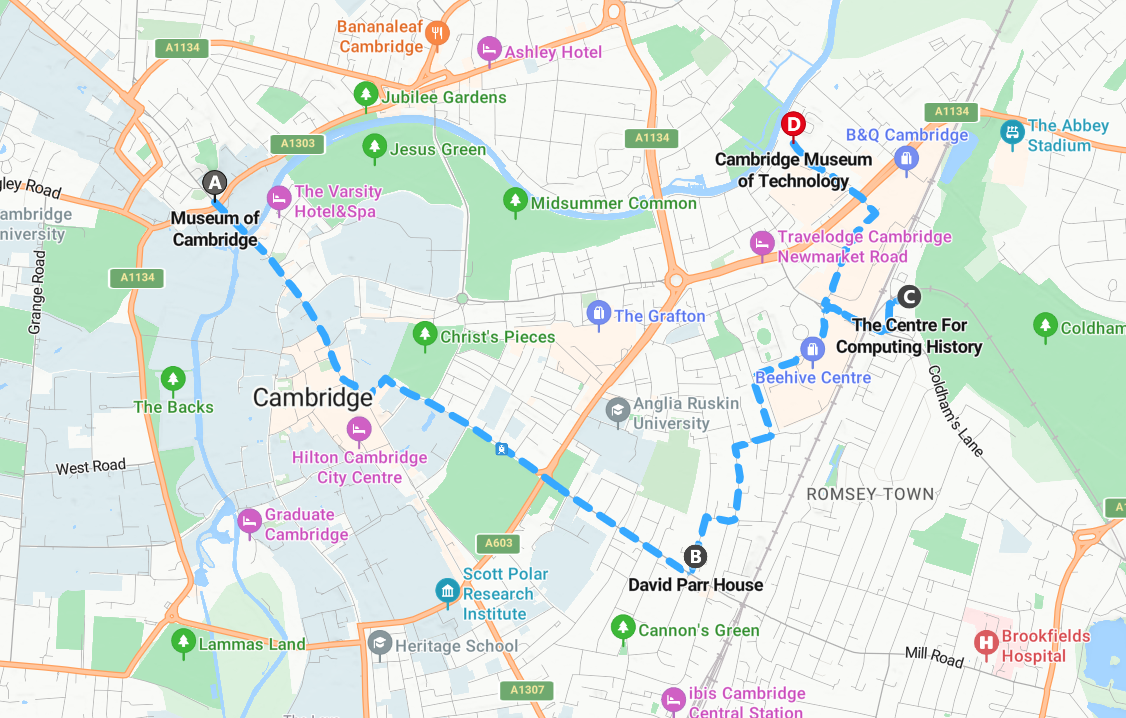
Cambridge’s Indie Museums are the Museum of Cambridge, David Parr House, the Centre for Computing History and the Cambridge Museum of Technology. These hidden gems offer a fun, fascinating, and truly authentic glimpse into Cambridge’s past, perfect for curious minds and culture lovers alike. You’ll enjoy a memorable day out, snap some great photos to share with friends, and support the local Indie Museum community while you’re at it.
So, what is an Indie Museum?
In Cambridge, our indie museums are the small museums who are not apart of the University of Cambridge and receive no government funding or guaranteed income stream. Instead, Indie museums rely on grants, fundraising activities and their own initiatives and resources to generate income. As such, Indie museums serve as custodians of historically important collections without the financial security and enhanced funding of University Museums.
How to support Indie museums?
It is easy and fun to support Indie museums, just coming for a visit helps directly support the museums, through ticket sales and exposure. Further, any donations, big or small, goes a long way. But you don’t even have to spend to support your local Indies, just helping us spread the word about the wonders that the indies hold is invaluable! By reviewing us online, posting on social media and even good old-fashioned word-of-mouth you can help generate more visitors to these hidden gems!
Why support Indie museums?
Not being part of the University Museums, Indie museums have long been overlooked and the treasures they hold missed – therefore just promoting and supporting Indie museums helps more people benefit from our wonderful local histories. By helping small museums continue to care for and share their collections you contribute to preserving Cambridge’s unique history. Further, your support ensures that we can continue our valuable service to the locality, delivering family activities, community engagement programs and providing much coveted volunteer opportunities.
With that in mind … Let’s go!
The best, and most carbon friendly way to take in the beauty of the city while on your trip is by bike. Bring you own, or hire a public bike or scooter, and you can have your own road trip enjoying each stop of the way.
Museum of Cambridge
Naturally, I started at my home institution, Museum of Cambridge. In my view, the museum building itself is the emblematic heart of the collection. It not only houses the objects but also embodies the stories we aim to share.
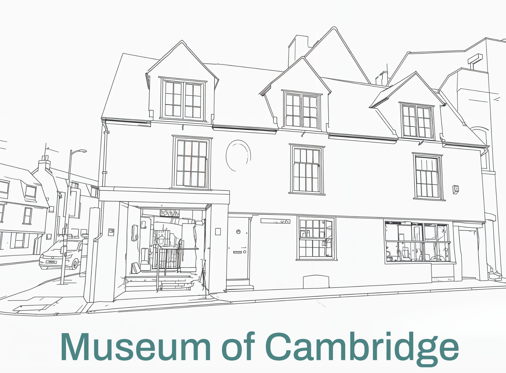
The museum is housed in a Grade II listed 16th-century building that once served as a coaching inn and later as the White Horse Inn pub, licensed back in 1646. As a social hub, it would have seen centuries of Cambridge life unfold within its walls.
Inside, the collection spans over 300 years of local history. Across three floors and nine rooms, the museum is packed with objects that tell the stories of everyday people from Cambridge and Cambridgeshire. Some are wonderfully ordinary, the kind of appliances or consumer products that would have been in homes across Britain. Others are rooted firmly in the locality as examples of local craftsmanship and culture.
There’s always something new to discover too, thanks to the temporary exhibitions that dive into different parts of the county’s past. Recent highlights have included The Stories Behind the Stitches, Educating Cambridge, and the current exhibition Legacies of Windrush in Cambridge.
The Museum of Cambridge shines a light on the people who often get overlooked in the city’s history. The famous colleges may dominate the skyline, but it’s the residents who have shaped, sustained and developed Cambridge from the very beginning.
David Parr House
My next stop was the David Parr House. From the outside it looks like a regular terraced home, but step inside and you’re instantly surrounded by a kaleidoscope of colour and pattern. It’s a true showcase of the Arts and Crafts movement.

The house was home to David Parr between 1886 and 1926. He was a working-class Victorian artist who worked for the Cambridge firm F. R. Leach & Sons, which collaborated with some of the biggest Arts and Crafts names of the 19th century, including William Morris.
Every room is covered, floor to ceiling, in intricate designs. The overall effect is stunning, but it’s the little details that really grab you, the personal touches and tiny imperfections that remind you this was all created by hand. On a guided tour you get to see Parr’s work at its most personal and imaginative.
The house has been beautifully restored in recent years, bringing the rooms back to their former glory. What you see now is a patchwork of Arts and Crafts at its best, layered with Parr’s own creativity and personality.
To top it all off, I got to wander through the cottage-style garden under a perfect blue sky, a view that Monet would have been jealous of!
The Centre for Computing History
Next, I headed over to Newmarket Road to check out the Centre for Computing History. From the outside it looks unremarkable, but step inside and you’re hit with a treasure trove of digital history. The place buzzes with the beeps and sound effects of retro video games and old-school programmes, giving it a brilliantly nostalgic, retro futuristic vibe.
The museum takes you on a journey through the story of computing, from its earliest beginnings right up to today. Desktops, personal devices, games and consoles are all lined up in order, so you can literally walk through decades of tech development. The best part? Most of the machines are hands-on. Each has a game or programme from its own era, so you can sit down and play- it’s interactive, fun and a total hit of nostalgia.
It’s not just the hardware either. There are loads of ephemera on display too: promotional posters, cartridges, accessories and more. My personal favourite was an incredibly detailed concept design diorama for the video game Creatures, made by Cambridge-based developer Millennium Interactive.
There are also immersive exhibits that unpack how coding and programming work behind the scenes. And then there’s the Lyons collection, which features a demo of LEO, the world’s first business computer, designed and built right here in Cambridge.
Cambridge Museum of Technology
Finally, I reached the last stop on this epic journey, the Cambridge Museum of Technology. After a quick coffee in their on-site partner café, I was ready to explore how industry changed the lives of Cambridge’s people.
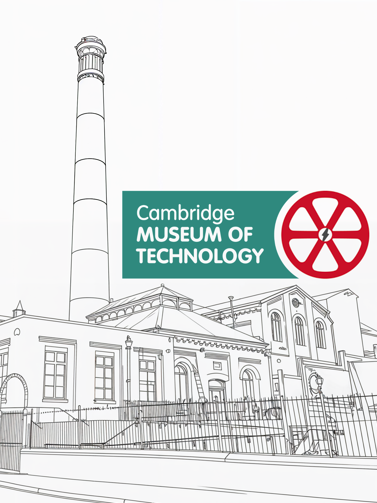
The museum is the home of Cambridge’s industrial heritage. The Victorian pumping house and its 53-metre-high octagonal chimney stand as echoes of a bygone era. I started my visit by marvelling at the two ‘Tandem Hathorn Davies’ steam pump engines, set in beautiful 1890s tile in true Victorian style. These machines, once dedicated to pumping the city’s sewage, are thought to be the only ones of their kind still capable of running today. Even better, volunteers still power the engines with coal furnaces using eco-friendly smokeless coal.
Walking around the huge boilers and furnaces, I could see the marks left by the men who worked here, traces of where they stood far enough back from the heat while clearing ash from the furnaces. It was a fascinating glimpse into the physical demands of industrial life.
I also enjoyed exploring the print room, with its large collection of printing equipment and ephemera, much of which is still in use today. The Valve Yard and Top Bay felt like a permanent steam rally, packed with engines of all shapes and sizes, very steampunk indeed. The museum concludes with the Pye Building, which highlights local tech companies such as Pye and the Cambridge Instrument Company, makers of scientific instruments and electronics. I even spotted a Pye radio, just like the one on display at the Museum of Cambridge.
This was a fitting end to my tour, weaving together all the stories I had discovered along the way. The museums of local industry, like the Museum of Technology and the Centre for Computing History, show the world-changing impact of Cambridge’s innovators. Meanwhile, the Museum of Cambridge and David Parr House tell the stories of the people whose lives were shaped by these technologies and industries.
Visiting all of Cambridge’s independent museums gave me a fascinating picture of the city. It reminded me that Cambridge is so much more than just the universities. This adventure strengthened my connection to the city and to the people who lived here before me.
All of the museums I visited are supported by an incredible group of volunteers. From front-of-house staff to engineers, volunteers are the lifeblood of these institutions. I feel privileged to work alongside them and see their dedication and selflessness firsthand.
I hope this adventure inspires you to visit some, or even all, of Cambridge’s independent museums and see for yourself the incredible legacies of the people who shaped this city.
It all sounds very interest, might take a look on my next trip into the area 😊