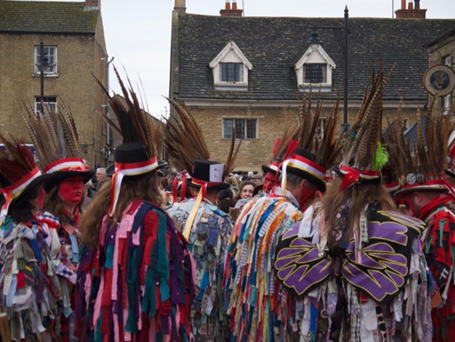
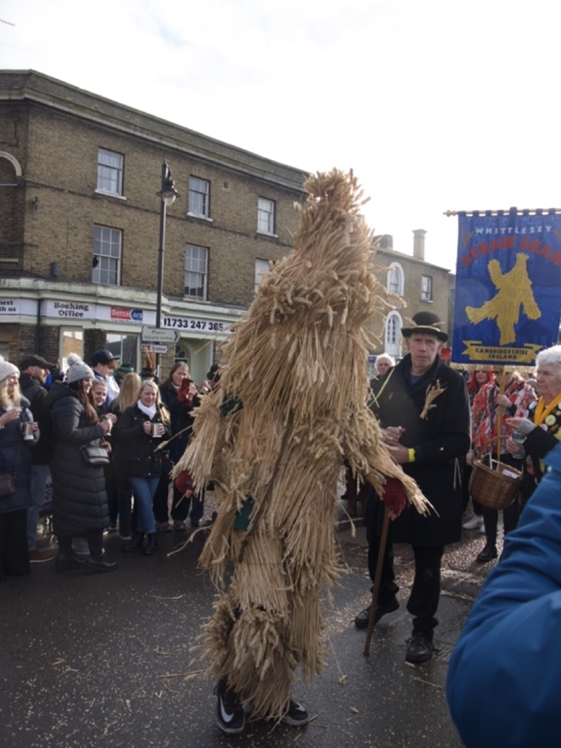
Hear from Izzy, Museum of Cambridge’s PhD candidate, on her visit to Whittlesea to enjoy the Straw Bear Festival!
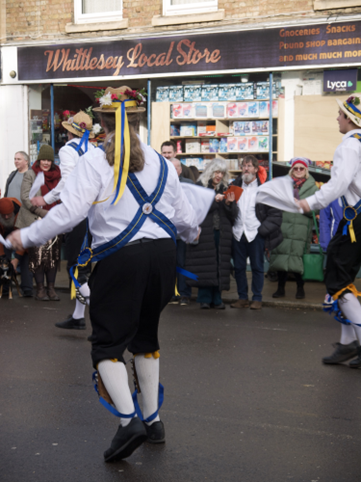
On a cloudy, mild Saturday morning in January, I boarded the 08:47 train from King’s Cross to Whittlesea. Faint jingles of bells and flashes of colourful fabric filled the carriage, as my fellow passengers and I made our way across the wide, flat Fens, to an occasion like no other: the Straw Bear Festival!
The Straw Bear Festival is a three-day folk event celebrated annually in Whittlesea, taking place after ‘Plough Monday’ – the traditional start of the agricultural year. Dressed from head to toe in straw, the ‘bear’ and the ‘baby bear’ dance through the streets, led by their ‘keepers,’ and are followed in procession by Morris/Molly sides and mummers play troupes, watched by crowds of onlookers. People gather small pieces of straw off the floor – fallen from the bear’s costume –hoping for good luck, and drink beer from silver tankards available to purchase at nearby antiques shops. Festivities continue into Saturday evening, before the costumes are burned on Sunday morning.
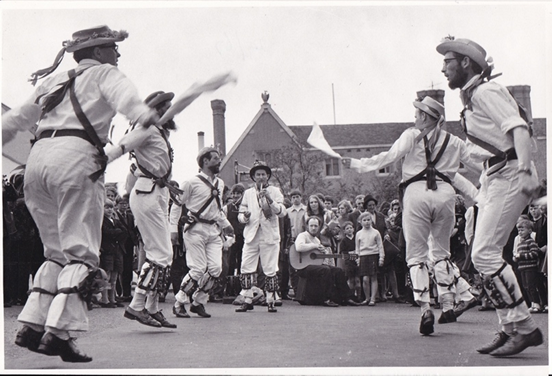
Early anthropologist James G. Frazer, literary scholar C.G. Moore Smith, folklorist T. Fairman Ordish, and folk-dance collectors Joseph Needham and Arthur L. Peck wrote about the interrelated practices of Molly dance, Mummers plays, Plough Monday, and the Straw Bear festival in the late 19th and early 20th centuries. They describe the celebrations as ancient or archaic seasonal customs. However, these authors also frame the traditions as caught up in cycles of loss and revival throughout history.
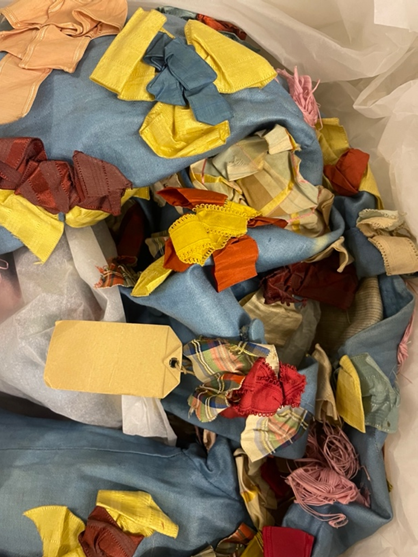
This particular version of the Straw Bear was revived in 1980 by the Whittlesea Society, after the second British folk revival of the 1960s and 70s. Contemporary folk dancers are inspired by historical sources to create new kinds of folk dance styles, costumes, and movements. At the Museum of Cambridge, we have several objects and photographs which tell stories of Morris, Molly, and Plough Monday over the years – some of which highlight continuity, and others which showcase transformation. Come along and visit to find out more about Cambridgeshire folklore, traditions, and social history, such as the Straw Bear Festival.