
Written by Milly Westbrook, Collections and Projects Officer, Museum of Cambridge
In the first of a series of blog posts accompanying the Museum of Cambridge’s Folklore exhibition, the museum’s Collections and Projects Officer and exhibition curator, Milly Westbrook, explores what folklore is, how we define it and why it still matters today.
Folklore has attracted growing interest in Britain in recent years. The reasons are unclear, much like folk traditions themselves, which often have no discernible moment of creation. Perhaps, in a world where global tensions and disasters are just a tap away on our smartphones, cultural heritage offers an escape. Or, as AI enters every aspect of our lives, traditions of yore provide a refreshing antidote. Or maybe it’s the handiwork of Ms Taylor Swift, whose 2020 album Folklore introduced a whole new audience to the concept.
Whatever the reasons, folklore remains a slippery term. Ask five people what it means and answers might range from ‘the stories and myths of a specific culture’ to ‘it’s everything – human culture itself!’
The word offers a starting point: folk means people, while lore refers to their traditions and knowledge. Folklore, then, encompasses the practices, stories and knowledge shared and passed down through generations, shaped by the landscapes and circumstances of the communities in which they develop.
We often think of folklore as belonging to a lost past, a heritage taken from us. But this fatalistic view overlooks a crucial truth: folklore has always evolved, and treating it as something frozen in time risks preventing it from living on.
Many traditions emerged in geographically isolated communities, where people learned to survive in their local landscapes and passed their knowledge down through generations. Industrialisation, improved infrastructure and advances in communication and travel gradually connected these communities to the wider world. As ways of life changed, many traditional practices were no longer necessary.
Yet these traditions have never truly disappeared. Though no longer practised, they survive through the work of historians and folklorists, preserving a wealth of knowledge about our past.
One such folklorist was Enid Porter (1908–1984), curator of the Museum of Cambridge from 1947 to 1976. She dedicated much of her life to recording East Anglian folklore and capturing oral histories from those who remembered these traditions in practice. The objects and knowledge she collected remain among the Museum’s foremost collections and form the heart of its 2026 Folklore exhibition.

Today’s renewed interest in folklore offers an opportunity to revive its spirit in a new age. At a time when some look to folklore as a glorified past of unchanging tradition, it is more important than ever to recognise that folklore has always depended on adaptation. Our forebears did not discover one way of working the land and stick to it until machinery arrived. They adapted to new opportunities and challenges.
Yet we often blame modernity and population change for the loss of tradition, rather than allowing our traditions to evolve in response, as they have for thousands of years.
So, do we need folklore today? Absolutely. Sharing stories, knowledge and traditions with our neighbours can restore a sense of belonging and enrich our lives through the wisdom and experiences we bring from near and far. Even before the Industrial Revolution, sharing in a community’s traditions did not require being born and raised there. Migration, though not always easy, helped traditions evolve, introducing new stories and practices.
In 2026, everyone who lives in Cambridgeshire, whatever their background, can take pride in and contribute to its heritage. We simply need to move beyond resisting change and gatekeeping tradition. Cambridgeshire can have a living folklore once again. We just have to come together and share it. Folklore isn’t just something we inherit from the past; it is something we create together.
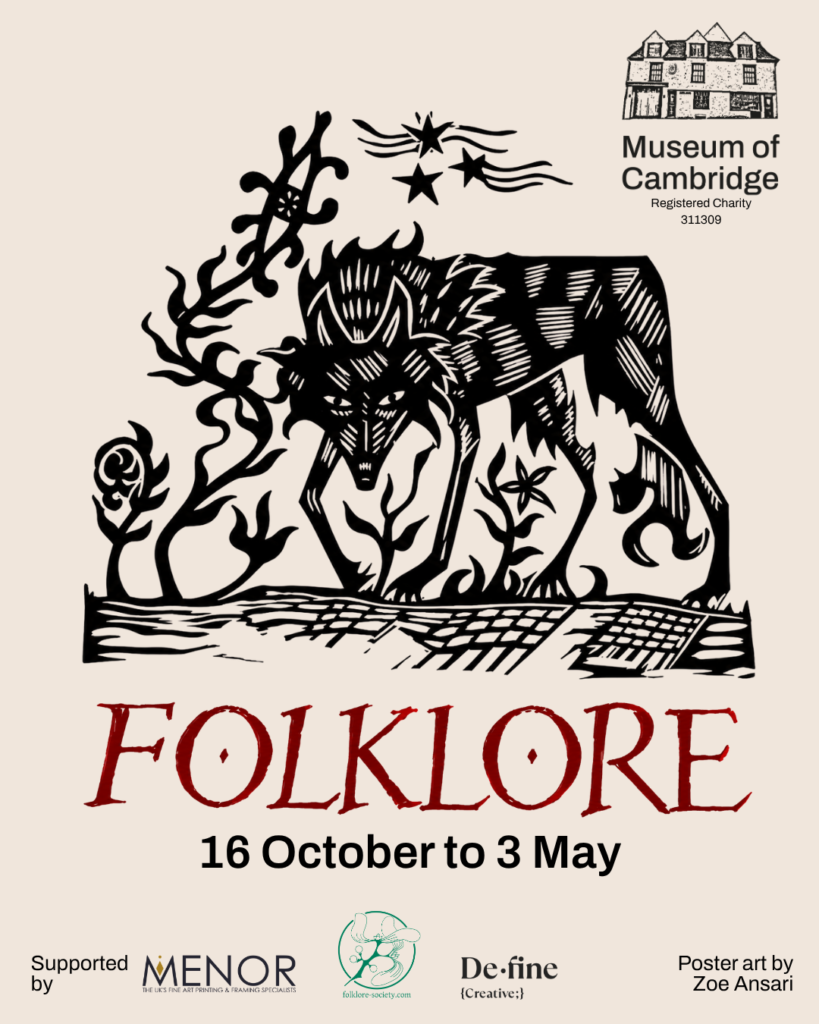
To find out more, come along to Folklore from 16 October – 3 May 2027. Magic, myth and legend at the Museum of Cambridge.
Standard admission applies. Children 16 and under go free.
The Museum of Cambridge is the independent social history museum of the City and County of Cambridgeshire. As a registered charity the Museum relies on your support to enable volunteering opportunities such as this.
For more information on how to support the Museum of Cambridge’s vital work to preserve local history for future generations, visit www.museumofcambridge.org.uk or phone 01223 355159.