
Written by Roger Lilley, Museum of Cambridge Trustee
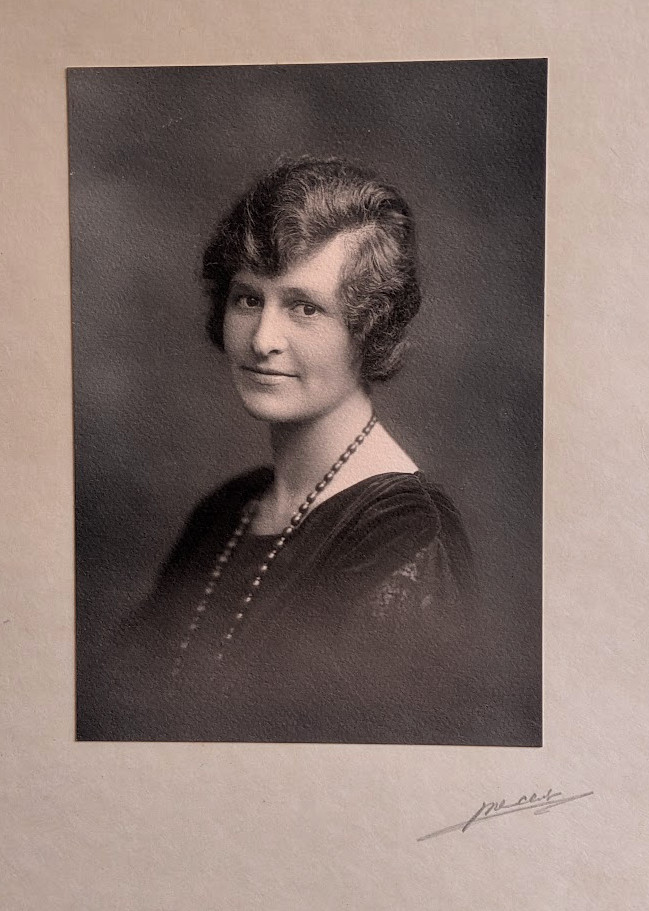
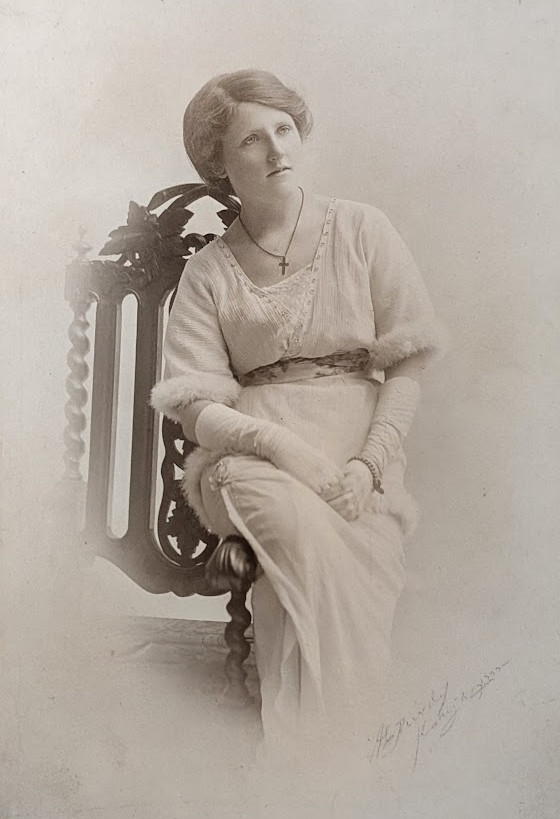
Cambridge is a common link in two family histories that stretch from Norfolk to Sudan and Burma. For Elsie Margaret Fordyce, b 1895, the story begins at 61 Chesterton Road, where she grew up in the household of her father, a Cambridge surgeon. For Louisa Banner, born 1892, the connection comes through her son Thomas, whose studies at Emmanuel College took him from King’s Lynn to lodgings in Warkworth Street before he left for military training. Their stories have survived in different forms. Elsie assembled a scrapbook of photographs, newspaper cuttings, letters and handwritten notes. Louisa’s story emerges from family papers, including official documents, ration booklets and letters written to her and her daughter Christine. The Fordyce scrapbook shows which events someone thought worth keeping together. The Banner papers show what documents reached a household as the war unfolded.
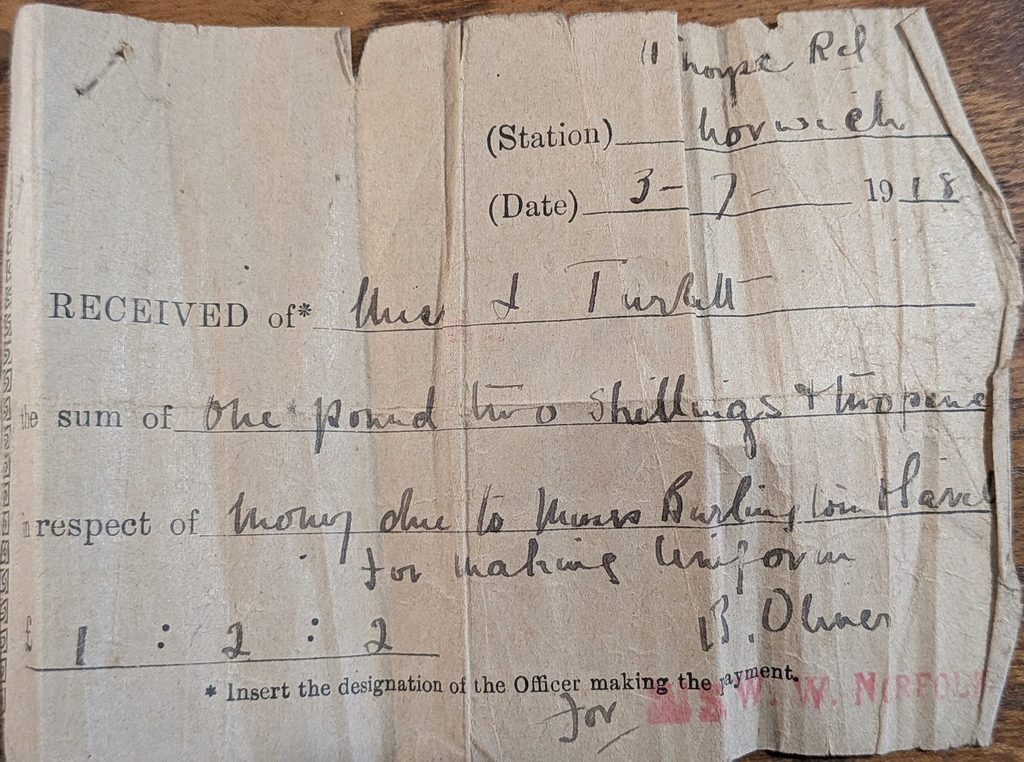
In the First World War, both women participated in organised war work. Louisa, then Louisa Turbett, came from a Norfolk railway family. Her 1915 national registration certificate lists her as a forwarding supervisor in Norwich. A bill dated 3 July 1918 records the cost of her Women’s Forage Corps uniform, £1 2s 2d. The Forage Corps were given the task of travelling around the countryside and dealing with farmers who would supply fodder to the thousands of horses serving on the Western Front. Elsie served as a driver with the Voluntary Aid Detachment whose work lay in supporting hospitals. Her scrapbook preserves a letter from the Northamptonshire Territorial Force Association and a July 1919 letter thanking VAD members. The bill gives Louisa’s service a tangible detail, down to the pennies. Elsie’s letters show how a voluntary organisation acknowledged its members’ work. Both women kept treasured the paperwork that showed the nation’s gratitude for their service at its time of need.
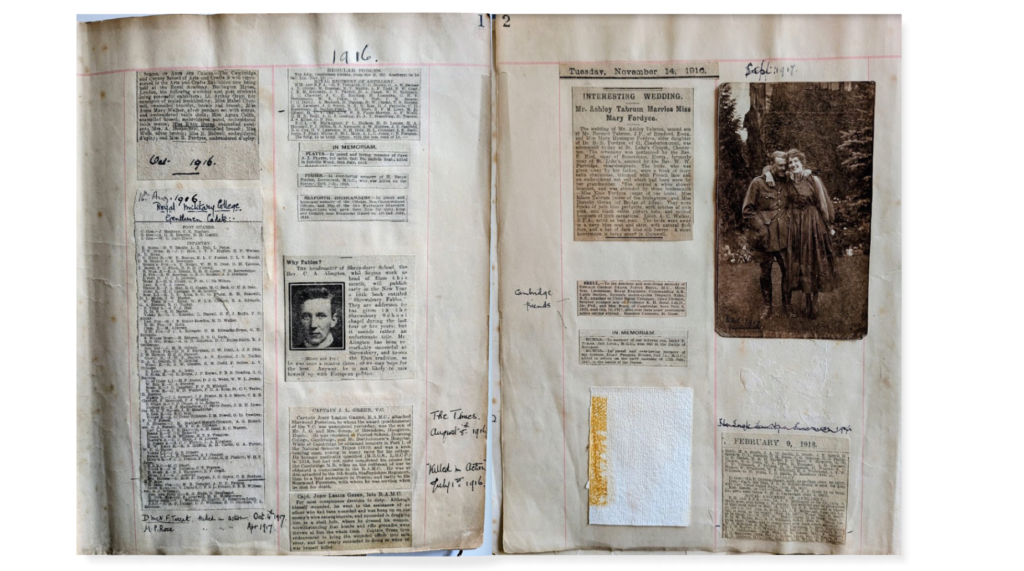
The arrangement of Elsie’s scrapbook tells a story of its own. The report of her sister’s wedding at St Luke’s Church in Cambridge in November 1916 shares a page with notices of men killed in action. Elsie was a bridesmaid and her future husband, Angus Walker, was best man. Elsewhere, beside a printed list of newly commissioned officers, a handwritten “killed” records what happened after the announcement. In Louisa’s case, the aftermath of the first war comes to us through a later family account. William Banner, whom she married in 1919, was reportedly wounded during the war and later developed serious mental health problems. Louisa and Christine visited him during his long hospitalisation in Great Yarmouth. Where the scrapbook captures the shock of individual losses, the Banner account traces the demands of care over years and years.
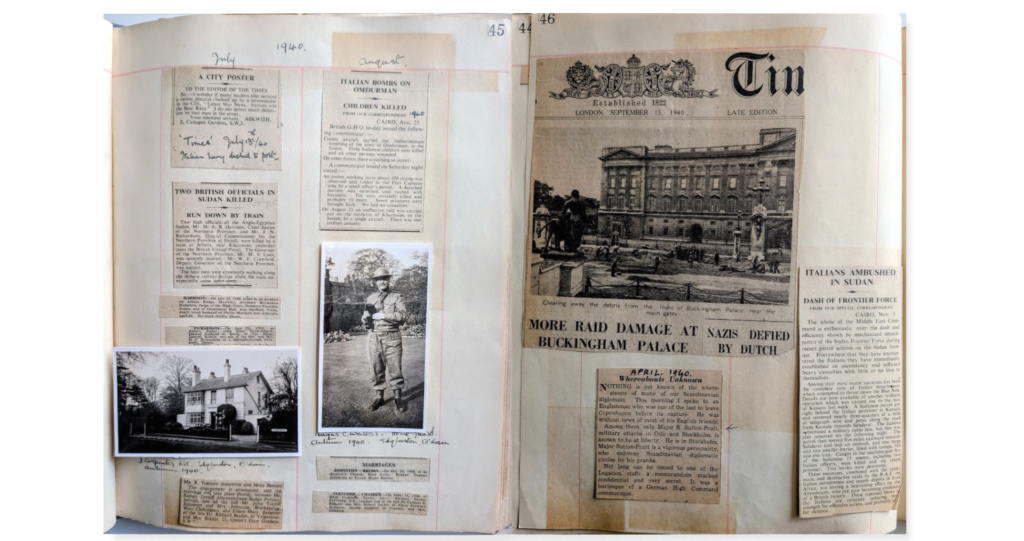
By the Second World War, both women had children. Louisa managed the East Anglian Trustees Savings Bank in King’s Lynn and, as well as having two grown up children, took in three evacuee boys. Their ration booklets put names to the children and show how evacuation entered the everyday running of her home. Elsie’s scrapbook places a photograph of Angus in the Home Guard in Edgbaston alongside news of the fighting in north-east Africa, including a cutting headed “Italian bombs on Omdurman”. Angus’s career in the Sudan Political Service gave that distant news a family connection. The scrapbook also preserves airmail envelopes addressed to Elsie in Khartoum and on the Norfolk coast, reminders of the routes along which family news travelled before the war.
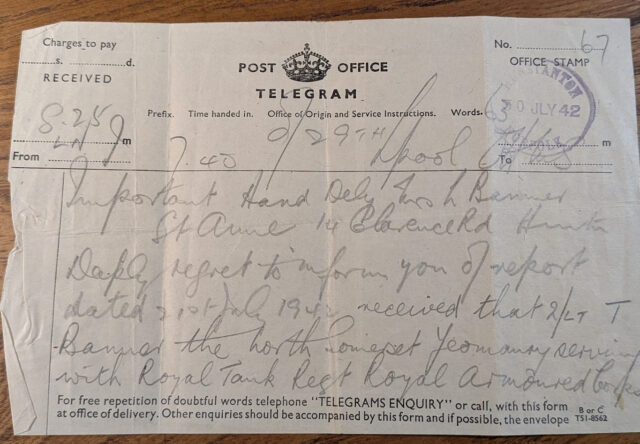
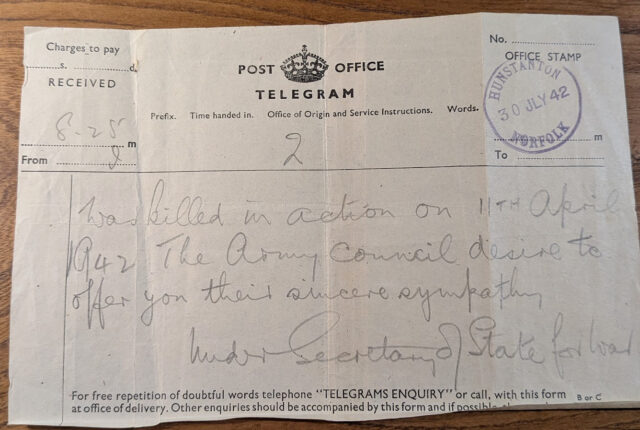
The link between Cambridge and the wider war is especially clear in Thomas’s letters. In January 1940 he wrote to his sister Christine about his first lectures at Emmanuel and asked her to knit him a college scarf. Two years later, writing to Louisa from Burma on 5 March 1942, he opened with “Yet another country visited!” In such a hot country, he describes how it is “absolutely wizard in the shade and almost like an English wood.” He is like a boy on a great adventure, but this is all cut short by his death aged 20. We are still researching the circumstances of his death; the War Office telegram, postmarked 30 July, told Louisa that he “was killed in action on 11th April 1942”. The shift from the voice of a son joking about a strange place to the formal language of the telegram is one of the most moving things the surviving papers allow us to hear.
Elsie’s scrapbook contains a newspaper cutting headed “An Airman to his mother”. Read beside Thomas’s letters, it connects a story offered to newspaper readers with the words one son sent to his own mother. Elsie died in April 1944, and later entries show that other hands continued the scrapbook she started. Louisa lived to receive her bank’s thanks in 1946, but much of her experience survives in other people’s words.
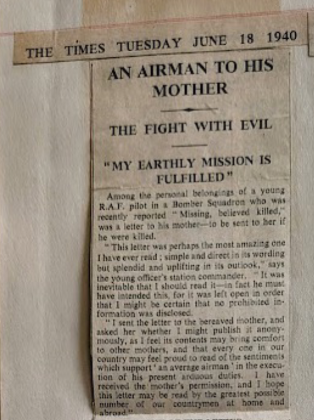
AN AIRMAN TO HIS MOTHER
THE FIGHT WITH EVIL
“MY EARTHLY MISSION IS FULFILLED”
Among the personal belongings of a young RAF. pilot in a Bomber Squadron who was recently reported “Missing, believed killed,” was a letter to his mother-to be sent to her if he were killed.
“This letter was perhaps the most amazing one I have ever read: simple and direct in its wording but splendid and uplifting in its outlook,” says It was the young officer’s station commander. inevitable that I should read it-in fact he must have intended this, for it was left open in order that I might be certain that no prohibited in- formation was disclosed.
“I sent the letter to the bereaved mother, and asked her whether I might publish it anonymously, as I feel its contents may bring comfort to other mothers, and that everyone in our country may feel proud to read of the sentiments which support an average airman in the execution of his present arduous duties. I have received the mother’s permission, and I hope this letter may be read by the greatest possible number of our countrymen at home and
abroad.” – The Times Tuesday June 18, 1940.
Two women, two world wars. Both struggling to cope with loved ones killed, or the aftermath of trauma.
Capturing Cambridge sources
- https://capturingcambridge.org/chesterton-2/chesterton-road/fordyce-scrapbooks/ — Elsie Margaret Fordyce’s scrapbook, with both volumes and an overview.
- https://capturingcambridge.org/wp-content/uploads/2026/10/Fordyce-Scrapbook.pdf — the page-by-page contents guide used for the scrapbook extracts.
- https://capturingcambridge.org/norfolk/melton-constable/locomotive-works-melton-constable/ — Louisa Turbett’s family background and her 1918 uniform bill.
- https://capturingcambridge.org/norfolk/kings-lynn/7-chapel-street-kings-lynn/ — Louisa’s bank work, the evacuees’ ration booklets and her wartime housing application.
- https://capturingcambridge.org/norfolk/kings-lynn/23-new-road-kings-lynn/ — Thomas’s scholarship and the family’s King’s Lynn addresses before he went to Emmanuel College.
- https://capturingcambridge.org/centre/st-andrews-street/emmanuel-college-cambridge/ – Thomas’s letter from college and then from active service
- https://capturingcambridge.org/the-kite/warkworth-street/13-warkworth-street-cambridge/ – Thomas’s lodgings in Cambridge
- https://capturingcambridge.org/norfolk/wymondham/council-houses-silfield-wymondham/ – Thomas’s home at the time of his birth
The Museum of Cambridge is the independent social history museum of the City and County of Cambridgeshire. As a registered charity the Museum relies on your support to enable volunteering opportunities such as this.
For more information on how to support the Museum of Cambridge’s vital work to preserve local history for future generations, visit www.museumofcambridge.org.uk or phone 01223 355159.