
Written by Jo Sarson, Disability Heritage Research Volunteer
This research piece was made possible by a two-year initiative made possible by funding from the Esmée Fairbairn Collections Fund through the Museums Association. This ground-breaking project will place disabled individuals at the forefront of researching, curating, and sharing the histories of disabled people in Cambridgeshire.
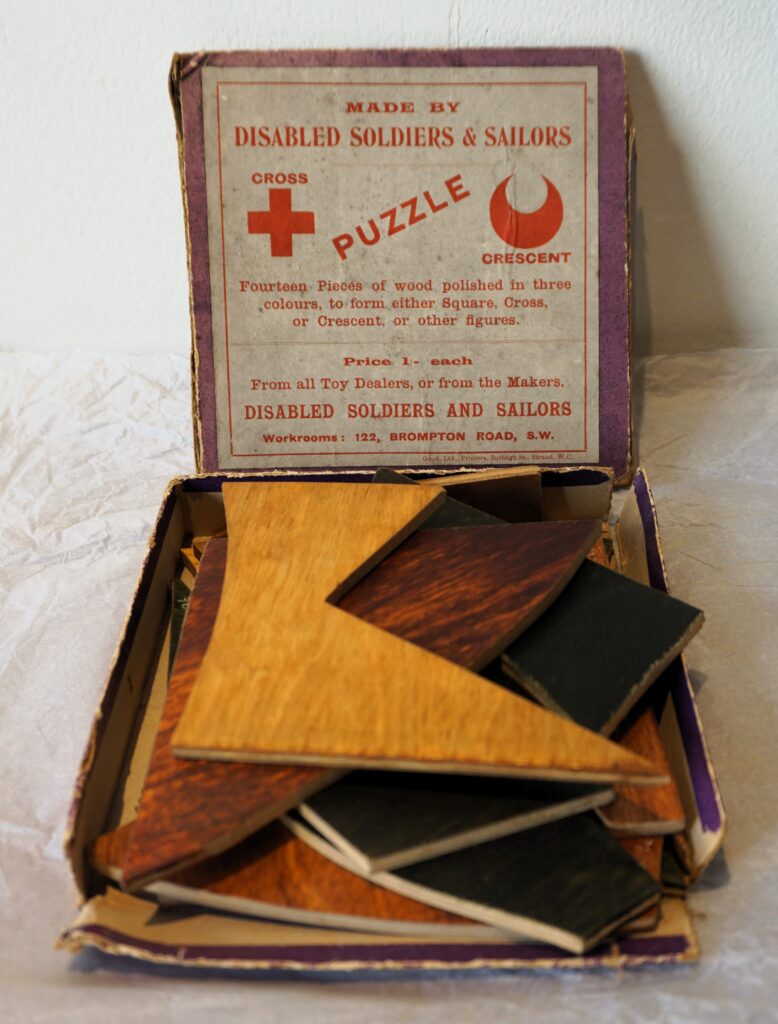
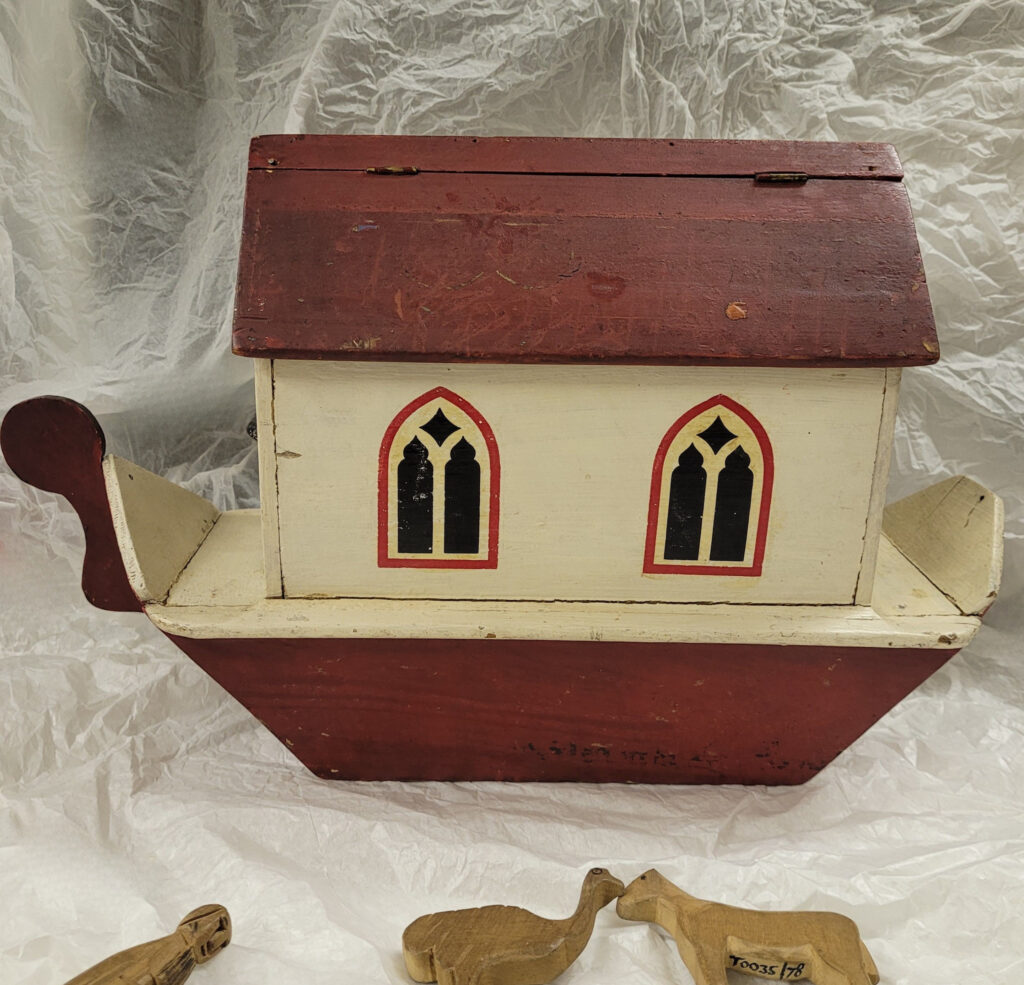
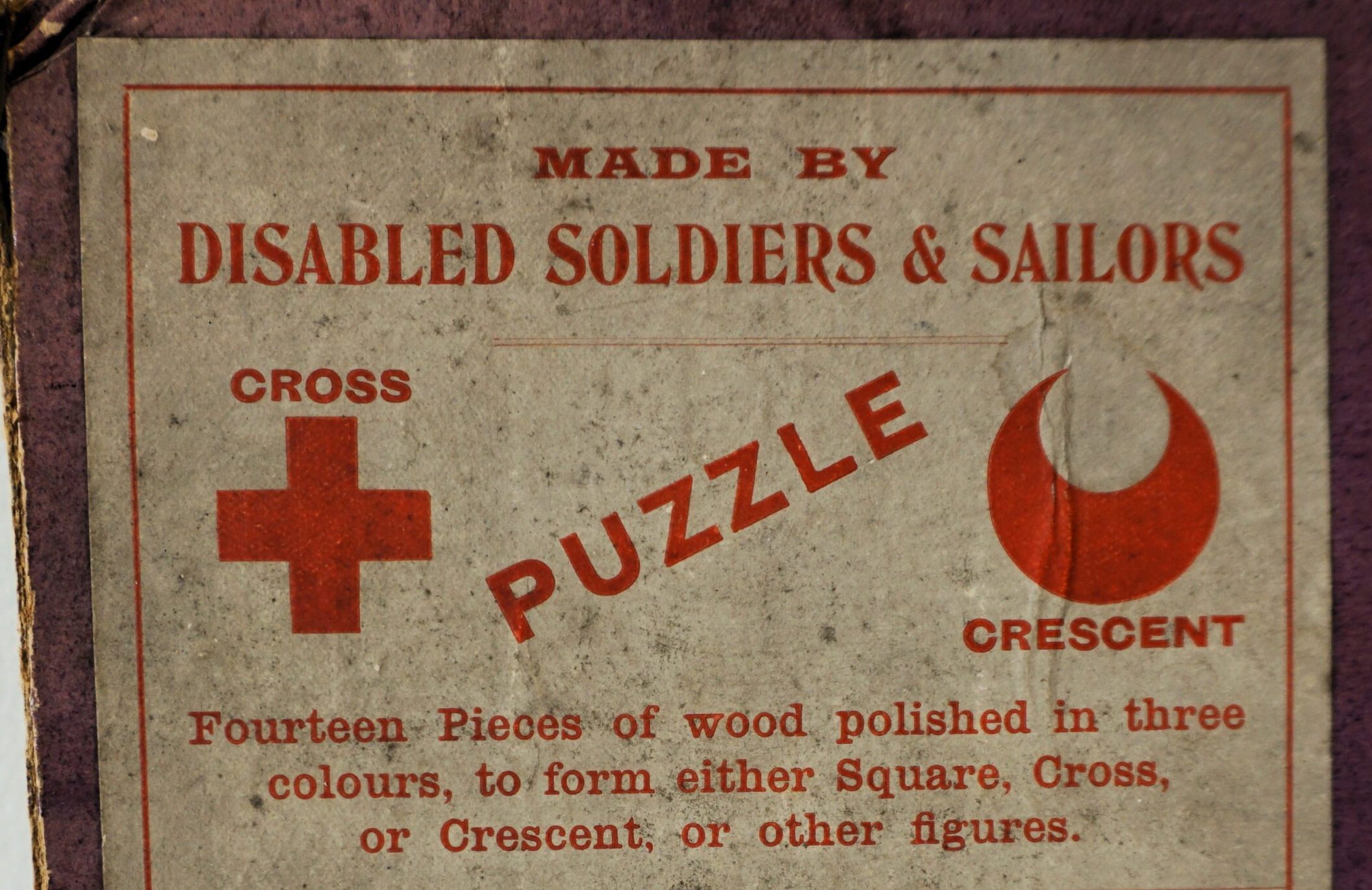
The objects seen above are pieces of craftsmanship from disabled veterans in the UK, around the time of the First World War when many charities supporting our nations ex-servicemen were established that still operate to this day.
The first object above, a wooden jigsaw, is marked with the symbol of the British Red Cross, the charity was first established in Europe under the name ‘International Red Cross and Red Crescent Movement’ after the Battle of Solferino (1859) where many men died due to lack of care. Just a few years later in 1870, as war broke out between France and Prussia, a Colonel Loyd-Lindsay called for a society to be formed in Britain as it had in Europe.
In both World Wars the Red Cross provided many services from on the battlefield, treating wounded soldiers, to at home where they would provide relief supplies to families such as food and shelter while also driving ambulances and rescuing people after bombings.
In cities and towns across the country, you would have seen your local town halls, campuses and private mansions transformed into centres by the Red Cross that provided additional support to hospitals and functioned as recovery homes.
In 1917, Mr G N Barnes, first minister of pensions, appointed a joint committee whose purpose was to arrange the provision of suitable treatment for discharged men disabled whilst serving in any branch of His Majesty’s Forces. However, it was soon realised that the government and local authorities were in no position to provide these types of homes, and so they turned to the Red Cross.
The first recovery home was based in Highfield, Golders Green the same year. Its focus was on patients suffering from ‘neurasthenia’ which was a term used to cover symptoms relating to the nervous system. The home contained workshops offering the patients regular employment as well as ‘curative treatment’ and the opportunity to learn a trade, such as carpentry, woodwork, basket-making, boot-making or electrical engineering. Efforts to find employment for discharged patients were made, and 78% were sent out to work or train in special trades after their stay at these homes.
Many more homes across the country began to appear, focusing on different areas of disability a soldier could experience, some focused on epilepsy and tuberculosis, others paralysis or orthopaedics. In each case the home provided, similarly to Highfield, facilities where men could be trained in handicrafts that could create an income for them and the possibility of reintegration into society and living independently.
Cambridge saw many parts of its university transformed into a medical network during the First World War; the First Eastern General Hospital being the most famous which was based on Trinity College Campus. There were also auxiliary sites expanded across the city to enhance the capacity of the Hospital. These facilities also provided activities for the recovering soldiers. There are many examples of needlework created by convalescing soldiers who stayed at the First Eastern General Hospital, archived with the Museum of Cambridge. The carpentry we see above accompanies these works as examples of disabled soldier’s activities in the UK.
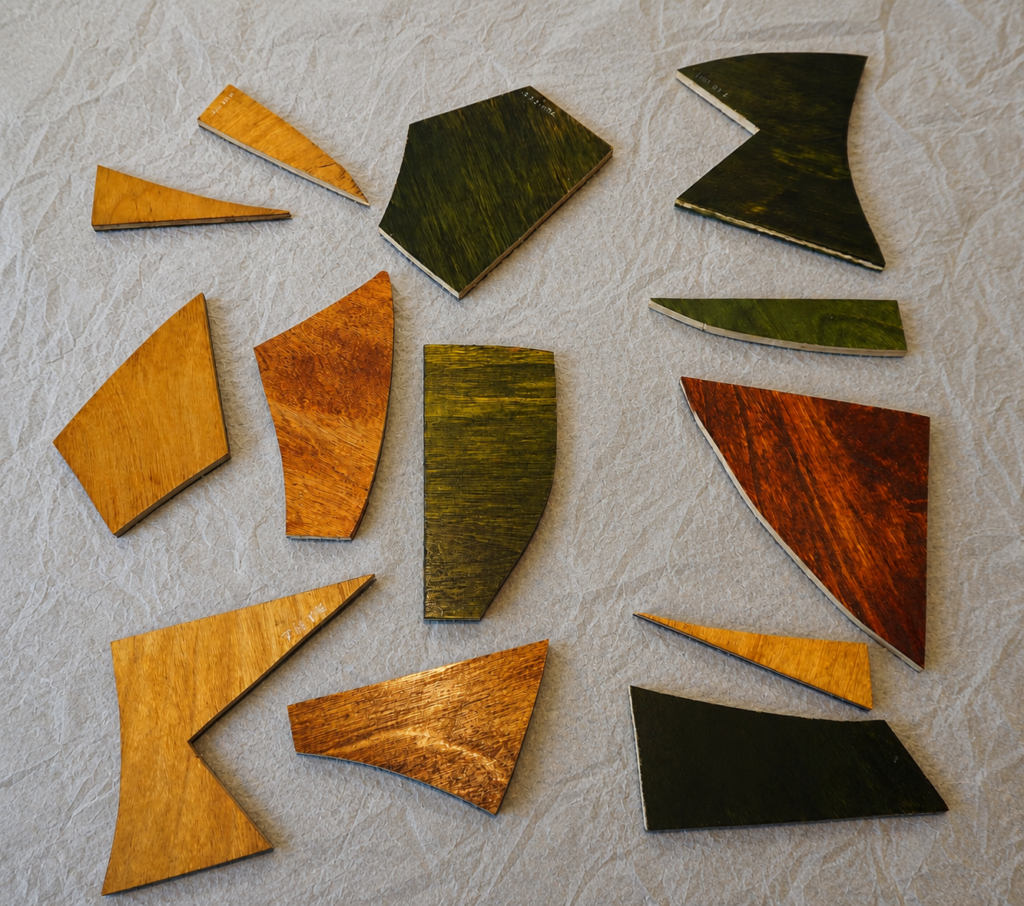
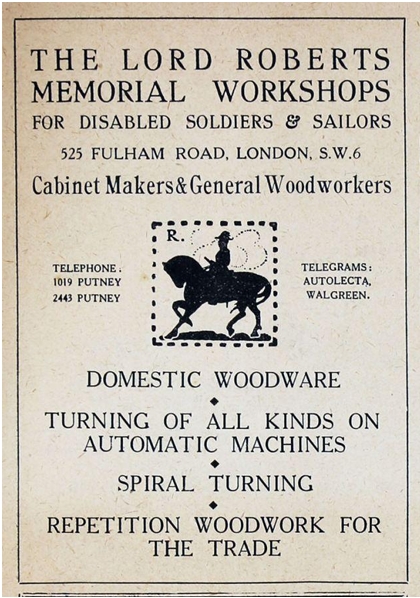
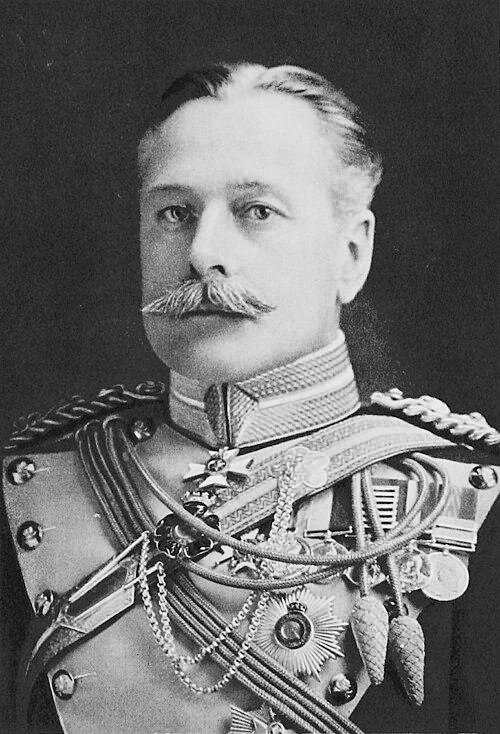
Although this object has been sourced from Cambridge, the text evident at the base of the box of the jigsaw is an address in London. This is the address of one workshop that was part of a charity patronised by Field Marshal Lord Roberts. He won the Victoria Cross 1857 and spent his career campaigning for more to be done for ex-servicemen disabled in war. He became a trustee of Workshops for Disabled Soldiers and Sailors and, following his death 1914, they named the workshops made thereafter ‘Lord Roberts Memorial Workshops’. By 1920 there were eleven workshops across the country producing woodwork from baskets and toys to all types of furniture. This included the location addressed on the box. By the end of the First World War, it was estimated that the enterprise had provided employment for thousands of men, disabled or effected by the war.
The second object above has a similar story, a wooden ark made by Earl Haig Workshops for Disabled Soldiers. Earl Haig was a highly decorated officer in the British Army, who experienced the First World War and other conflicts. When he retired from service, he devoted his time to advocating for the welfare of ex-servicemen. Alongside Tom Lister, he founded the Royal British Legion in 1921 which to this day supports veterans and their families. He was also instrumental in founding the Haig Fund for the financial assistance of ex-servicemen, and the Haig Homes- now Haig Housing Trust- that aided with housing for them too. A lesser known aspect of Haig’s legacy is, when the Royal British Legion agreed with French humanitarian Anna Guérin to adopt the poppy as their symbol and to sell for Remembrance Day in November it was Haig who implemented the idea and insisted that they be produced by a British supplier which ended up being ‘The Disabled Society.’ This was a charity founded by George Howson to campaign for better prosthetic legs and access to jobs for men injured in war. Howson proposed that the poppies could be made by disabled war veterans, and in 1922 he was given £2,000 by the Legion to establish a poppy making factory. ‘The Poppy Factory’ still operates today, celebrating their centenary in 2022.
So, how did these objects end up in Cambridge? That is a difficult question to answer. We may speculate that soldiers who participated in these Workshops and recovery programmes were from Cambridge where they could have produced these items as part of the charitable organisation discussed above. It is also plausible, and more likely, that they were purchased by a resident of Cambridge from wherever this object was distributed to. What we can say for certain is that these objects provide evidence for the importance of supporting disabled members of our communities. When disabled people are provided the space and dignity to participate in society in a way that supports what they are experiencing, we are left with beautiful pieces of craftsmanship and creativity.
Sources:
Rehabilitation | World War 1 volunteers | British Red Cross
The Great War: The Forgotten Contribution of St Chad’s | St Catharine’s College, Cambridge
Home From the War: What Happened to Disabled First World War Veterans – The Historic England Blog
First Eastern General Hospital, Cambridge | Capturing Cambridge
Medical care | World War 1 volunteers | British Red Cross
Lord Roberts Memorial Workshops – Graces Guide
“‘We’re not men now’: Design as Pathos at the Lord Roberts Memorial Workshops” – Ulster University
Douglas Haig, 1st Earl Haig – Wikipedia
100 years of history – The Poppy Factory
The Museum of Cambridge is the independent social history museum of the City and County of Cambridgeshire. As a registered charity the Museum relies on your support to enable volunteering opportunities such as this.
For more information on how to support the Museum of Cambridge’s vital work to preserve local history for future generations, visit www.museumofcambridge.org.uk or phone 01223 355159.