Written by Dr N Henry
Content Warning: This post contains references to violence.
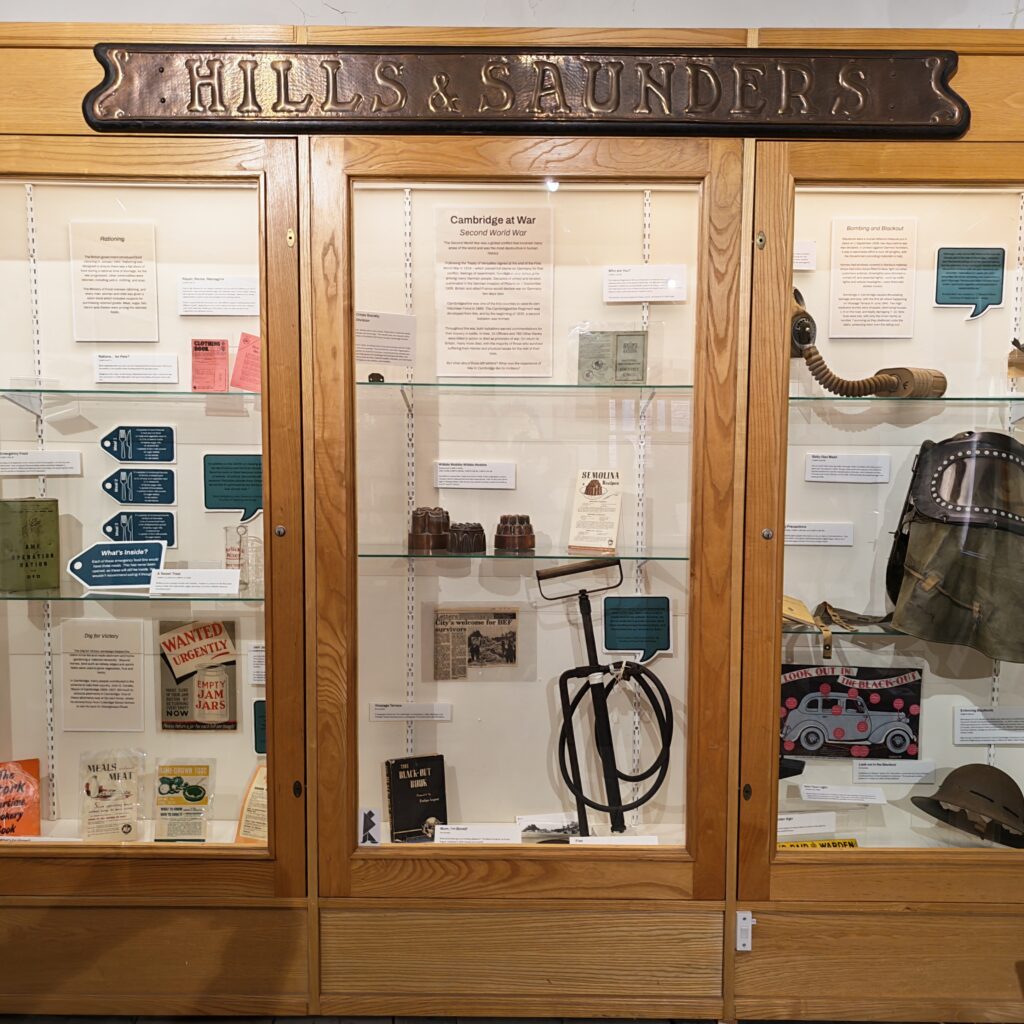
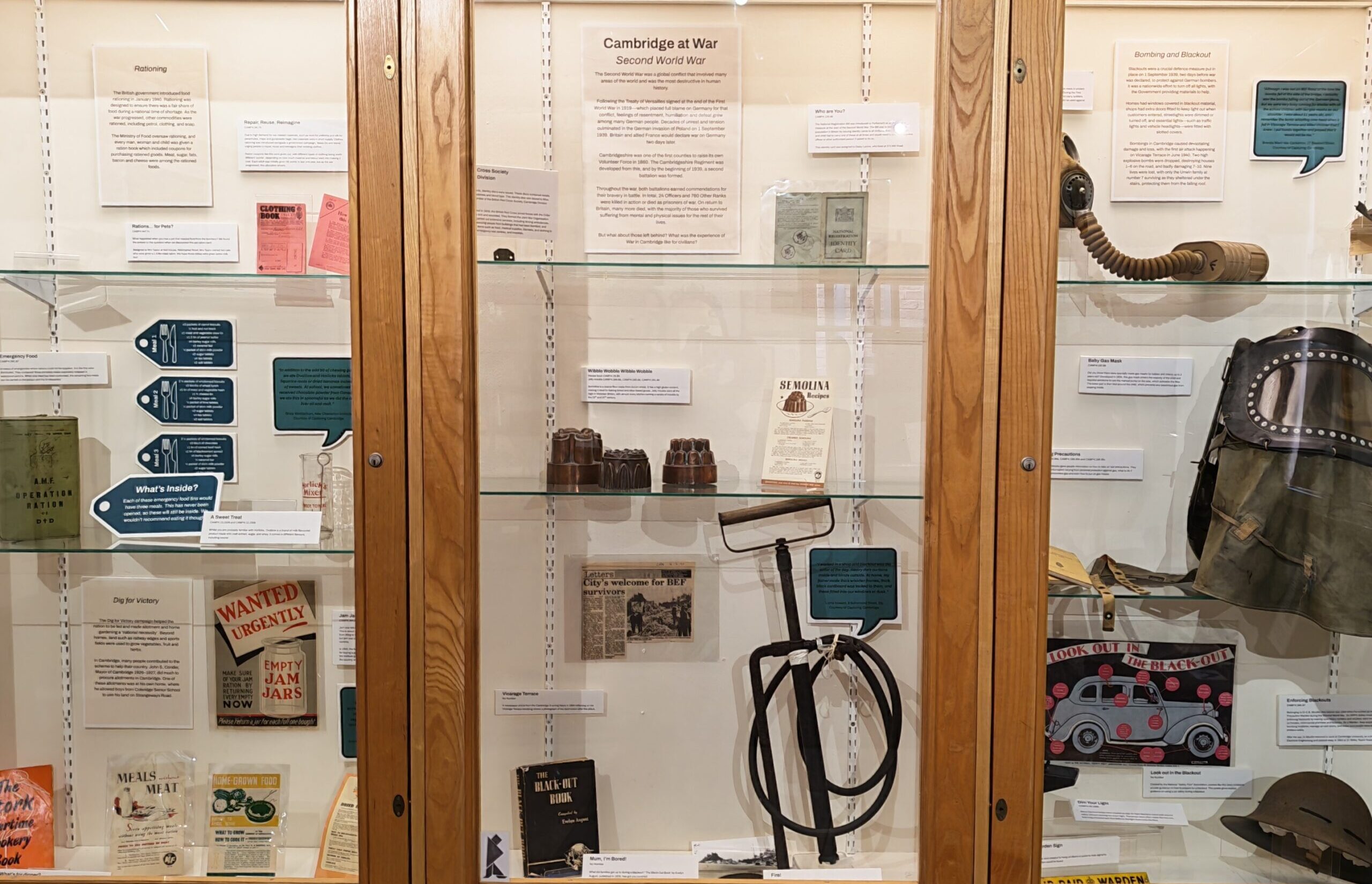
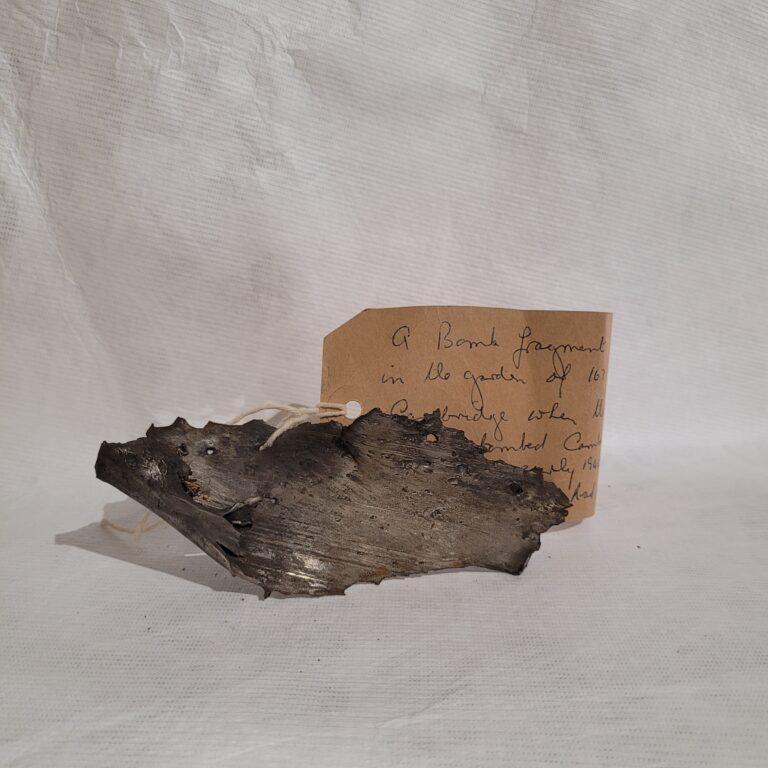
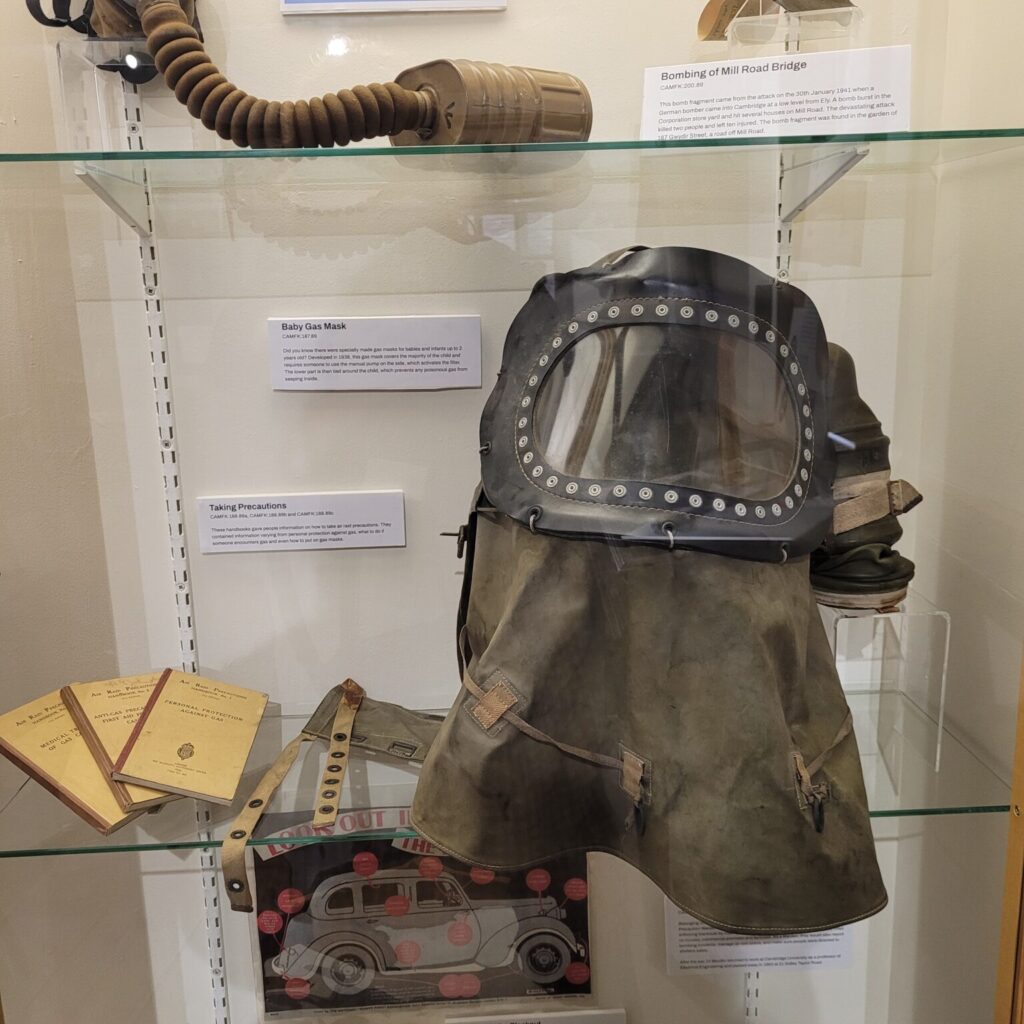
The permanent WWII display of the Museum of Cambridge houses a large collection of objects from gas masks to ration books including a bomb fragment (shrapnel) found in the garden of 167 Gwydir Street. This probably came from the bomb attack on Mill Road bridge on 30th January 1941.
One of the highlights of the display is the baby gas mask. These were made to protect infants up to two years old from anticipated gas attacks. Approximately 1.4 million of were issued because babies could not wear stand masks. It is heartbreaking to imagine the anxiety that the parents of small children would have felt, faced with the possibility of gas attacks. Fortunately, these never happened in Britain, and the masks were never used; Britain had been well prepared for any eventuality
Although the town of Cambridge itself was spared serious damage during WWII, many local men from the Cambridgeshire regiment never returned from the Far East where they died in atrocious conditions in Japanese prisoner of war camps, forced to work on the Thailand-Burma Death Railway.
An oral testimony transcribed by the BBC from a local man, Stanley Chown, a cook at Pembroke College before the war, gives a rare and vivid account of what these men had to endure:
We went on a ship, heading for Singapore, to drop behind Japanese lines. But when we reached Singapore, our side was disorganised, our guns were round the wrong way, and everything degenerated into chaos.
After a time we run out of ammunition, and also of water and other provisions, and we were surrounded by the Japanese. At 4pm the ceasefire order went out, and we were captured. […]
We were put in cattle trucks, I got malaria, others got dysentery, and the trucks stank. We embarked on a forced march, always marching at night. Many of the men dropped out along the way- they were dispatched by Japanese machine guns. We arrived at the camp, then cholera came, many more died. This was the Railway of Death, the Burma Railroad. I was put in charge of cooking, and this saved my life. […] I became famous for my snake and rat stew; it sounds disgusting, but it was all goodness, nutrition that would help keep people alive. In the jungle there was very little else to eat, mainly rice, sometimes some eggs. I did what I could to help keep the sick prisoners alive.
D-Day is an important reminder of the sacrifices made by our men and women whether away at war or at home in Cambridgeshire. Farmers in the Fens became foster families for children evacuated from London like Billie Bridgement:
We were so lucky to get wonderful foster-parents, our parents stayed in London although the docks were very dangerous. […] My foster-parents had a small holding, they kept pigs and we used to eat pigs’ brains on toast. It sounds awful but it was wonderful, we ate all the bits other people did not want. I worked, I had a paper round. We went home with £24, which our foster-parents had saved for us.
D-Day is a reminder of times of great hardship but also great togetherness. Cambridgeshire played a full part in the war. Do visit the Museum of Cambridge and look at the WWII display, a place of memory where past experiences are cherished.
References:
Oral testimonies from The Century Speaks: Cambridgeshire Voices, Tempus Publishing Limited, 1999 (BBC Radio Cambridgeshire)
The Museum of Cambridge is the independent social history museum of the City and County of Cambridgeshire. As a registered charity the Museum relies on your support to enable volunteering opportunities such as this.
For more information on how to support the Museum of Cambridge’s vital work to preserve local history for future generations, visit www.museumofcambridge.org.uk or phone 01223 355159.