Written by Hannah Twinberrow, Disability Heritage Research Volunteer
This research piece was made possible by a two-year initiative made possible by a £99,802 grant from the Esmée Fairbairn Collections Fund through the Museums Association. This ground-breaking project will place disabled individuals at the forefront of researching, curating, and sharing the histories of disabled people in Cambridgeshire.
Providing over the counter treatment for acne and blisters, aches and burns, the medical cabinets of the early 20th century have surprising overlap with the at home treatments of today’s twenty-first century first aid kits. Read on to learn about Box 64a’s assorted collection of restorative and preventative treatments, their history, context, and contemporary uses.
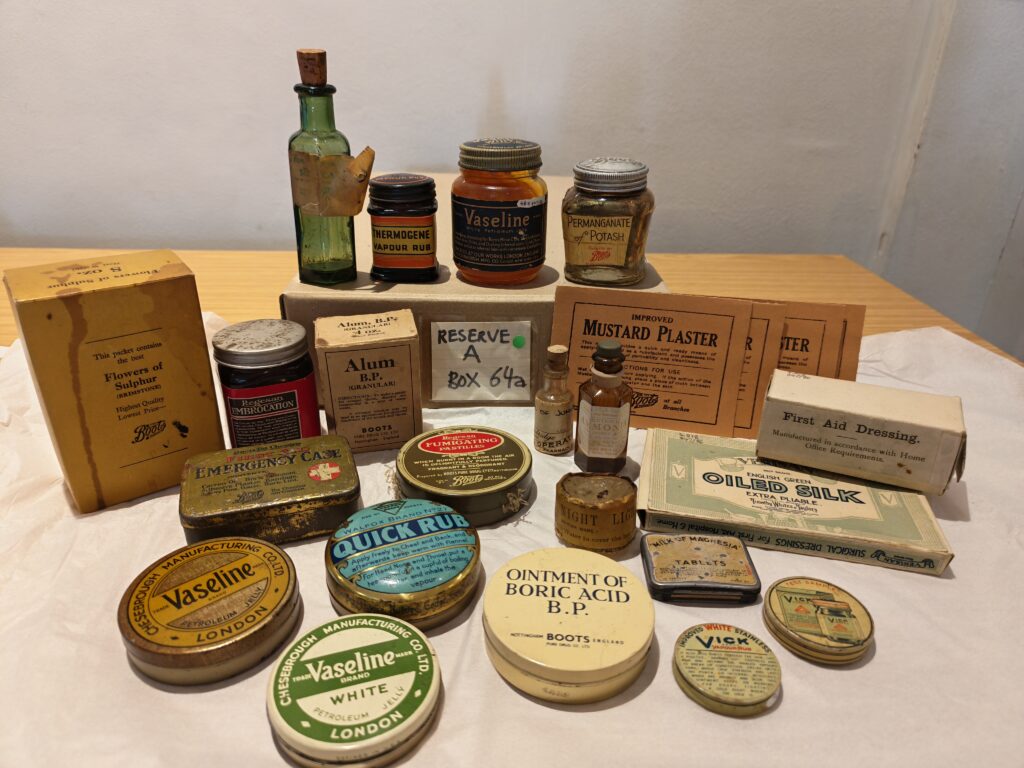
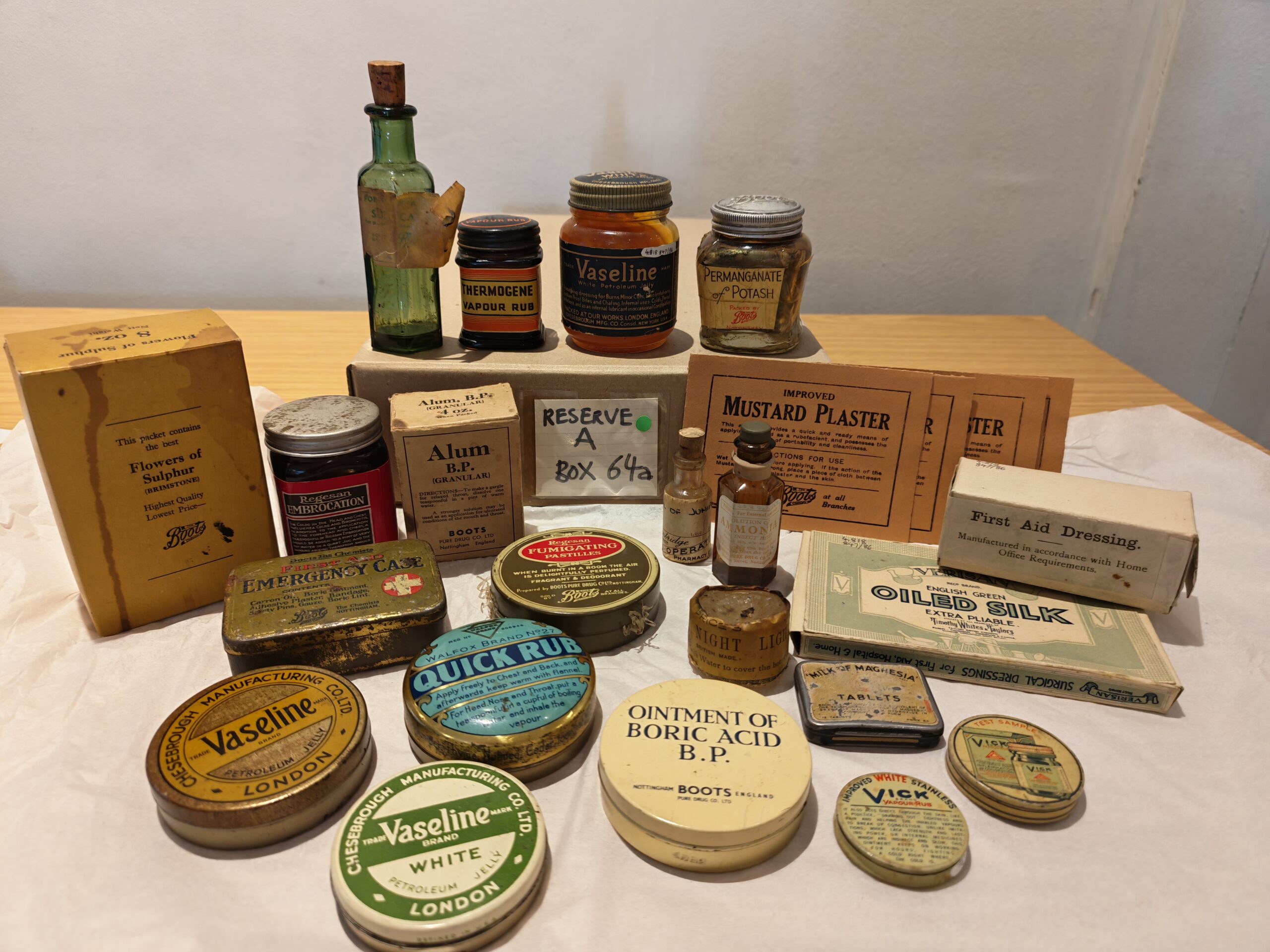
Hopefully, in 2026, you rarely need to dust off your first aid kit and get it down from behind the Exhibit box 64a (fig.1) shows a collection of various items found in everyday household medical cabinets from the early 20th century. The collection consists of:
(a) Four pieces of mustard plaster; (b) A Vaseline ‘Blue Seal’ jar; (c) A Vaseline white tin; (d) A Vaseline yellow tin; (e) Ointment of boric acid from Boots; (f) Surgical spirit in a green bottle; (g) Regesan embrocation; (h) Permanganate of potash; (i) A small flat milk of magnesia tin with tablets; (j) Fumigating pastilles for burning by Regesan; (k) Thermogene vapour rub; (l) Boots First Aid emergency case containing a finger dressing, a Mentholatom tin, a safety pin, needles and thread, a metal container with glass bottle, white stick; (m) A Price’s child’s candle nightlight; (n) A tin of Walfox quick rub; (o) A box of Alum BP granular; (p) A Vick test sample tin; (q) ‘Improved’ white stainless Vic vapour rub; (r) A wound dressing; (s) A Wheatsheaf candle nightlight; (t) A box of Flowers of sulphur (brimstone); (u) Verisan oiled silk surgical dressing.
Mustard Plasters
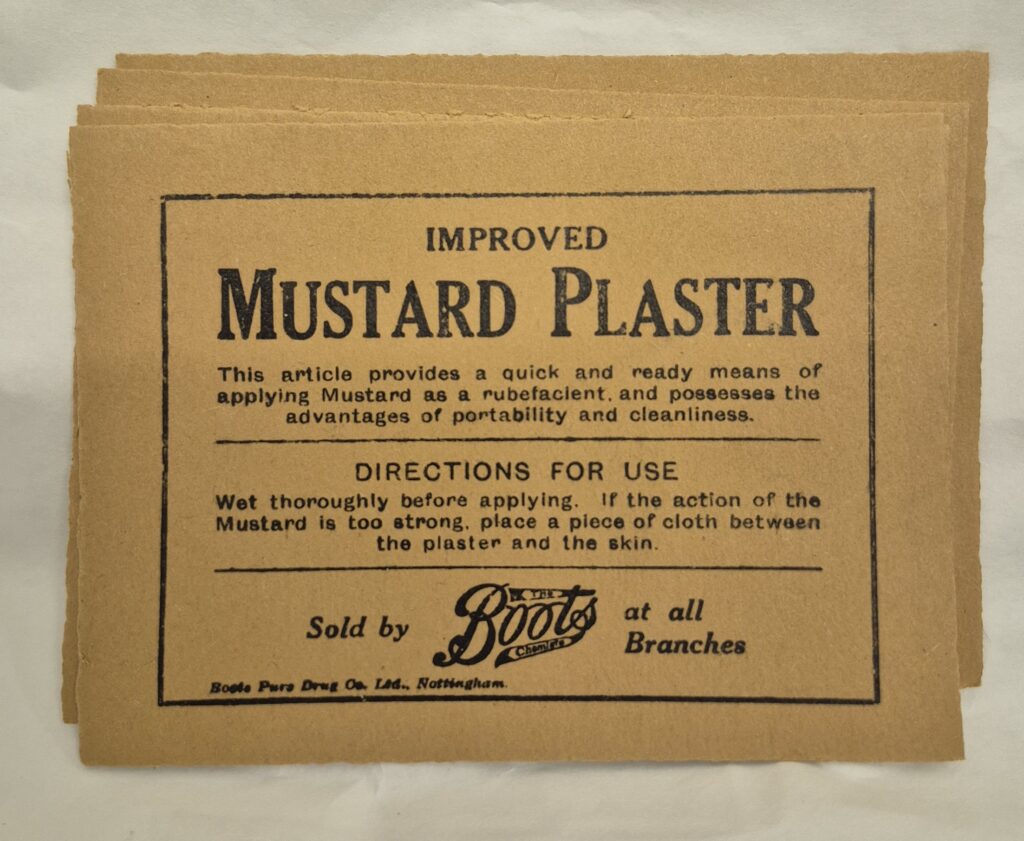
Frequently used to relieve congestion and muscle aches, Mustard was packaged in many different forms. One of the most popular was the mustard plaster (fig.2). Applied to the skin of the affected area, it worked as a rubefacient (making the skin red and warm) although care had to be taken as if left on too long it could cause a serious burn!
Mustard has a long relationship with medicine, religion, cooking, and childbirth rituals across the globe. The Lloyd Library & Museum has an excellent talk by Kevin Grace on The Medicinal Heritage and Ethnohistory of Mustard. Centuries after various cultures started using mustard for its health benefits, research now shows that mustard has ‘potent anti-microbial and anti-inflammatory properties against a variety of organisms.’[i]
Vaseline White Petroleum Jelly
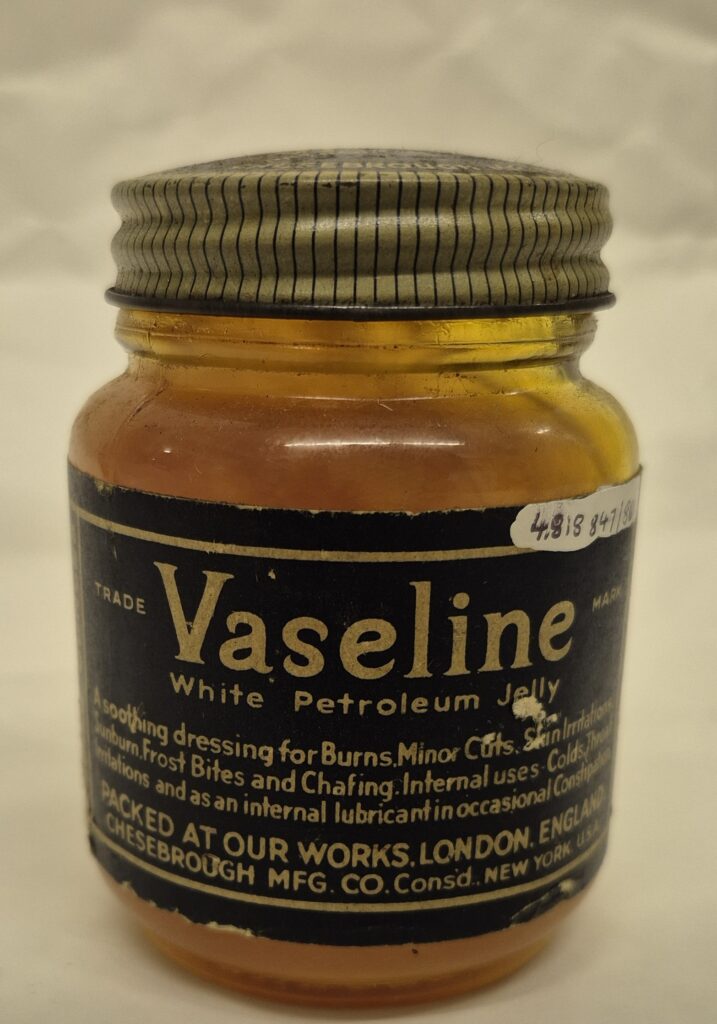
Vaseline ‘Blue Seal’ jar is what most people tend to associate with the name Vaseline. A triple-purified petroleum jelly, it was (and continues to be) used as a barrier on the skin. Ideal for eczema, chapped lips, and dry skin.
Vaseline ‘white’ (fig.3) contains the same ingredient as ‘Blue seal’ petroleum but is more refined and therefore used for more medically sensitive purposes. Unlike the slightly yellow colour of Vaseline blue seal, the purification process leaves the ‘white’ product odourless and colourless. The label states that it was to be used topically as ‘a dressing for burns, minor cuts, skin irritation, sunburn, frostbites and chafing’. It could also be used internally for ‘colds, throat infections and as an internal lubricant in occasional constipation.’ It can still be purchased today and is mainly used for compromised skin and acne.
Ointment of Boric Acid
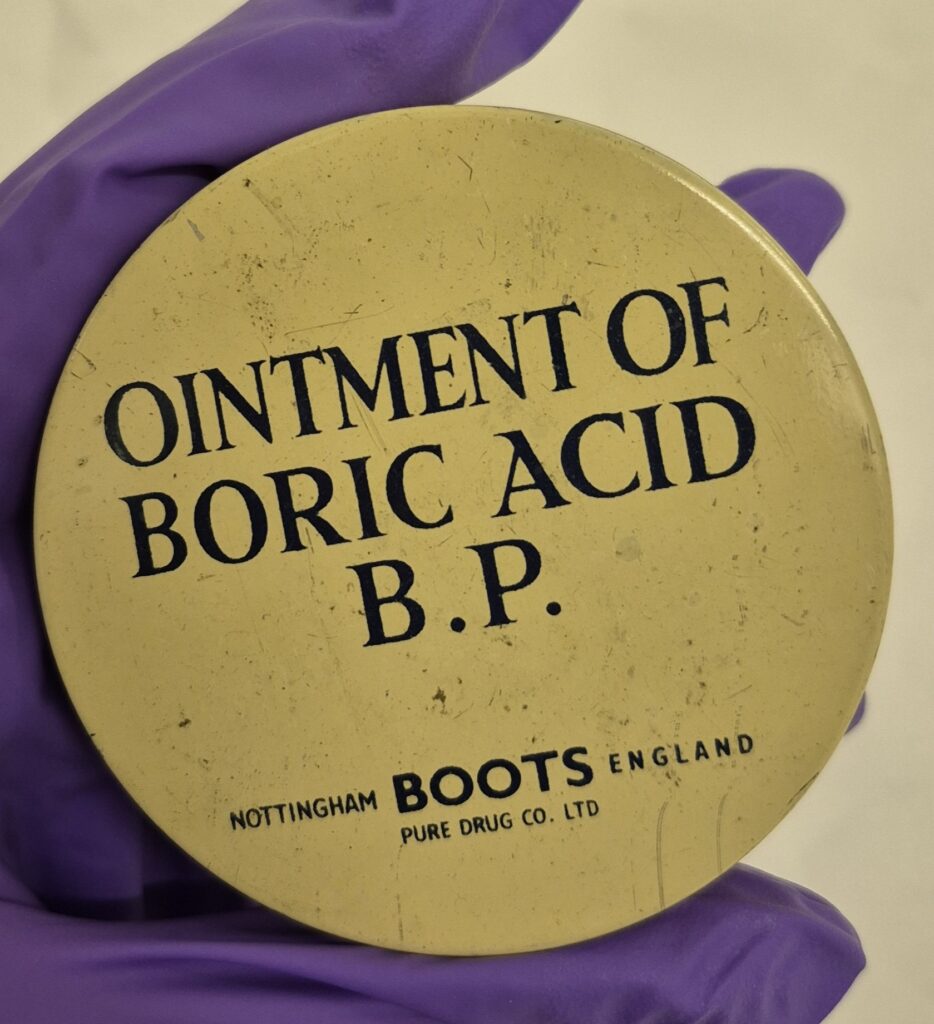
Also called ‘boracic acid’, Boric acid (fig.4) is an antiseptic and was sold in Boots to treat minor cuts, burns, and bruises. The B.P. on the tin stands for British Pharmacopoeia and is the sign of quality control for medicines in the UK.
Prior to pasteurisation (French scientist Louis Pasteur is credited with inventing pasteurisation in 1864) Boric acid was added to milk to ‘purify’ it. Unfortunately, it caused nausea, vomiting, and diarrhoea. It also did nothing to kill the Bovine TB that lurked in unpasteurised milk. It does possess mild antiseptic and antifungal properties and so there would have been benefit in using it for superficial wounds, however, its absorption toxicity means it has been largely replaced by safer and more effective alternatives in the 21st century.
Surgical Spirit
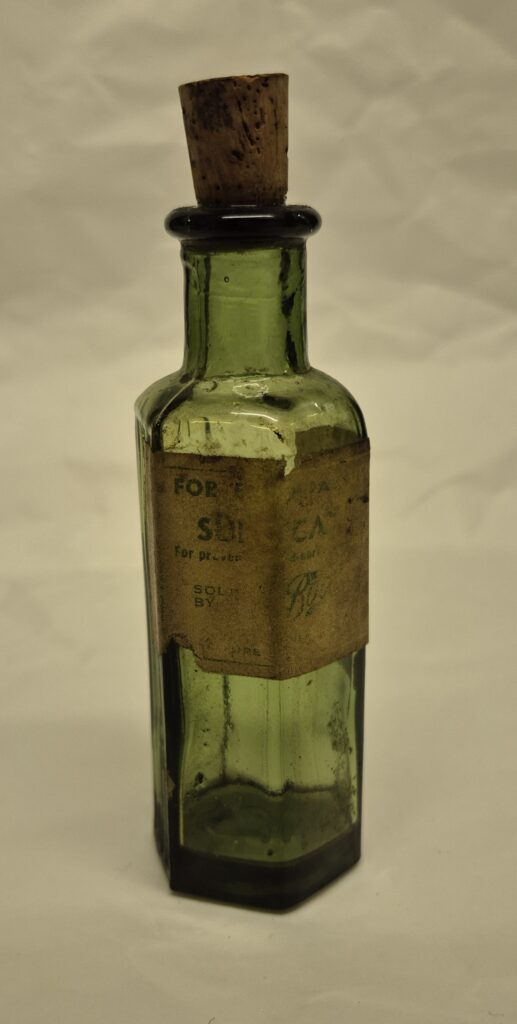
Dr Joseph Lister introduced Carbolic acid into surgery protocol in Britain in 1867. Ignaz Semmelweis had previously demonstrated that antiseptic techniques reduced mortality in Hungary in 1847, but he had been largely dismissed. It wasn’t until after Louis Pasteur’s germ theory of disease was published in 1860 (and scientists had a clear reason as to why aseptic techniques actually worked) that clinicians became more receptive to cleaning the operating theatres before procedures.
Carbolic acid was used to soak bandages, clean the operating theatre and wash surgeons’ hands. It caused a significant drop in post infection rates but was very damaging to the skin. As distillation technology improved, new standardized formulas were developed, and Surgical Spirit BP was created (fig.5). It was made from denatured ethanol and then blended with additives like castor oil and methyl salicylate to reduce dryness and act as an analgesic.
By the late 19th century, surgical spirit was used in households to sterilise small wounds and to harden skin (such as on the feet and hands) before labour intensive work. It is still used to clean wounds prior to bandaging and for sterilising surfaces and instruments today.
Regesan Embrocation
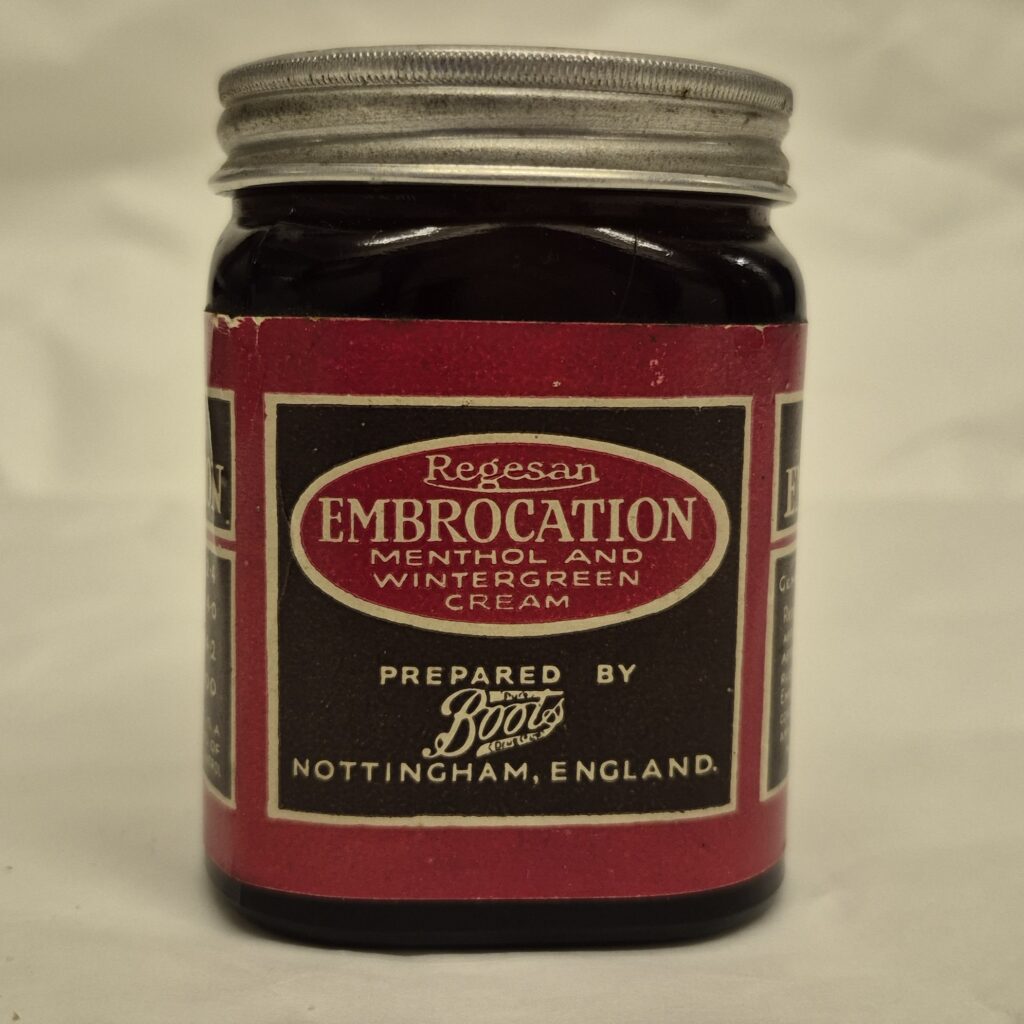
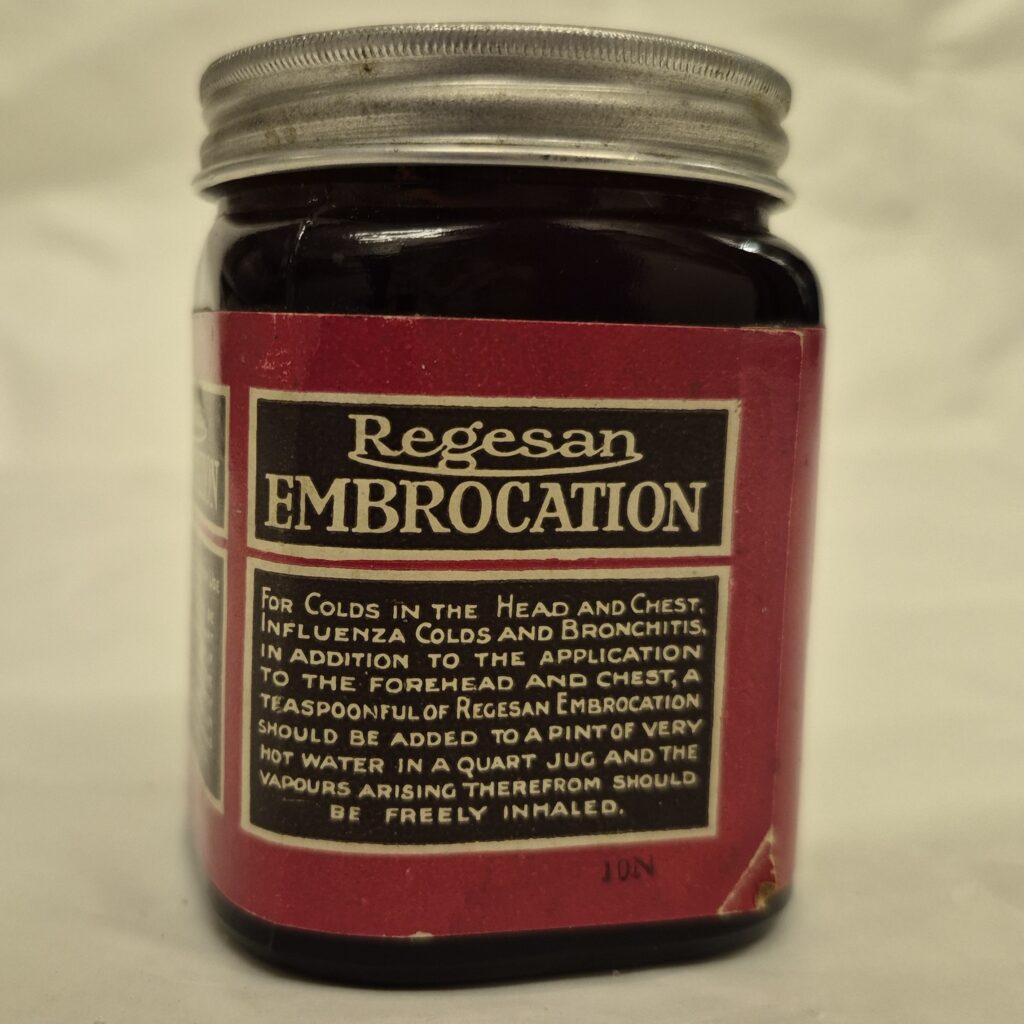
‘Regesan’ was a Boots own brand of home health remedies and bronchial lozenges. Their embrocation (fig.6) was rubbed onto the skin to treat muscular aches, stiffness and swelling and then ‘freely and lightly cover[ed] with lint or flannel.’ Although the definition of an embrocation is technically a muscle rub, the label states this product could also be used for ‘colds in the head and chest, influenza colds and bronchitis.’ It could be applied to the chest and forehead to open the sinuses and a teaspoon of embrocation could be added to a pint of very hot water so that the vapours could be inhaled.
The term embrocation has largely fallen out of use in human care, with brand names like ‘deep heat’ being more commonly used. However, embrocations are still frequently applied by vets (e.g. for stiff joints and muscles in horses before and after turnout) and professional cyclists rely on ‘embros’ in cold weather to prevent cramping.
Permanganate of Potash
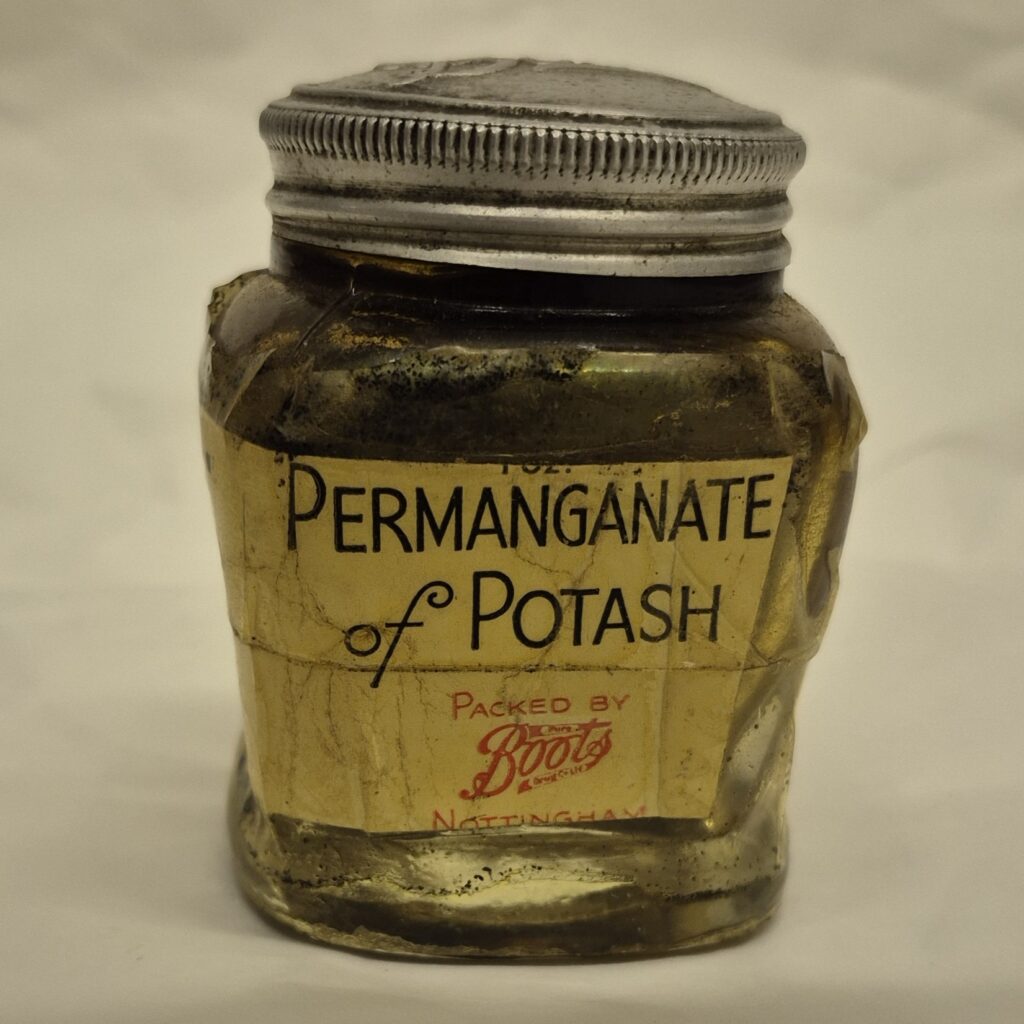
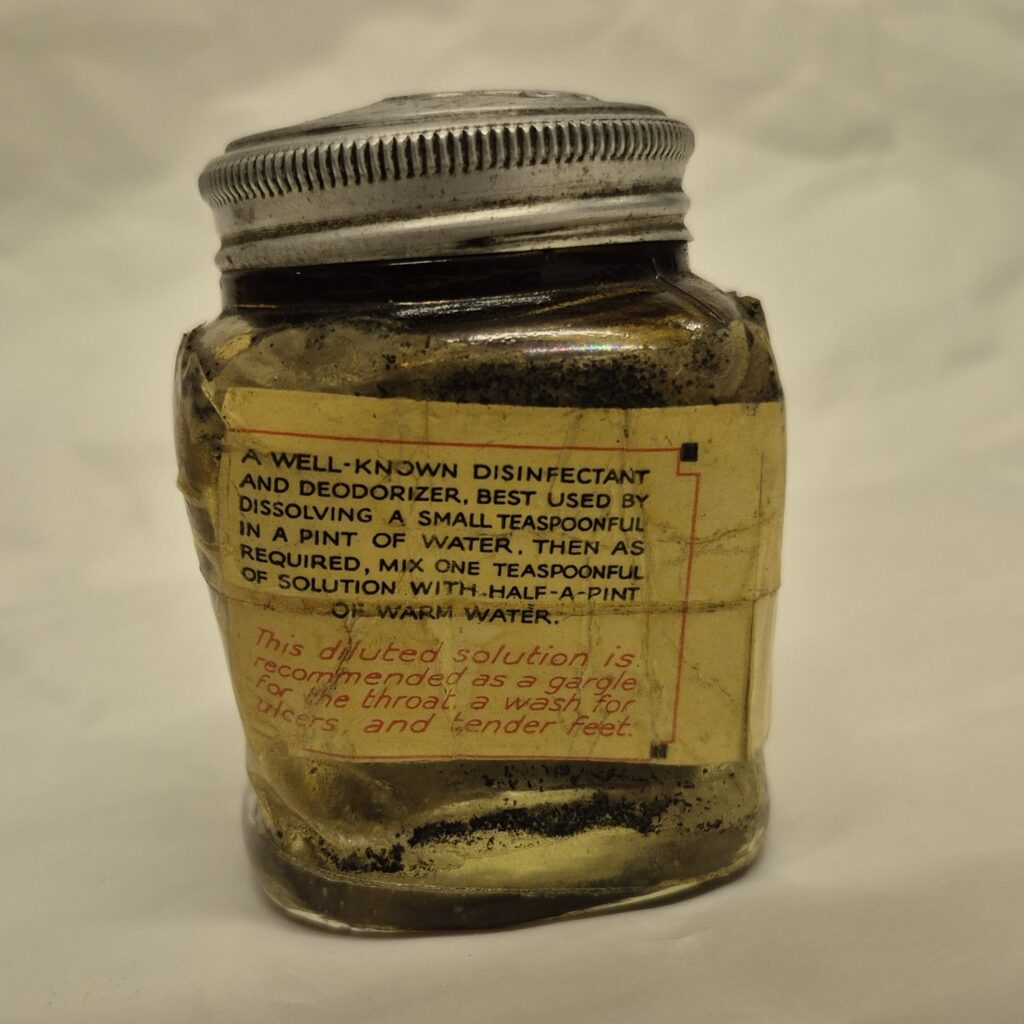
Permanganate of Potash (fig.7) is also called Potassium Permanganate or Condy’s crystals. This deep purple oxidising agent is a topical antiseptic and antifungal treatment. It must be highly diluted (until it turns light pink in water). The label directs that it is ‘best used by dissolving a small teaspoonful in a pint of water.’ It can be used to treat infected eczema, skin ulcers, and conditions like athlete’s foot. The label claims it is ‘recommended as a gargle for the throat, as a wash for ulcers and tender feet.’ Today it is used in agriculture and aquariums to purify water and is still available for medicinal purposes, although much less commonly so. Care must be taken as it is fatal if swallowed. It can also stain your fingers!
A tin of Milk of Magnesia tablets
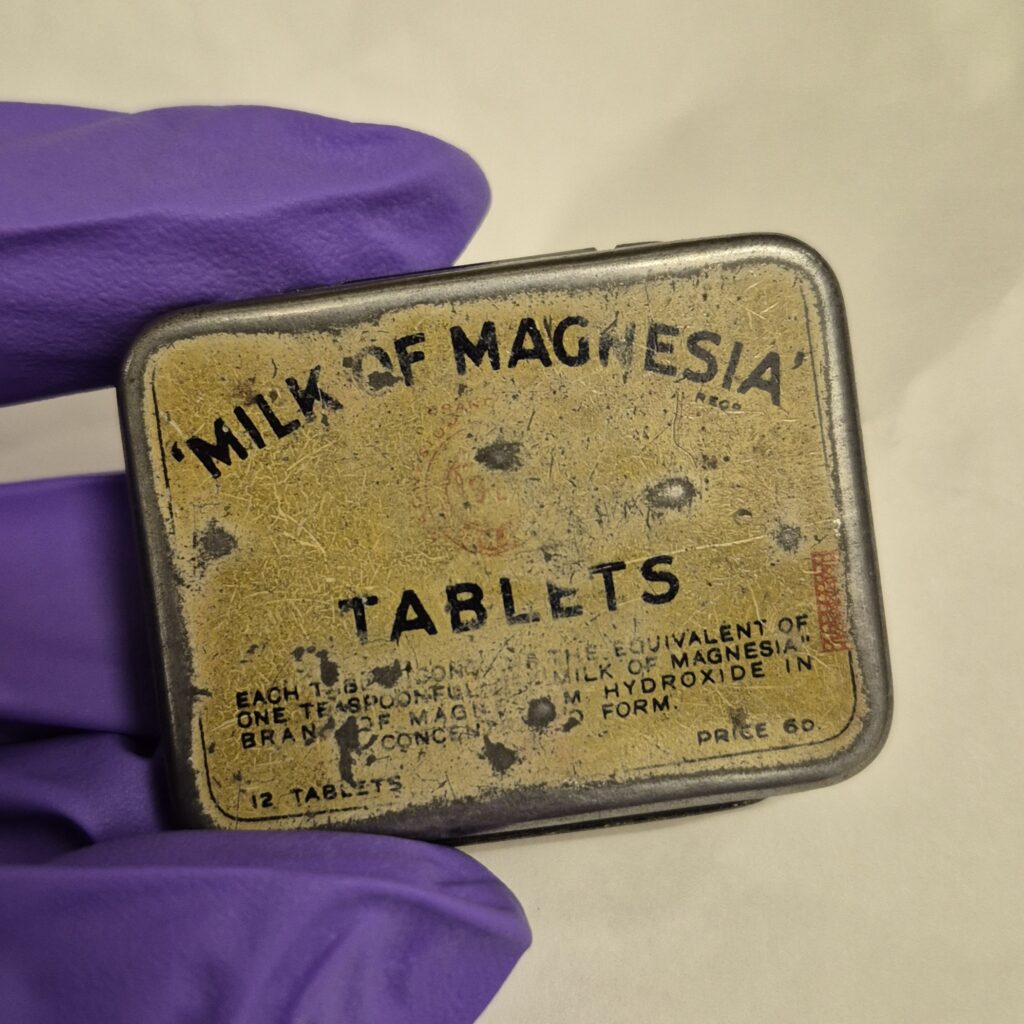
These milk of magnesia tablets (fig.8) are made of magnesium hydroxide. They are osmotic laxatives that work by drawing water out of the intestines, and they also treat heartburn by neutralising stomach acid. This tin contains the original tablets which is a rare find, however we wouldn’t recommend trying them! Luckily, Boots still sells milk of magnesia in a lovely mint flavoured liquid instead.
Regesan Fumigating Pastilles
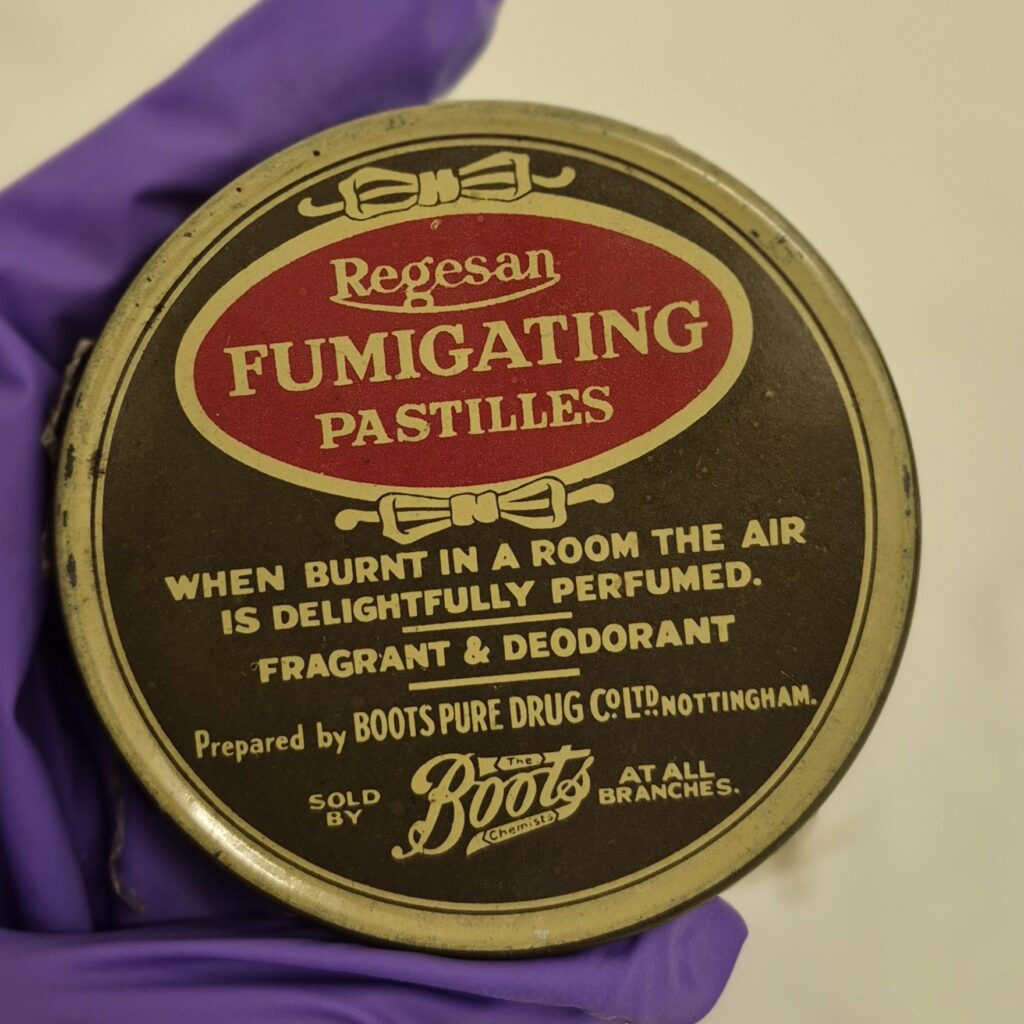
These Regesan pastilles (fig.9) were another product in the Boots own brand. They were marketed as the everyday alternative to professional fumigation. However, the ‘fumigating’ results of the name are misleading. If you read the pack carefully, these pastilles would merely leave the room ‘delightfully perfumed’.
After outbreaks of diseases like cholera, professional fumigators would burn formaldehyde or sulphur to sterilise a space.[ii] Fumigation is more commonly associated with miasma theory, the earlier scientific idea that disease was caused by bad smells. This theory arose around 5th Century BCE from the thoughts of Greek physicians like Hippocrates and was later built upon by the Greco-Roman doctor Galen. However, even when miasma theory was replaced with germ theory in 1860, scientists continued to utilise fumigation as it proved to be the quickest way to sterilise large spaces. Even now, formaldehyde is used in laboratories to kill bacteria, fungi, and viruses. Alas, these fumigating pastilles would not offer legitimate fumigation and were more of a marketing gimmick for incense.
Thermogene Vapour Rub
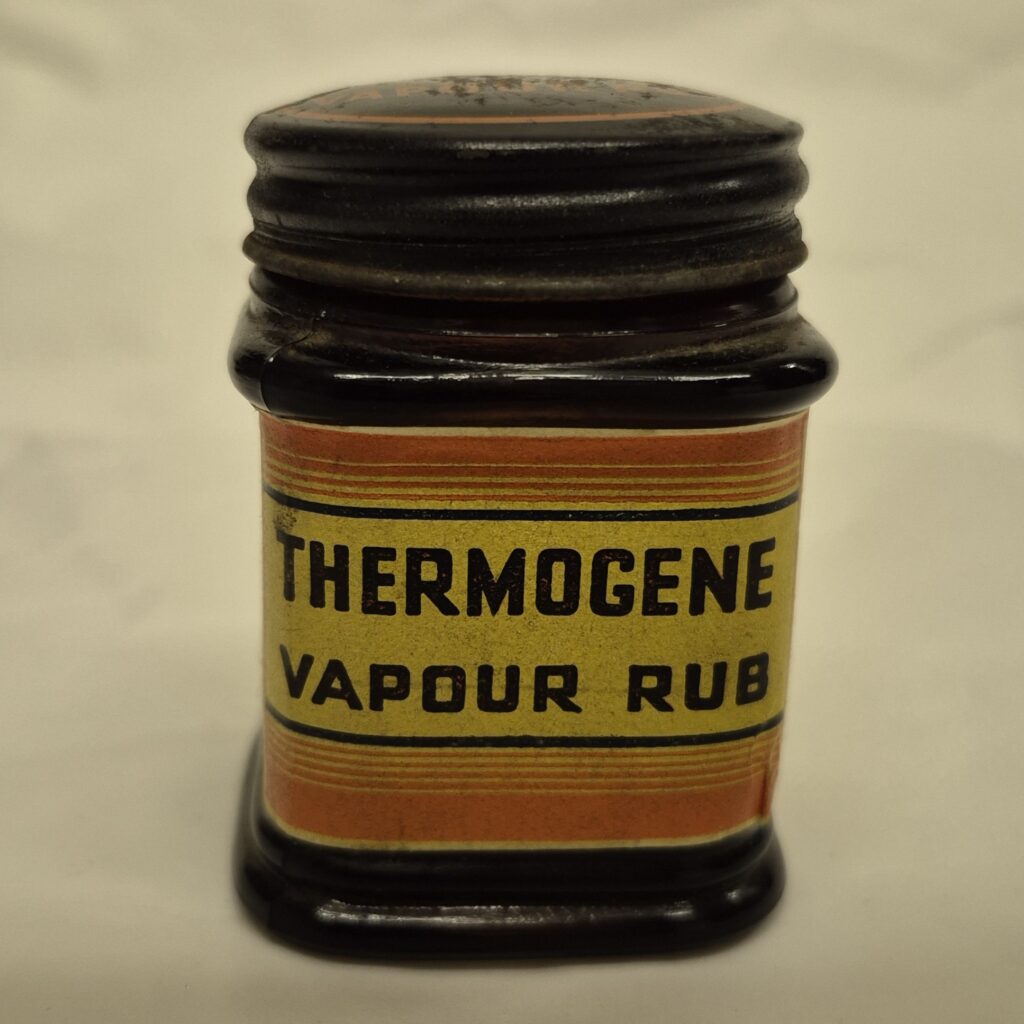
Initially developed in Belgium in 1896 as a medicated cotton wadding, Thermogene was a cotton pad painted with eosin (to make it red), soaked in capsicum frutescens (chili pepper) and perfumed with balsam and sandalwood. It was alleged by the manufacturers to treat ‘coughs, rheumatism, side stitches, and lumbago’ overnight. Thermogene was widely distributed during World War I and II and proved to be so popular that the company expanded their product line to include an assortment of other Thermogene variations such as a spicy version of vapour rub (fig.10). We can see its influence in the modern-day equivalent: deep heat.[iii]
First Aid Emergency Case
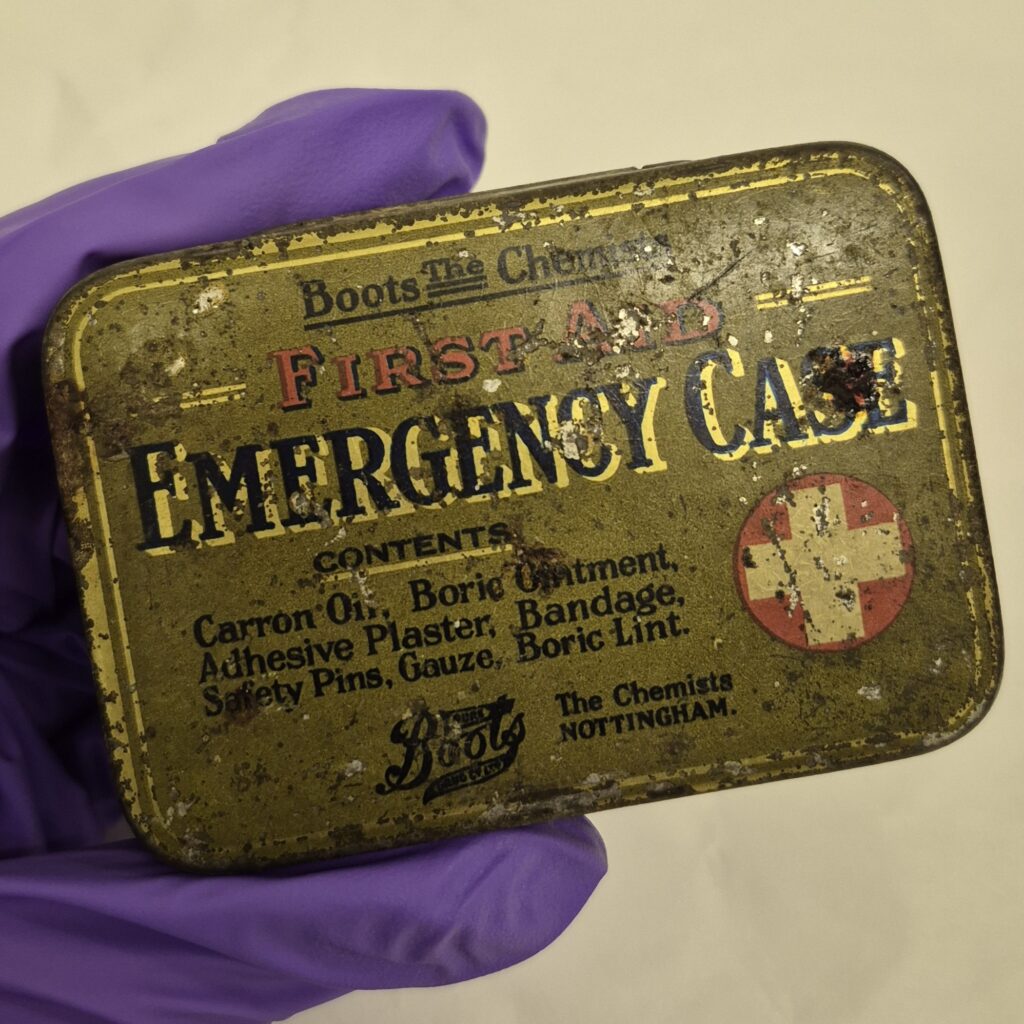
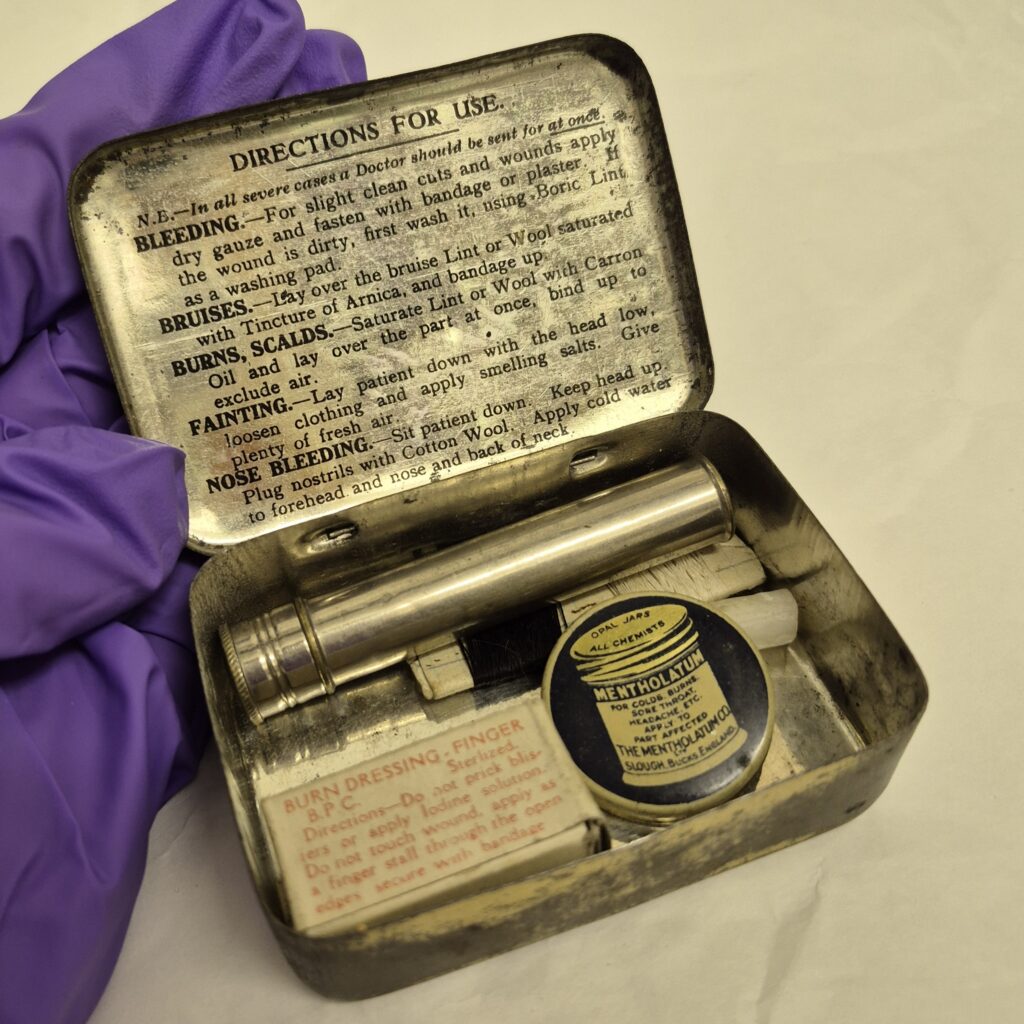
The Boots First Aid emergency case (fig.11) is an interesting example of someone refilling a container after the original contents has been used (undoubtedly similar to many of today’s at home first aid kits nestled away in chocolate/biscuit tins and shoved up high away from curious little fingers!) On the tin it states that the contents include: Carron Oil, Boric Ointment, Adhesive Plaster, Bandage, Safety Pins, Gauze, Boric Lint. However, upon opening the tin, it actually holds: a finger dressing, a tin of Mentholatom, a safety pin, needles and thread, a metal container with a glass bottle and white stick.
Carron Oil was made from linseed oil and limewater and was used as a topical lotion for burns in the early 20th century. Nowadays more effective burn treatments are used in clinical settings, but Carron oil is still used as an equine supplement.
Mentholatom was used to ease muscle pains, suppress coughs and ease chest congestion. It contains camphor, menthol, and eucalyptus oil and is still produced today (135 years after Rohto pharmaceuticals first launched the product).
It is unclear whether the owner of this makeshift emergency kit stored needles and thread in the handy tin as a way to have quick access to a sewing kit for clothing repairs or whether they performed simple suturing as part of their home medical care. However, if the latter is the case, then the ‘white stick’ they also kept in the metal tin may have come in handy. White stick was the solid form of opium sold over the counter as a pain relief. It would be dissolved in alcohol (like laudanum). It was used as a remedy for many common pains and was even incorporated into ‘quieting cordials’ for babies to allow mothers to work.[iv]
A tin of Walfox’s Quick Rub
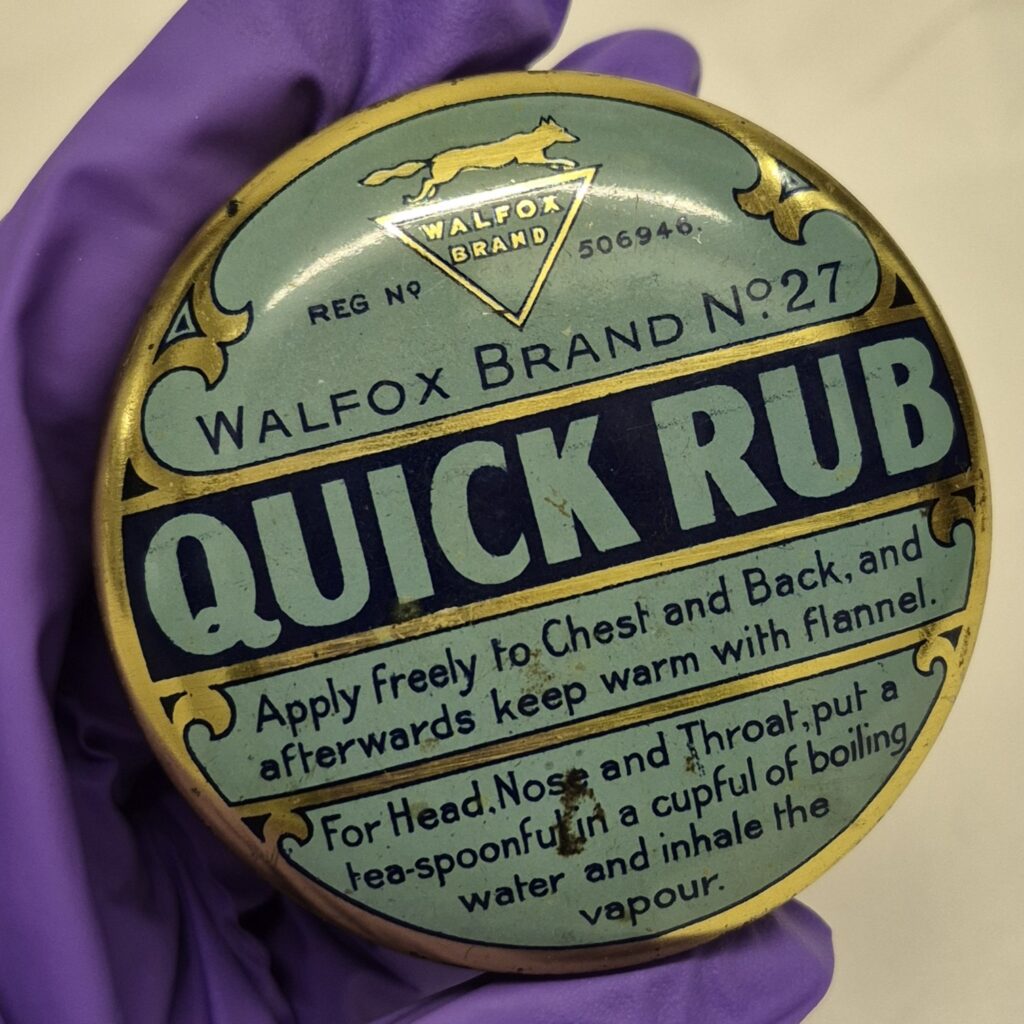
This blue tin (fig.12) contained methyl salicylate and capsicum. It offered relief from muscular aches and congestion. Methyl salicylate was first identified by Auguste Andre Thomas Cahours in 1843, and it provides a rubefacient and analgesic effect. In low doses it is used to give mouthwash and chewing gum its minty taste.
The ‘Walfox’ company was a manufacturing chemists and wholesale druggists launched in 1927 in West Yorkshire by Thomas H. Walfox. It was bought up by various companies throughout the 20th century before eventually being absorbed into Lloyds Pharmaceuticals. The ‘Walfox brand’ is now known for its collectible blue poison bottles and antique chemist tins such as this quick rub tin.
A box of Alum B.P. (granular)
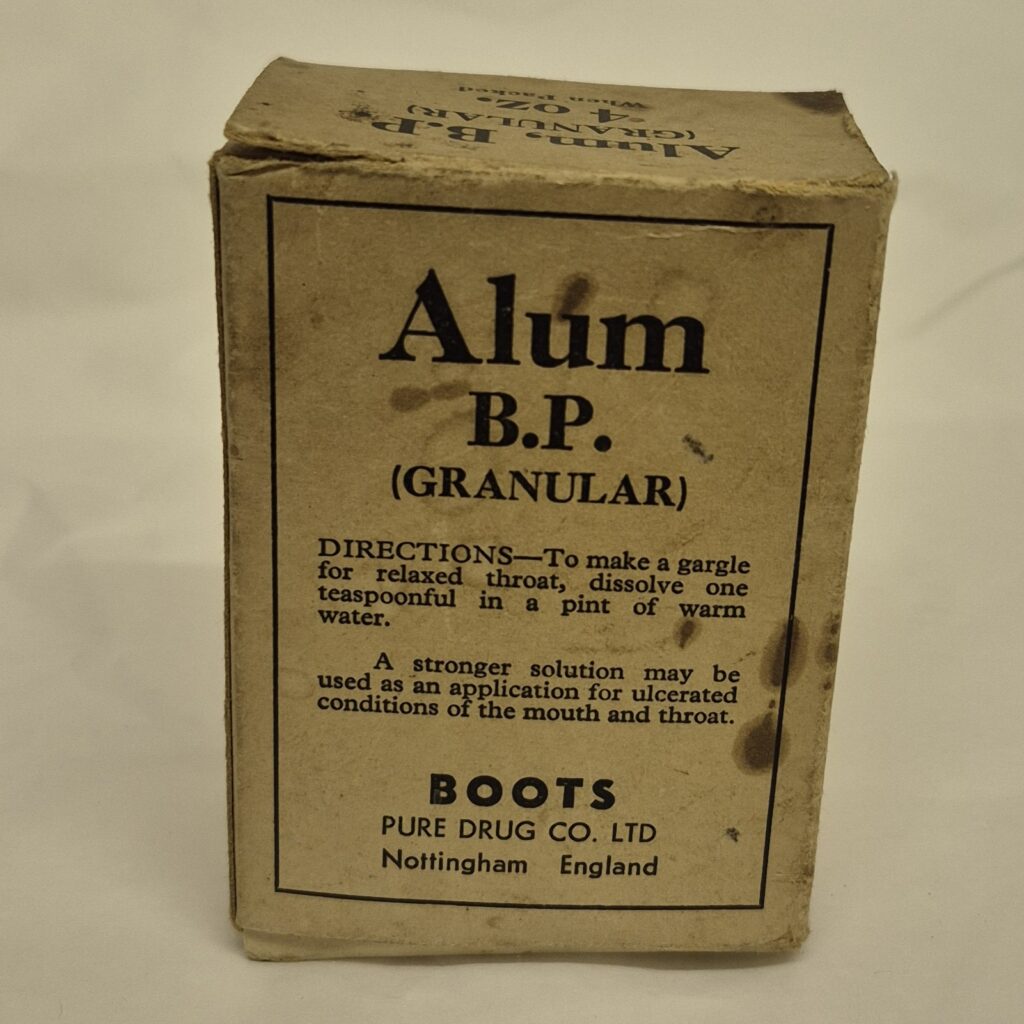
Alum (fig.13) is also called potassium aluminium sulphate or potash alum. This mineral salt has powerful antibacterial and astringent properties. Alum would have been used in early 20th century British households to soothe razor burn and stop bleeding from minor cuts, haemorrhoids and nosebleeds.
Potash alum was used as a mordant (fixer) for dye in Ancient Egypt (~1500-1000 BCE) and to reduce cloudiness in water. Herodutus also wrote that it was used in mummification in 5th century BCE. The Romans used it as a deodorizer under the arms as it didn’t stain clothes and many antiperspirants still contain alum in small amounts.[v] It appears in Ayurvedic texts from India and is used in Chinese medicine.
Sally Mittuch has an interesting blog on The History and Uses of Alum in Britain.
It is still used in medicine, industrial dying, leather work, chemical flame retardation and water purification today.
A tin of ‘Improved’ White Stainless Vick’s Vapour Rub
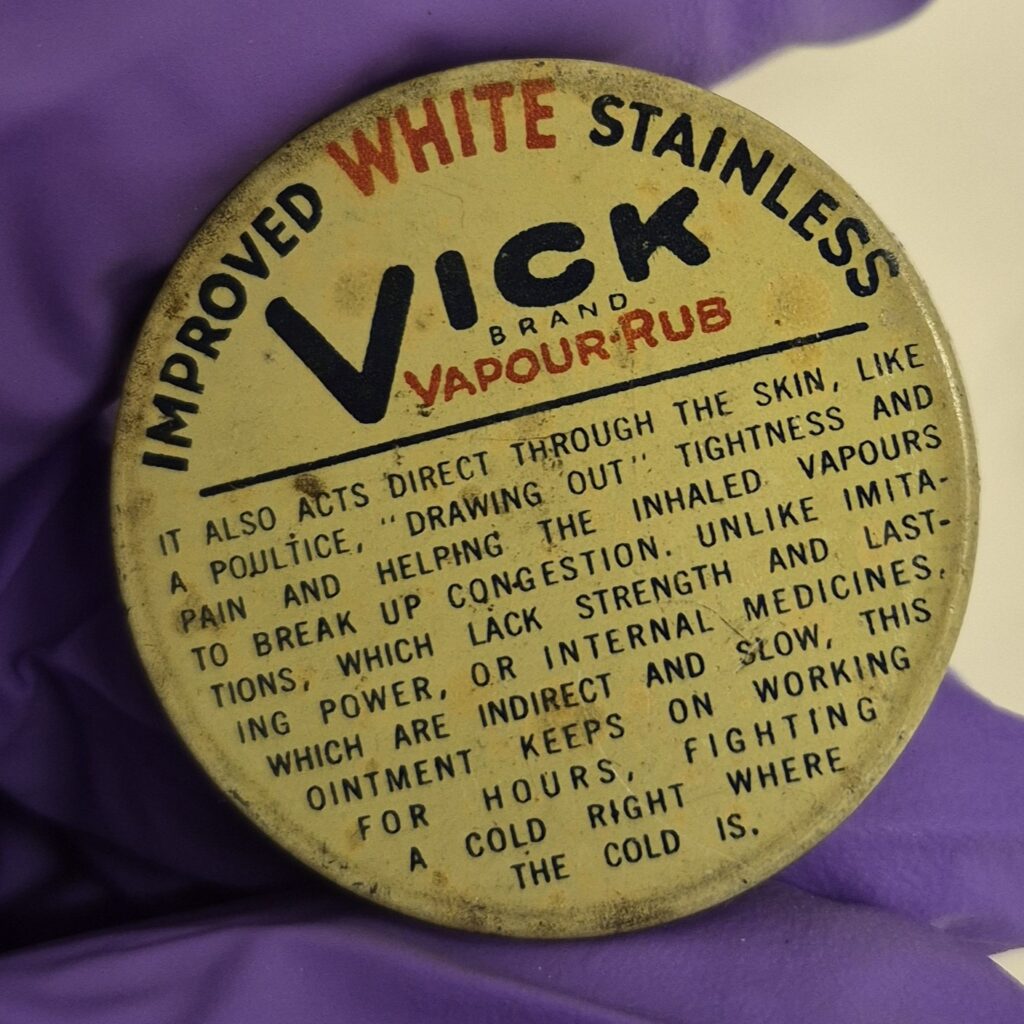
Vick’s originally started in 1894, when pharmacist Lunsford Richardson created a concoction to treat his son’s croup. He used his brother-in-law’s name (Dr Joshua Vick) for the branding as he thought Vick’s ‘was short, easy to remember and looked good on the label.’ He sold jars of his treatment for 25c (fig.14). It consisted of menthol, camphor, and eucalyptus.[vi] On the back of his success, Richardson created 21 different products with his Croup & Pneumonia Salve becoming the VapoRub we know today.
A test sample of Vick’s Vapour Rub
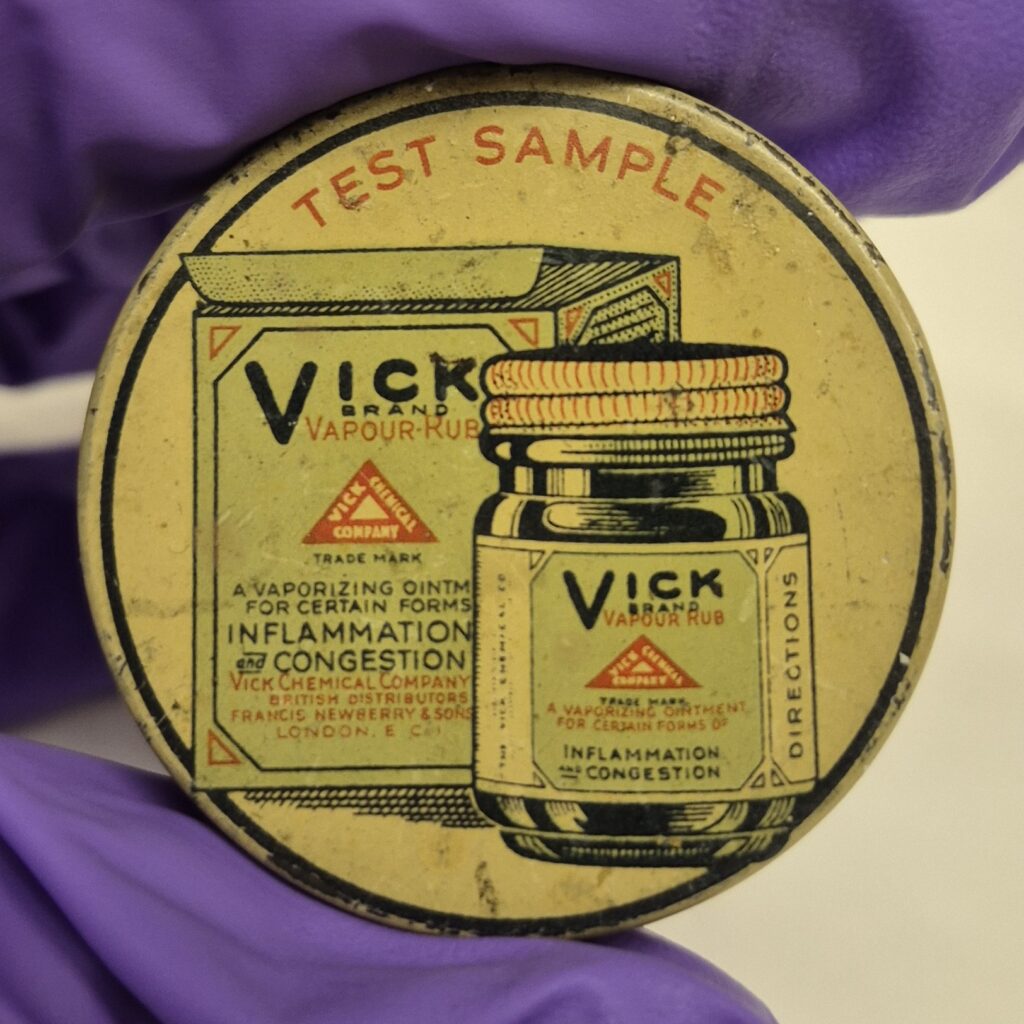
Early 20th century Vick’s testing samples (fig.15) were pioneering promotional items designed to popularise Vick’s vaporising ointment. The concept was launched initially in the United States of America in 1917, when the company made the most of relaxed postal laws to send out samples to millions of households, and it was such a success that they later rolled out their tester pots internationally. The container often said, ‘test sample’ and instructed the user to melt the ointment in hot water and inhale.
A box of Flowers of Sulphur (Brimstone)
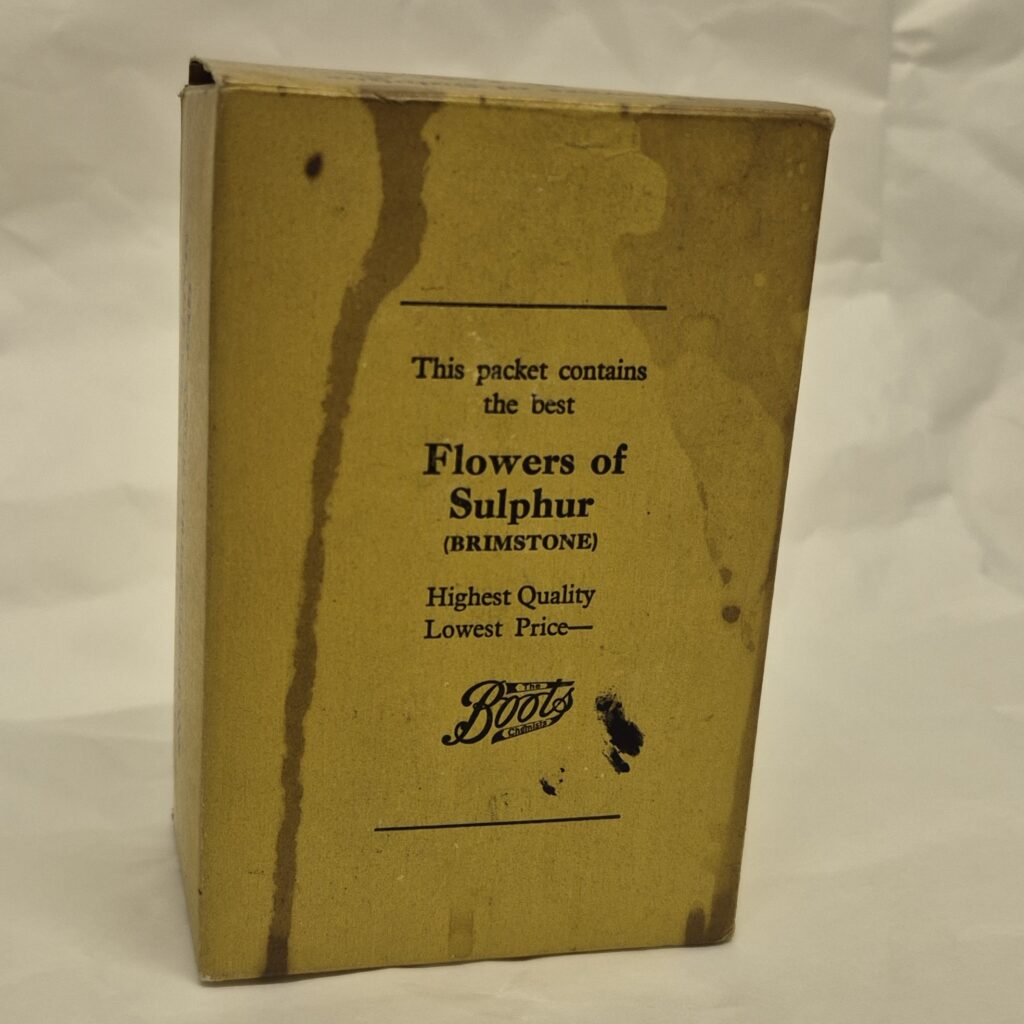
Flowers of Sulphur, also known as flowers of Brimstone (fig.16) is a highly purified form of elemental sulphur. It is bright yellow and is a natural fungicide.
It was historically used to treat skin diseases by apothecaries and features in Pemberton’s Pharmacopeia (1746) as ‘Balsam sulphuris’. In the early 20th century, it was also used in agriculture to reduce fungal diseases in crops.
Nowadays it is primarily used for gardening and equine/animal care as it treats rashes, fights off mites, and cures mud fever in horses.
English Green Oiled Silk
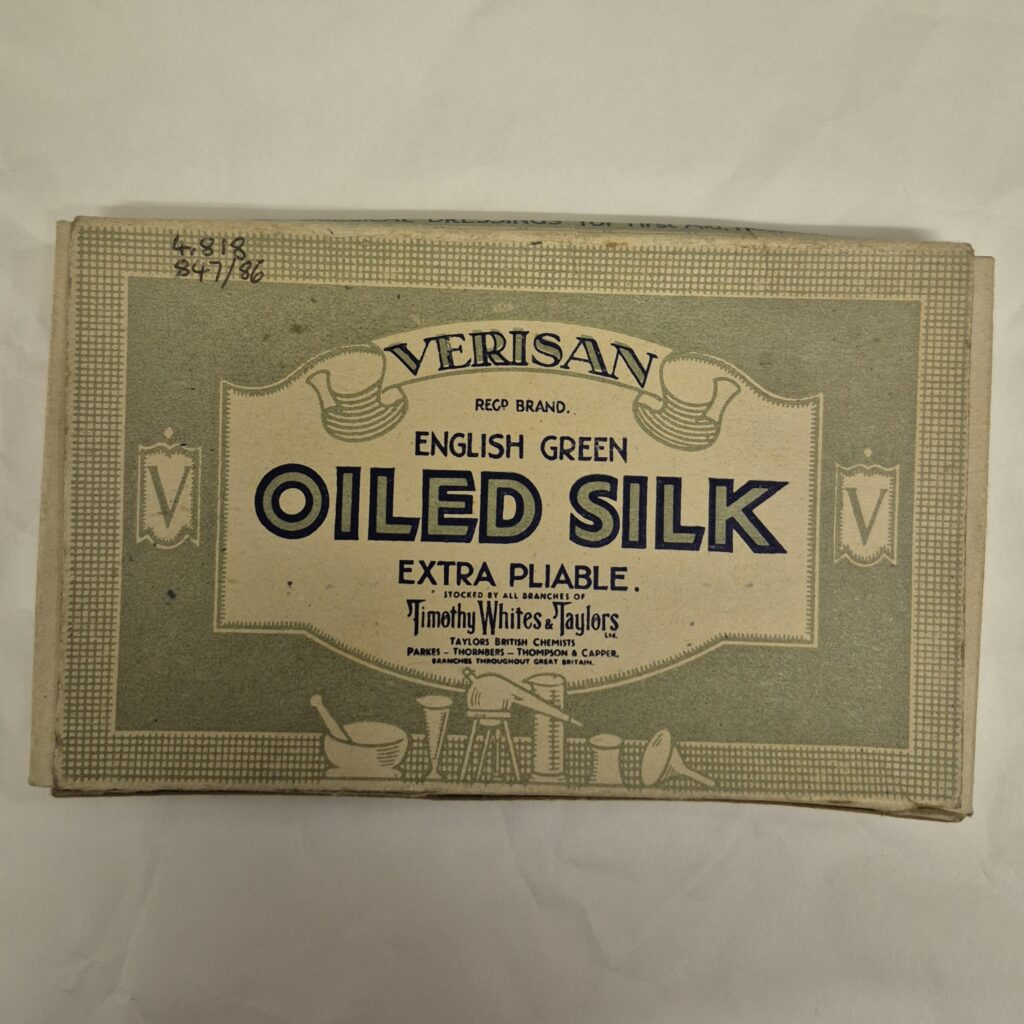
Oiled silk (fig.17) was used as a waterproof layer on top of dressings. It retained heat and moisture in wounds and skin infections which was believed to be advantageous to healing as it prevented fluid loss. Unfortunately creating an impenetrable barrier often led to the growth of anaerobic bacteria and infection. As penicillin wasn’t discovered until 1928 (and antibiotics weren’t widely commercially released until after World War II) these infections could be nasty. Interestingly however, in clinical settings, ‘controlled thermal therapy’ is a promising area of 21st Century wound management with researchers exploring the ideal levels of humidity and heat for different wound types in a personalised approach to healing.
Although the precise journey of each individual item in Box 64a is likely to remain unknown, the objects offer us an insight into the many varied healthcare stories of families at the turn of the twentieth century and mirror our experiences today. So, the next time you have the sniffles and are scrambling around for your first aid kit, take a moment to consider the Cambridge families of 100 years ago similarly smothering themselves in Vicks.
[i] Devika et al., ‘Evaluation of Anti-Inflammatory and Antimicrobial Properties of Mustard Seed Extract-Based Hydrogel: An In Vitro Study’
[ii] https://www.victorianlondon.org/publications/thomson-6.htm
[iii] https://cosmetotheque.com/en/thermogene-or-skin-that-heats-up/
[iv] https://wellcomecollection.org/stories/drugs-in-victorian-britain
[v] https://www.perseus.tufts.edu/hopper/text?doc=Perseus%3Atext%3A1999.02.0137%3Abook%3D35%3Achapter%3D52
[vi] https://vicks.com/en-us/vicks-history/heritage-of-care-and-trust
The Museum of Cambridge is the independent social history museum of the City and County of Cambridgeshire. As a registered charity the Museum relies on your support to enable volunteering opportunities such as this.
For more information on how to support the Museum of Cambridge’s vital work to preserve local history for future generations, visit www.museumofcambridge.org.uk or phone 01223 355159.